Cedar shake repair and restoration in Portland
A shake roof with moss in the gaps, a few split pieces and gray, tired wood often has years left in it. We repair and restore existing cedar roofs in Portland so you get more life before a full replacement.
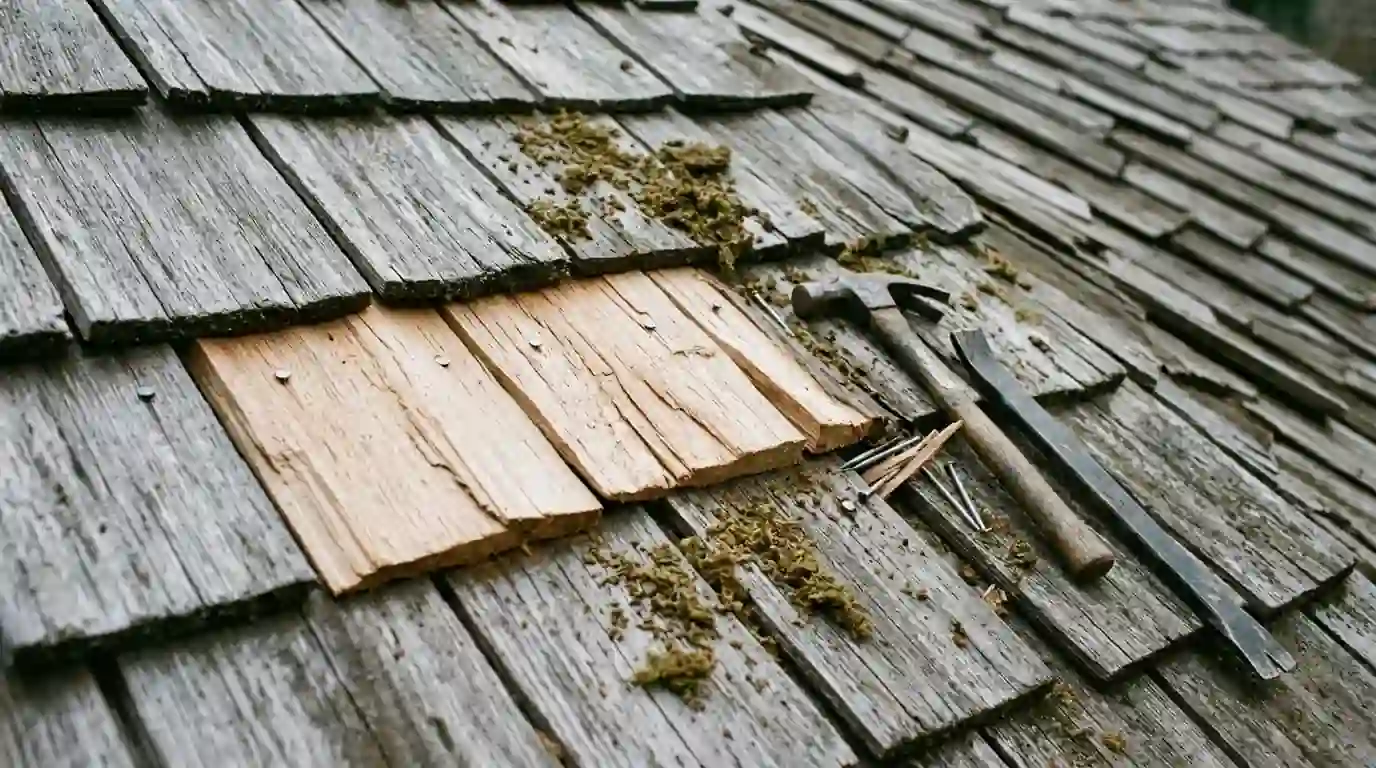
Cedar shake repair in Portland means replacing split, cupped or rotted shakes one by one, clearing moss and debris from the keyways, soft washing the surface, fixing worn valley and wall flashing, and applying a penetrating preservative. Spot repairs often run $425 to $1,180, while a full cleaning and restoration on a typical home commonly costs $3,680 to $8,940.
Cedar roofs rarely fail all at once. A few shakes split along the grain, a section on the north slope grows a thick moss mat, the keyways fill with fir needles, and the valley flashing wears thin. Each problem is small on its own, but together they let water reach the interlayment and the deck. The good news is that a shake roof can be repaired piece by piece, which is something composition roofs cannot offer in the same way.
Restoration makes sense when most of the wood is still thick enough to protect the house. We assess how much life is left by checking shake thickness, nail condition and the deck underneath, then tell you plainly whether repairs and cleaning will buy meaningful years or whether replacement is the better spend. When restoration fits, it can cost a fraction of a new roof. Call (503) 917-5484 to have your shake roof assessed.
Signs your existing shake roof needs attention
These are the problems we see most often on cedar roofs around the metro.
Split or missing shakes
Cedar splits along the grain as it ages and dries. A split that lines up with the gap in the course below creates a direct path for water. Missing shakes after a windstorm leave the interlayment exposed to rain.
Moss filling the gaps
Moss grows in the gaps between shakes and in the keyways, holding water and pushing pieces apart. Heavy mats on north slopes keep wood saturated and speed up rot under the surface.
Cupped or curled shakes
Shakes that cup upward or curl at the edges have lost oils and dried unevenly. They leave openings for wind-driven rain and often crack when walked on or hit by falling limbs.
Black or soft wood
Dark, spongy areas show rot, especially near the lower edge of the roof, around chimneys and below valleys. Press with a screwdriver; if it sinks in, those shakes and possibly the deck need work.
Debris packed in the keyways
Fir needles and maple leaves collect in the gaps between shakes and behind chimneys. They hold water, feed moss and block the airflow that keeps cedar drying between storms.
Rusty nails and loose pieces
Older shake roofs often used plain steel nails that rust through. Shakes then slide down or lift in wind. Rust streaks below nail heads are a clue that fastening is failing.
What does shake repair and restoration cost?
Repairs are priced by the area and number of shakes involved. Restoration is priced by roof size and condition.
| Work | Typical Portland range |
|---|---|
| Spot shake replacement after storm or wearper repair | $425 to $1,180 |
| Full cleaning, repair and treatmentper home | $3,680 to $8,940 |
| Soft wash and preservative treatment onlyper sq ft | $0.95 to $1.85 |
| Valley flashing replacement on shake roofper valley | $865 to $2,140 |
| Zinc or copper moss stripsper roof | $385 to $940 |
Every shake roof wears differently, so these are planning numbers only. After we walk the roof and count damaged pieces, you get a written estimate.
What moves the price:
- Number of shakes to replace
- Moss and debris buildup
- Flashing repairs needed
- Roof pitch and height
- Access around trees
- Treatment product chosen
How we bring an aging shake roof back
Assess thickness and remaining life
We check shakes across every slope for thickness, splits and rot and look at the attic side for stains. You get an honest read on whether restoration will add useful years or whether replacement makes more sense.
Clear moss and keyway debris
Moss is lifted out by hand and with brushes, and keyways are cleared of needles and leaves. We avoid pressure washing, which shreds the soft wood surface and drives water under the shakes.
Soft wash the roof surface
A low pressure wash with a cleaning solution kills remaining moss, algae and lichen and lifts gray surface fibers. The wood dries back to a cleaner, more even tone without being torn up.
Replace damaged shakes individually
Split, cupped and rotted shakes are cut out and replaced with matching cedar slipped into place and nailed with stainless fasteners. New interlayment is added where the old strips have deteriorated.
Repair flashing at weak points
Worn valley metal, loose step flashing and failing chimney counterflashing are replaced. These spots take the most water and are where most leaks on older shake roofs actually begin.
Apply preservative treatment
Once dry, the roof gets a penetrating preservative that restores oils, slows moss and helps the wood shed water. Zinc or copper strips at the ridge can follow to keep moss away longer.
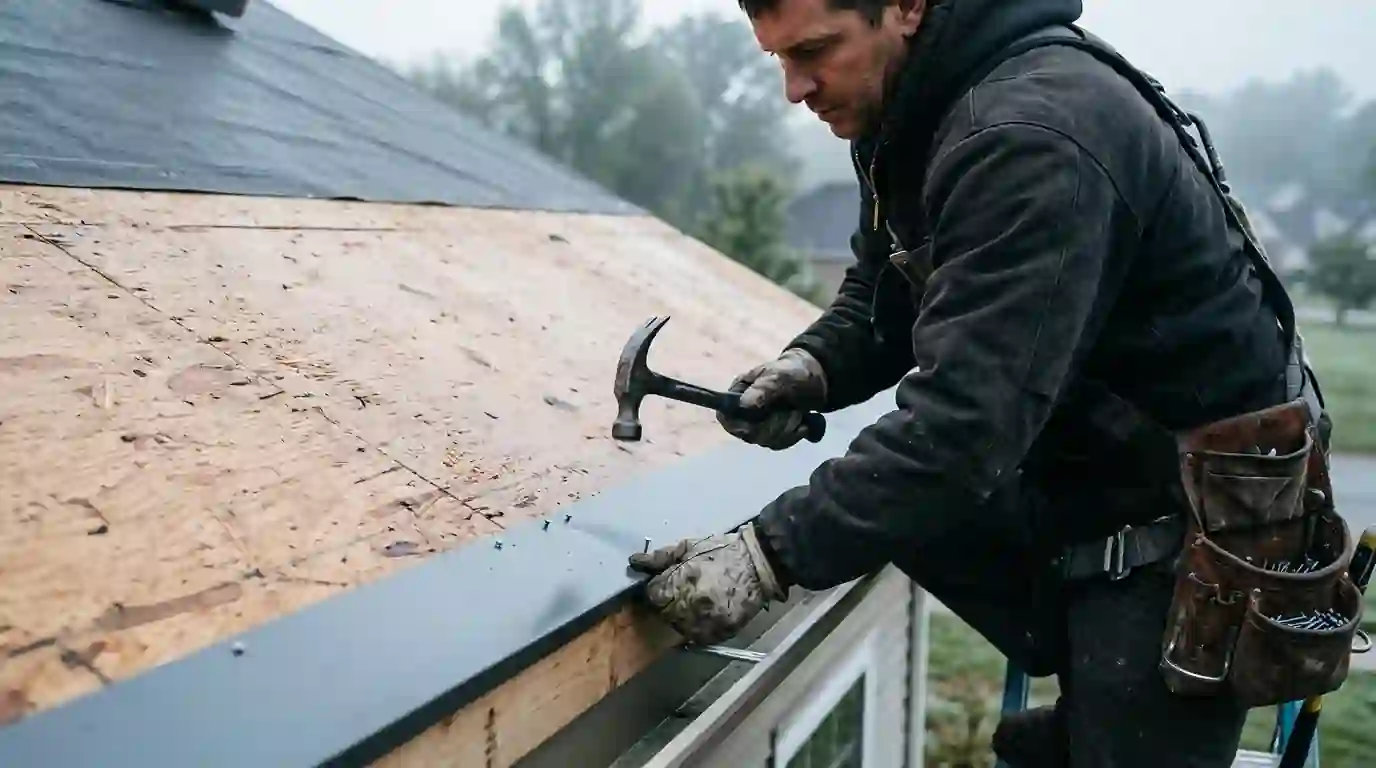
Materials for cedar shake repair & restoration come from manufacturers such as Malarkey, GAF, Owens Corning, CertainTeed, Carlisle and Velux, chosen for the job rather than the logo.
Choosing repair, restoration or replacement
The right path depends on how much sound wood is left on the roof.
Spot shake replacement
Best for a roof in good overall shape with a handful of split or missing pieces, often after a storm. We replace only the damaged shakes and repair the flashing around them.
Full cleaning and restoration
For roofs with widespread moss, debris and scattered damage but enough thickness left. Cleaning, shake replacement, flashing repair and preservative treatment together can add years to the roof.
Ongoing maintenance treatments
After restoration, a periodic cleaning and treatment schedule keeps moss down and the wood oiled. It costs less than letting damage build up and doing a full restoration again.
Planned replacement
When shakes are thin across most slopes, nails are rusting out and the deck shows rot, restoration no longer pays. We help you compare new cedar, synthetic shake and other options.
Keeping shake roofs healthy in Portland neighborhoods
Much of the shake restoration work we do is in older, tree-heavy parts of the city. In Eastmoreland, Laurelhurst and Irvington, many homes still have cedar roofs under big street trees, and the combination of shade, needle fall and our long rainy season wears shakes from the top down. North slopes and the areas below valleys and chimneys usually show damage first, while sunny south slopes often still have plenty of thickness left.
Shake roofs from the 1980s and 1990s are common in Lake Oswego, West Linn and parts of Beaverton, often on larger homes with complex roof lines. Those roofs are reaching the point where restoration either buys several years or tells you it is time to plan replacement. After the January 2024 ice storm, we also repaired many shake roofs where falling limbs cracked a patch of shakes without damaging the rest.
Why owners of older shake roofs call us
A straight answer on life left
We tell you plainly whether restoration will buy meaningful years. If the roof is past saving, we say so rather than selling cleaning that will not help.
No pressure washer damage
We use hand tools and soft washing to clean cedar, protecting the wood surface instead of stripping it the way high pressure washing does.
Matching cedar for repairs
Replacement shakes are matched in thickness and style, and new wood weathers toward the color of the existing roof within a season or two in Portland.
Not sure how often your roof needs moss care? Answer four quick questions about shade, trees, material and age. Check your roof's moss risk.
Cedar Shake Repair & Restoration questions from Portland homeowners
Is cedar shake restoration worth it on a Portland home?
It often is when the shakes still have enough thickness and the deck is sound. Restoration can add several years for a fraction of the cost of a new roof. If shakes are thin, split across most slopes and nails are rusting through, replacement is usually the smarter long-term spend.
How often should a cedar shake roof in Portland be cleaned?
Most shake roofs here benefit from keyway and gutter clearing every year and a fuller cleaning and treatment every few years. Roofs under heavy tree cover may need more frequent attention, while sunny roofs can go longer between treatments.
Can pressure washing damage my cedar shake roof?
Yes. High pressure strips soft wood fibers, thins the shakes, and can drive water under the courses. It also removes the weathered surface that helps cedar shed water. We use hand tools and soft washing with a cleaning solution instead.
Will new replacement shakes match my weathered Portland roof?
At first new shakes look lighter. In Portland rain and weather they turn gray fairly quickly, usually blending within one or two wet seasons. Treatment applied across the whole roof also helps even out the color.
Can you repair cedar shakes damaged by a falling limb?
Yes. We remove the broken shakes, check the interlayment and decking beneath, repair any deck damage, and weave new shakes into the surrounding courses. Storm damage like this is often covered by insurance, and we document it with photos.
Where we do this work most
We cover the whole metro. These are the places we are on roofs most often:
Related roofing services
Cedar Shake Roofing
Few roofs suit an old Portland house like real western red cedar. We install new shake roofs that look right on Craftsman, Tudor and lodge style...
Roof Moss Removal
Moss on a Portland roof is almost a given under the firs. We take it off by hand and brush, treat what is left and add zinc so it grows back slower.
Roof Maintenance
A regular tune-up keeps a Portland roof ahead of the rain. We clear debris, renew sealant, check every boot and flashing and flush gutters on a...
Roof Flashing Repair
Most roof leaks in Portland start at a joint, not in the open field of shingles. Flashing at dormers, sidewalls, valleys and roof edges is where...
Fallen Tree Roof Repair
A fir limb or whole tree on a Portland roof is a framing problem as much as a roofing problem. Rafters, ceiling joists and decking often need...
Need cedar shake repair & restoration in Portland?
Call and tell us what you are seeing. We answer 24/7 and can usually talk you through the next step on the first call.