Chimney flashing repair for Portland brick chimneys
Portland's old brick chimneys are the single most common leak point we see. Proper chimney flashing uses two layers of metal, one woven into the shingles and one set into the brick, so rain cannot get behind it.
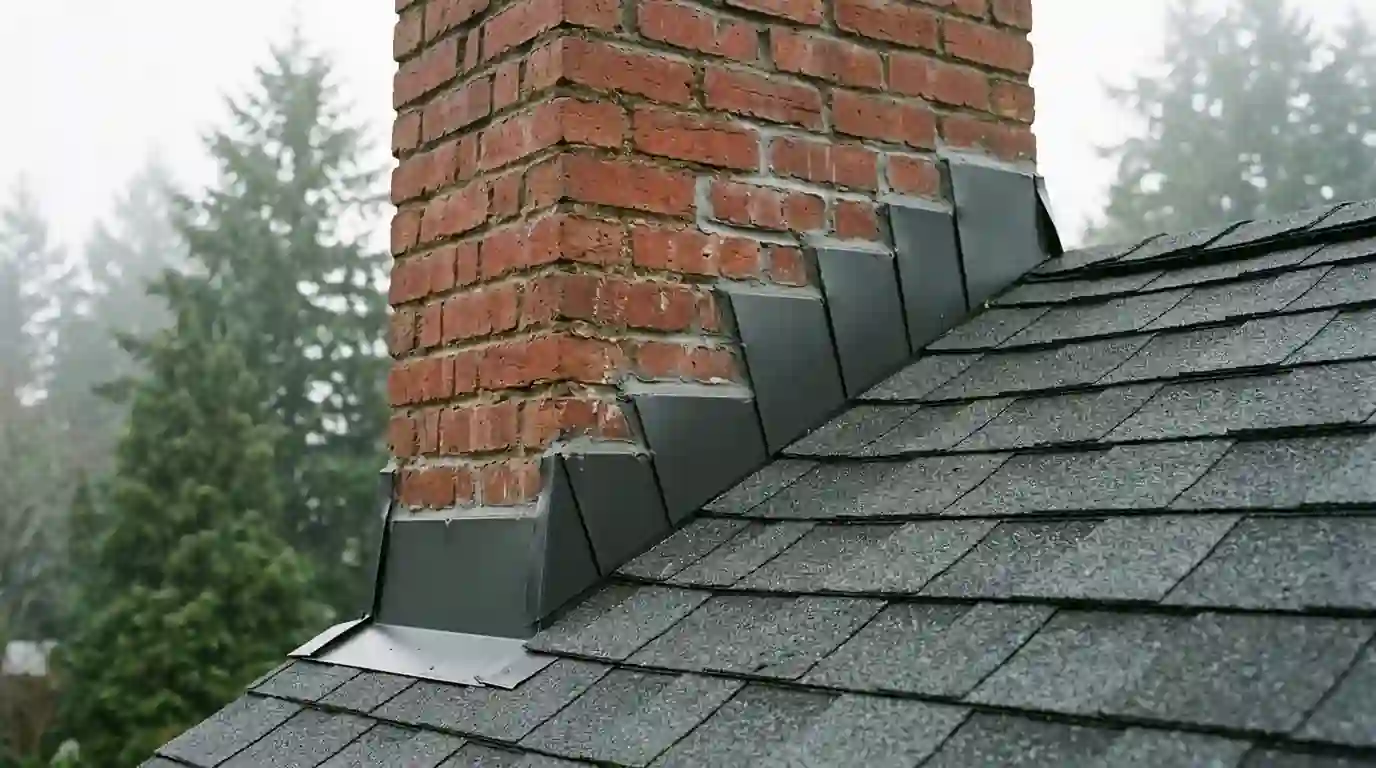
Chimney flashing repair in Portland typically costs $685 to $2,940. A correct job removes the old metal and caulk, installs new step flashing under each shingle course, cuts a groove into the mortar to set counterflashing, and adds a cricket behind chimneys wider than about 30 inches. Tar or caulk smeared over old flashing is not a repair. Call (503) 917-5484 to schedule a look.
Chimneys are hard to keep watertight because they move differently from the roof around them. The brick stack sits on its own foundation, while the roof framing swells, shrinks and settles with the seasons. Flashing has to bridge that gap without being fastened rigidly to both, which is why good chimney flashing is built in two parts. The base or step flashing tucks under the shingles and turns up the side of the brick. A separate counterflashing is set into the mortar and laps down over it, so each piece can move a little without opening a gap.
On many Portland homes, that system has been replaced over the years by something simpler: a single bent strip of metal nailed to the brick and coated in roofing tar. It may hold for a season or two. Then the tar cracks, the nails loosen as the mortar crumbles, and water runs down the face of the brick straight behind the flashing.
Repairing chimney flashing properly means taking all that apart and rebuilding it the right way. It is a careful, detailed job, but it is far less expensive than the rotted framing, stained ceilings and damaged plaster that a chronic chimney leak causes. Once it's done right, chimney flashing usually outlasts the shingles around it, and the next reroof only needs to tie into it rather than start over.
Flashing materials and options for your chimney
The material and method depend on your chimney, your roof and how long you plan to keep the house.
Prefinished steel flashing
The most common choice. Painted galvanized steel holds up well, comes in colors that blend with shingles and brick, and is the practical option for most Portland asphalt roofs.
Aluminum flashing
Lightweight and rust resistant, aluminum works well on shingle roofs. It should not touch fresh mortar or concrete directly for long periods, so we use it with care around masonry.
Copper flashing
Copper lasts for decades and weathers to a brown patina. It costs more and suits older homes, cedar roofs or owners who want flashing that outlasts several shingle replacements.
Metal-clad cricket
Behind wide chimneys, a framed cricket covered in soldered or folded metal sheds water and needles off the uphill side. It is one of the most effective upgrades for a chronic chimney leak.
Signs your chimney flashing has failed
Chimney leaks show up inside and out, and many of them start years before a ceiling stain appears.
Stains on the chimney breast
Brown streaks or bubbling paint on the wall or ceiling around a fireplace chimney are the classic symptom. Water is running down the brick behind the flashing and into the framing around the chase.
Thick tar around the base
Layers of black roofing cement around the chimney mean someone has been chasing a leak for years. Tar dries, cracks and pulls away from brick, and it often hides rusted metal underneath.
Counterflashing pulled from the brick
If the top edge of the metal is bent outward, loose, or held only by caulk, water can run behind it. Counterflashing should be set into a mortar joint, not surface mounted.
Debris piled behind the chimney
Needles and leaves stacked on the uphill side of a chimney trap water against the flashing. On wide chimneys without a cricket, this pocket stays wet for most of Portland's winter.
Crumbling mortar joints
Soft or missing mortar where flashing is set into the brick lets the metal loosen and water seep into the masonry. Flashing repair often goes hand in hand with repointing those joints.
Rot in the attic around the chase
Dark, soft wood on rafters or decking next to the chimney inside the attic shows water has been getting in for a long time, even if the ceiling below still looks fine.
How we rebuild flashing around a chimney the right way
Strip old flashing and tar
We remove the shingles around the chimney, pull out the old metal and scrape off roofing cement. That exposes the decking, the brick and any rot, so the new flashing goes onto clean, sound surfaces.
Repair decking and add membrane
Soft sheathing next to the chimney is cut out and replaced. We then wrap the base of the chimney and the surrounding deck with ice and water shield as a second line of defense behind the metal.
Install apron and step flashing
A front apron flashing goes across the downhill face. Individual step flashing pieces are woven in with each course of shingles up both sides, so every piece overlaps the one below and sheds water outward.
Build a cricket on wide chimneys
For chimneys about 30 inches or wider, we frame a small peaked cricket on the uphill side and cover it in metal or membrane. It splits the water around the chimney instead of letting it pond.
Cut in the counterflashing
We grind a groove into the mortar joints, then set bent counterflashing into the groove so it laps over the step flashing. The joint is sealed with a masonry-grade sealant made for movement.
Reshingle and check the cap
Shingles are reinstalled around the new flashing. While we are up there, we also look at the chimney crown and cap, since cracks at the top can let water down inside the brick.
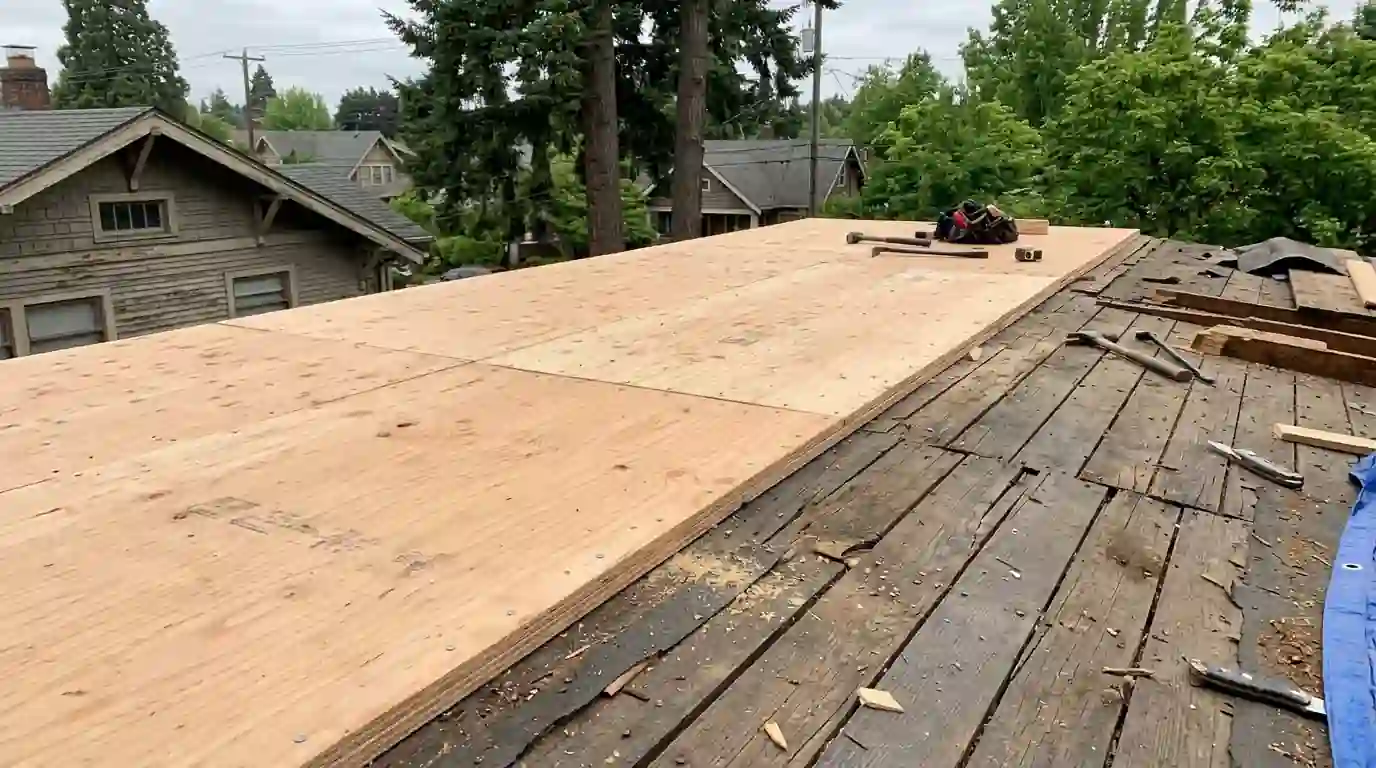
Materials for chimney flashing repair come from manufacturers such as Malarkey, GAF, Owens Corning, CertainTeed, Carlisle and Velux, chosen for the job rather than the logo.
What chimney flashing repair costs in Portland in 2026
Price depends on chimney size, the flashing metal and whether we find rot or need to add a cricket.
| Work | Typical Portland range |
|---|---|
| Reseal and refasten existing counterflashingper chimney | $345 to $685 |
| Full step and counterflashing rebuildper chimney | $1,165 to $2,370 |
| Cricket framing and metal coverper chimney | $585 to $1,240 |
| Copper flashing rebuildper chimney | $1,890 to $2,940 |
| Rotted decking replacement at the chaseper area | $285 to $815 |
These numbers reflect common chimney jobs across Portland and are not a quote. The real price comes after we look at the chimney from the roof and attic and give you a written estimate.
What moves the price:
- Chimney width and height
- Flashing metal chosen
- Need for a cricket
- Rotted decking around the base
- Mortar condition for counterflashing
Why chimney flashing fails so often on Portland homes
Portland is full of homes built in the 1900s through the 1950s with large brick chimneys that run through the middle of the roof. In Irvington, Laurelhurst, Alameda and Eastmoreland, it is common to see two or even three chimneys on one house, many no longer used for fires but still standing. Decades of reroofing jobs have often left behind patched, surface-mounted flashing and thick tar rather than proper counterflashing.
Our climate makes those shortcuts fail. Months of steady rain keep the brick damp, so mortar softens and lets flashing loosen. Douglas fir needles collect behind chimneys in treed neighborhoods like Mount Tabor and Multnomah Village, holding water against the uphill side all winter. During the January 2024 ice storm, ice dammed behind many chimneys and forced water under the flashing, which is when a lot of homeowners first noticed the leak.
What you get from a properly flashed chimney
Two-part flashing that moves
Separate step flashing and counterflashing let the chimney and roof shift independently without opening a gap. That is the design that keeps working for decades.
No reliance on tar
We remove the roofing cement rather than adding more. Metal set into mortar and woven into shingles does the work; sealant only finishes the joint.
Water diverted before it reaches
A cricket on wide chimneys keeps water and needles from piling up on the uphill side, which removes the main reason chimney flashing fails here.
Chimney Flashing Repair questions from Portland homeowners
How do I know if my Portland chimney leak is flashing or brick?
Leaks that appear only during wind-driven rain and stain the ceiling beside the chimney often point to flashing. Leaks that show up inside the firebox or on the brick inside the attic can mean a cracked crown or porous brick. We check the flashing, crown and cap together so the fix is aimed at the right part.
Can chimney flashing be repaired without replacing the roof?
Yes. We remove only the shingles around the chimney, rebuild the flashing and reinstall or replace those shingles. It makes sense to do chimney flashing during a reroof if one is coming within a year or two, but a stand-alone repair is common and effective.
Does my chimney need a cricket in Portland?
Chimneys about 30 inches or wider on the uphill side generally need one, and many older Portland chimneys never got one. Without it, water and fir needles pile up behind the chimney all winter. Adding a cricket during a flashing repair is usually the most effective long-term fix.
Should I remove an unused chimney instead of reflashing it?
Some Portland homeowners take an unused chimney down below the roofline and roof over it, which removes the leak point entirely. It involves masonry work and roof framing, so it costs more up front. For a chimney that is sound and part of the home's look, reflashing is the simpler option.
How long does chimney flashing repair take?
A typical chimney flashing rebuild takes most of a day. Adding a cricket or replacing rotted decking can add a few hours. We schedule it for a dry window in the forecast, which is easy enough in Portland even during the wet season.
Where we do this work most
We cover the whole metro. These are the places we are on roofs most often:
Related roofing services
Roof Flashing Repair
Most roof leaks in Portland start at a joint, not in the open field of shingles. Flashing at dormers, sidewalls, valleys and roof edges is where...
Roof Leak Repair
A stain on a Portland ceiling is rarely under the hole that caused it. We trace the water back along rafters and decking to the true entry point...
Dry Rot & Roof Deck Repair
A soft spot underfoot on the roof or a sag you can see from the street points to rotted sheathing below the shingles. We open Portland roofs, remove...
Roof Repair
Portland roofs rarely fail all at once. A few torn shingles, a cracked ridge cap or a soft valley can be fixed cleanly and matched to what you have...
Need chimney flashing repair in Portland?
Call and tell us what you are seeing. We answer 24/7 and can usually talk you through the next step on the first call.