TPO roofing for Portland low-slope roofs
TPO is a single-ply membrane with seams welded by hot air instead of glued. On Portland low-slope roofs that sit wet for months, those fused seams are the main reason owners choose it.
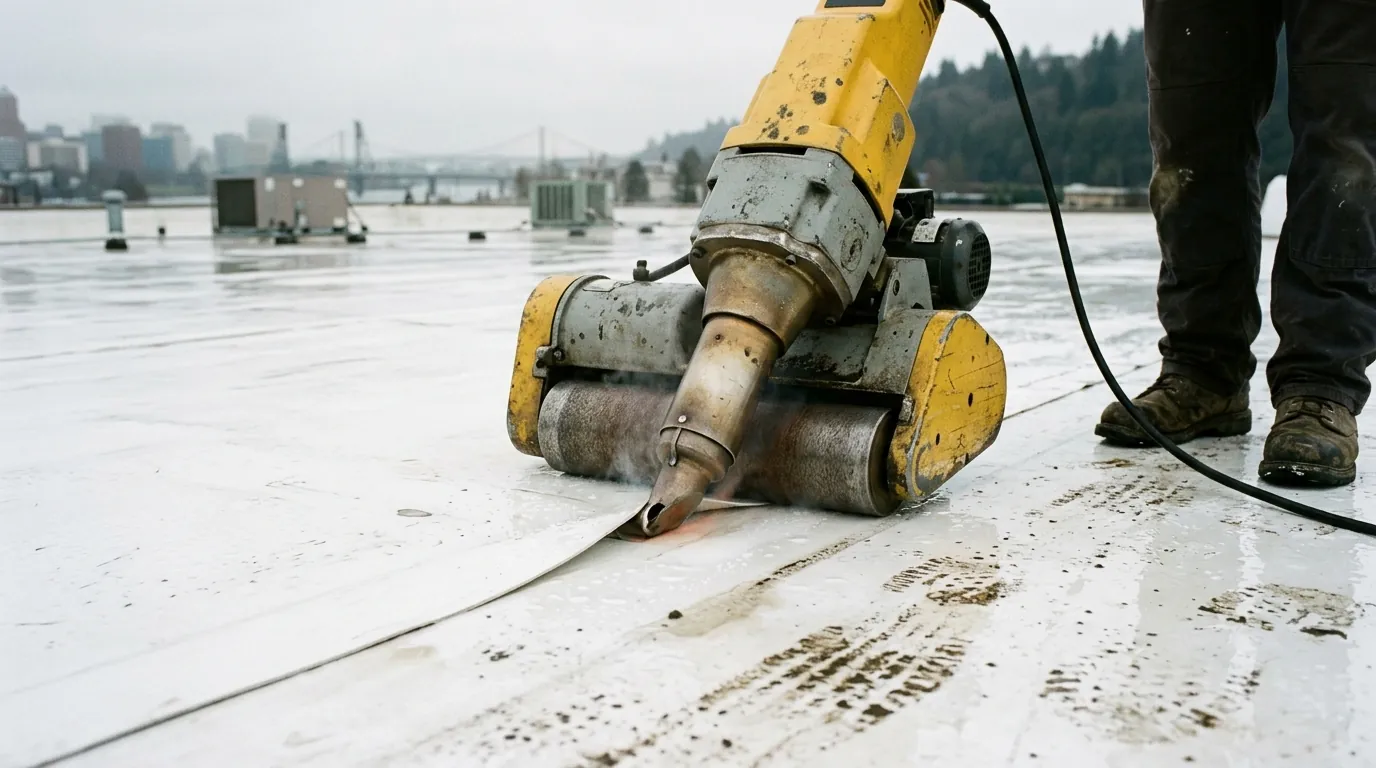
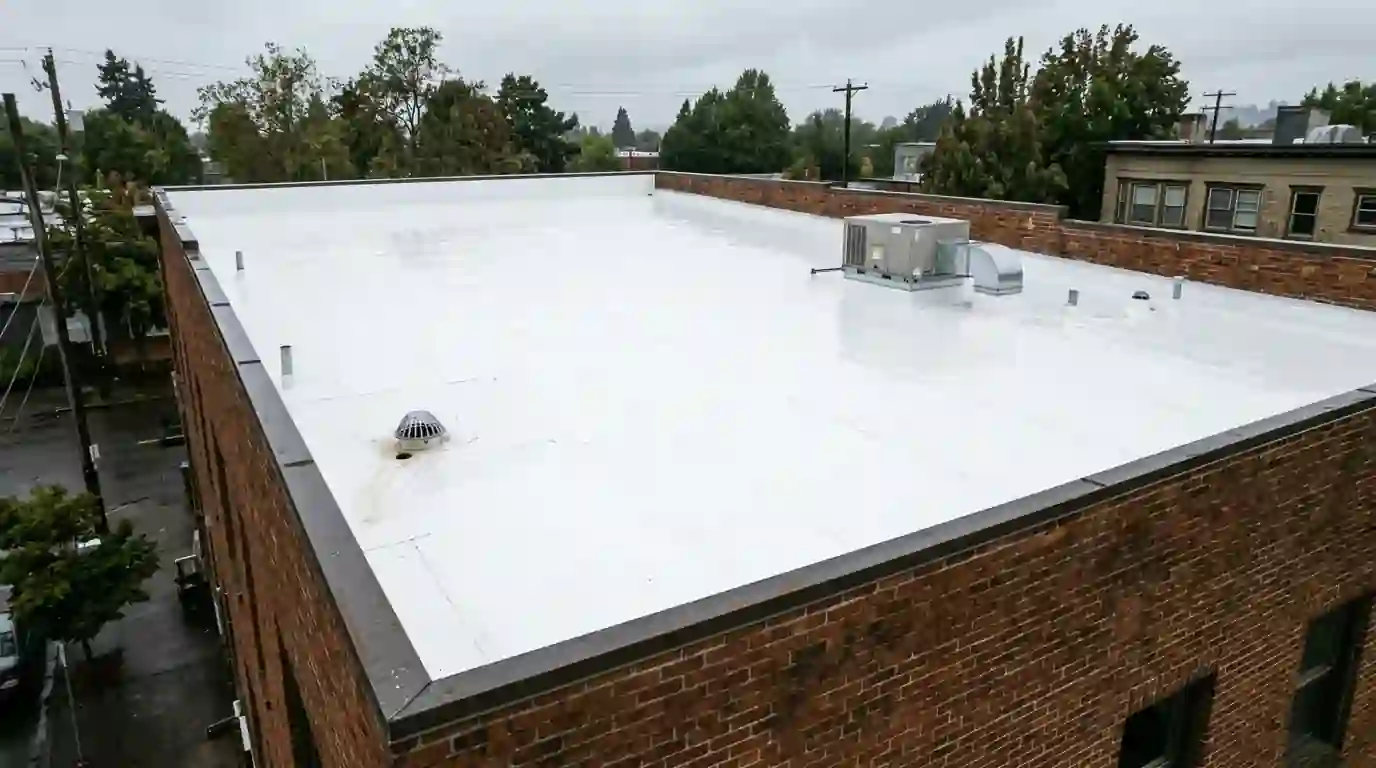
TPO roofing in Portland typically costs $8.70 to $14.70 per square foot installed, depending on tear-off, insulation and detail work. TPO is a thermoplastic sheet, usually 60 or 80 mil thick, installed over insulation and cover board with every seam fused by a robotic or hand-held hot-air welder. It's reflective, holds up well to ponding, and suits homes, additions and commercial buildings across the metro.
Most leaks on low-slope roofs start at seams. Glued and taped seams depend on adhesive that weakens over years of wet and dry cycles. TPO is different because the sheets are thermoplastic: heat softens the edges and they fuse into one continuous layer. A properly welded TPO seam is often stronger than the sheet around it, which is a big deal on a roof that holds a film of water for half the year.
We install TPO on Portland homes with low-slope sections, modern flat roofed houses, garages, additions, apartment buildings and commercial roofs. We use membranes from manufacturers like Carlisle, Versico, GAF and Firestone, and we probe every seam after welding. The membrane is only as good as the welds, the edge metal and the flashing at each penetration, so that's where we spend our attention.
Which TPO setup fits your building?
TPO comes in several thicknesses, colors and attachment methods, and each suits different roofs.
60 mil mechanically attached
The standard for many homes and light commercial roofs. Fasteners and plates sit in the seam laps, covered by the weld. Economical and quick to install over insulation and cover board.
80 mil fully adhered
A thicker sheet glued to the cover board with adhesive. No fluttering in wind, better puncture resistance and a smoother look. Good for roof decks, high wind exposure and roofs with regular foot traffic.
White versus gray TPO
White reflects the most heat and keeps rooms below cooler. Gray or tan hides dirt and blends better with nearby shingle roofs on homes where the flat section is visible from upstairs windows.
Walkway pads and protection
Welded walkway pads around HVAC units and hatches protect the membrane from service traffic. They cost little and save repairs on roofs where technicians visit often.
When is TPO the right membrane for your roof?
These are the situations where we usually recommend TPO over other low-slope options.
Seams keep failing on EPDM
If an old rubber roof has lifting seams and edges every winter, switching to welded TPO seams removes the adhesive joint that keeps letting go. It is one of the most common reasons owners make the change.
Rooms under the roof overheat
White TPO reflects much of the summer sun, so top floor offices and bedrooms under a flat roof stay cooler during August heat waves. It helps most on roofs with full sun exposure.
Large roof with few obstacles
Wide TPO rolls cover big areas with fewer seams. Commercial buildings, warehouses and apartment roofs with open expanses go quickly and end up with fewer joints to maintain.
Ponding that cannot be fully eliminated
Some older buildings can only be sloped so much. TPO welded seams tolerate occasional standing water better than lapped asphalt or taped rubber systems.
Rooftop equipment and curbs
TPO accepts prefabricated corners, pipe boots and curb wraps that weld directly to the field sheet. HVAC units, vents and hatches get clean, fused flashing details.
How we install a TPO roof that stays sealed
Prepare the substrate
We tear off the old roof, repair decking, and install tapered or flat polyiso insulation with a cover board on top. TPO needs a clean, smooth base, because any lump or screw head can wear through the sheet over time.
Lay out and attach sheets
Sheets are rolled out with laps planned so water flows over seams, not into them. We mechanically fasten in the seam laps or fully adhere the sheet, depending on wind exposure, building height and the substrate.
Hot-air weld every seam
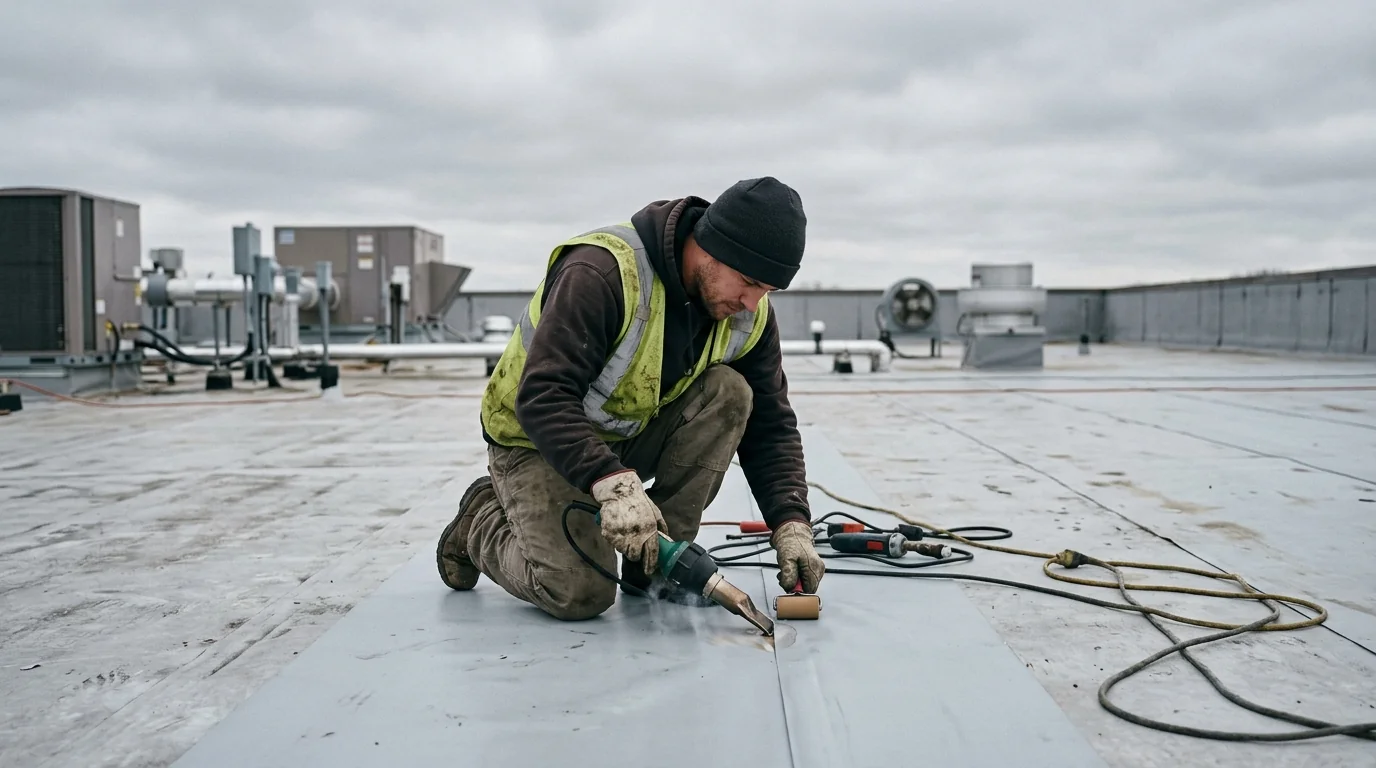
A robotic welder runs the long seams at a set temperature and speed, and hand welders handle corners and details. We do test welds each morning and whenever the weather changes, because cold or damp air affects weld quality.
Probe and check welds
Every seam is probed with a seam tool to find voids or cold welds. Any weak spot gets rewelded or covered with a patch the same day, before it can let water in.
Flash curbs, walls and penetrations
Walls and parapets get TPO flashing welded to the field sheet and terminated under metal counterflashing. Pipes get prefabricated boots, and HVAC curbs get full wraps with welded inside and outside corners.
Finish edges and drains
TPO-coated edge metal, drain clamping rings and scupper sleeves tie the membrane into the drainage system. We clean the surface and walk the roof with you to show where water goes.
Materials for tpo roofing come from manufacturers such as Malarkey, GAF, Owens Corning, CertainTeed, Carlisle and Velux, chosen for the job rather than the logo.
What does a TPO roof cost in Portland in 2026?
TPO is priced by the square foot. Here are typical installed ranges for Portland homes and commercial buildings.
| Work | Typical Portland range |
|---|---|
| 60 mil TPO with tear-off, residentialper sq ft | $9.40 to $14.70 |
| 80 mil fully adhered TPOper sq ft | $10.80 to $15.90 |
| Commercial TPO, larger roofsper sq ft | $8.70 to $12.90 |
| HVAC curb flashingper curb | $365 to $785 |
| Walkway padsper linear ft | $13.40 to $23.70 |
These are typical Portland ranges, not a quote. We give you a real price after measuring the roof and writing an estimate for your building.
What moves the price:
- Membrane thickness
- Attached or adhered system
- Tear-off and decking repair
- Insulation and taper
- Curbs, drains and penetrations
- Roof size and access
How TPO handles Portland rain, moss and debris
Damp, cool weather is where welding skill shows. Portland mornings are often wet even in summer, so we dry the seam areas, adjust welder settings through the day, and stop when conditions make good welds impossible. On commercial roofs in the Central Eastside and near the northwest industrial area, TPO is now the most common membrane we install because it covers large areas quickly with fewer seams.
White TPO stays cleaner than people expect, but fir needles and leaves still collect around drains and against parapets. On homes near Laurelhurst Park and the Alameda Ridge, where big trees overhang the roof, we suggest a light rinse and drain clearing each fall. We never pressure wash TPO hard; a soft brush and low pressure water keep the surface in good shape.
What sets a good TPO install apart
Every seam probed
We probe all welds after installation and fix weak spots the same day. Cold welds look fine from above and fail later, so checking every seam is not optional on our roofs.
Welder settings tuned to weather
Test welds each morning and after weather changes keep seam quality consistent through cool, damp Portland days, when weld temperatures drift if nobody checks.
Details welded, not caulked
Corners, curbs and boots are TPO welded to the sheet, with metal counterflashing at walls. Caulk is a maintenance item, and we keep it off the critical joints.
TPO Roofing questions from Portland homeowners
How long does a TPO roof last in Portland?
A well installed TPO roof commonly lasts 20 to 30 years here. Thickness, sun exposure, drainage and maintenance all affect that. The seams and flashing details determine most of the outcome, which is why we probe every weld and keep drains clear on roofs we install.
Is TPO better than EPDM for a Portland flat roof?
TPO has heat-welded seams, which tend to outlast taped EPDM seams under constant moisture, and its white surface keeps rooms cooler. EPDM stays more flexible and handles foot traffic and odd shapes well. For most Portland homes and commercial roofs with ponding concerns, we lean toward TPO.
Can TPO be installed over an existing roof in Portland?
Sometimes, if the existing roof is a single layer, dry, and solid. We take core samples first. If insulation is wet or there are already two layers, a full tear-off is the right call. Covering wet material traps moisture under the new TPO.
Does white TPO get dirty in Portland?
It collects some grime, moss spores and tree debris, especially under firs. A gentle cleaning with low pressure water and a soft brush every year or two keeps it bright. Gray or tan TPO hides dirt better if appearance from upstairs windows matters to you.
Can you install TPO roofing in Portland during the rainy season?
We can, but only in dry windows. The membrane and seams must be dry for good welds, and we adjust welder settings for cool air. In winter we work smaller sections and seal the roof each night. Planned replacements are easier between May and October.
Where we do this work most
We cover the whole metro. These are the places we are on roofs most often:
Related roofing services
Flat Roof Replacement
When a Portland flat roof has more patches than original membrane, it's time to start over. We strip it to the deck, fix the drainage and install a...
Commercial Roofing
A commercial roof protects inventory, equipment, tenants and rent. We install new and replacement roofs on Portland warehouses, storefronts, offices...
EPDM Rubber Roofing
EPDM is the black rubber sheet on thousands of Portland garages, dormers and additions. We install new fully adhered rubber roofs and repair the...
Silicone Roof Coatings
A silicone coating can add years to a Portland flat roof that is still dry and solid underneath. It can't save a roof full of wet insulation, and...
Apartment & Multifamily Roofing
Roof work on Portland apartments, condo buildings and fourplexes, planned around tenants, parking, board approvals and the wet season so residents...
Need tpo roofing in Portland?
Call and tell us what you are seeing. We answer 24/7 and can usually talk you through the next step on the first call.