Apartment and multifamily roofing for Portland property owners
Roof work on Portland apartments, condo buildings and fourplexes, planned around tenants, parking, board approvals and the wet season so residents stay dry and the building keeps running.
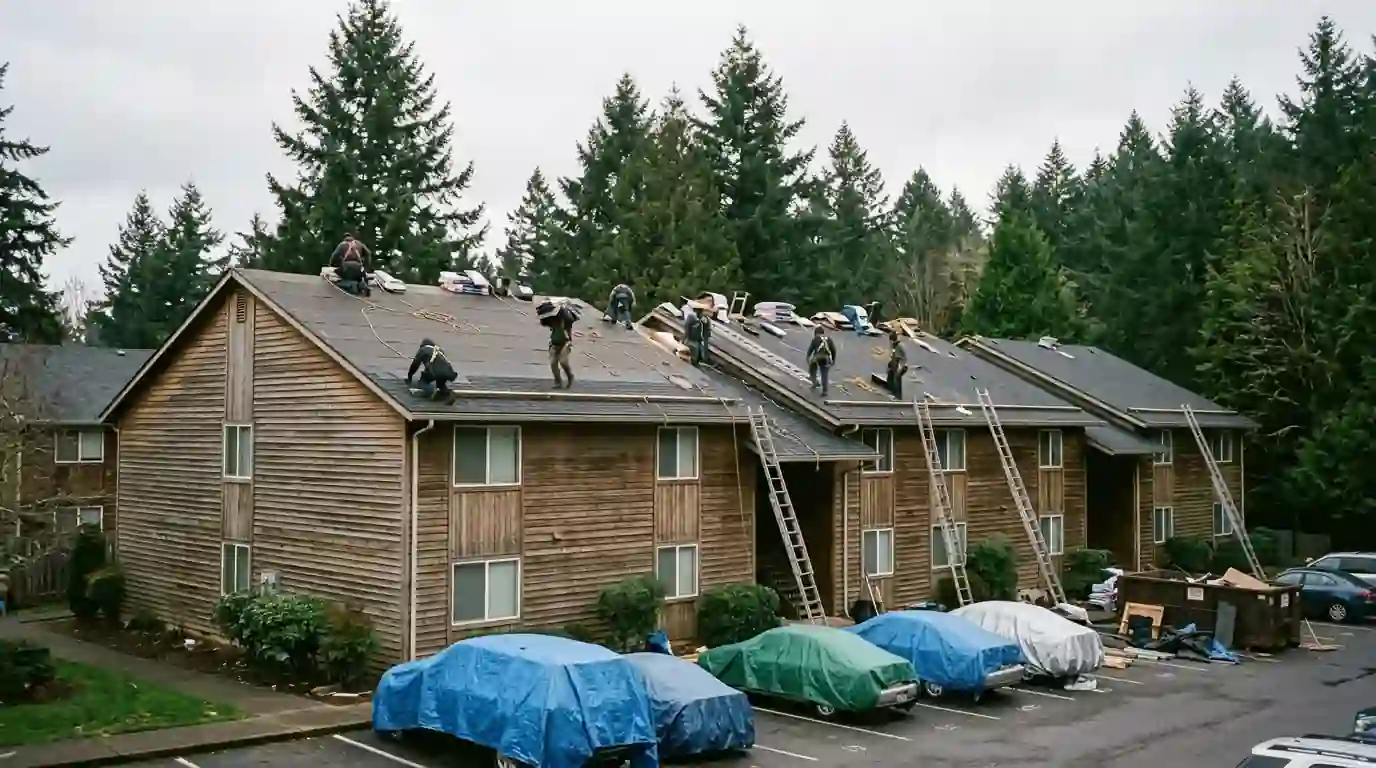
Multifamily roofing in Portland means repairing or replacing the roofs on apartments, condos, fourplexes and HOA communities while people live underneath. We scope each building, give owners and boards a written phasing plan, post tenant notices ahead of noisy days, protect cars and walkways, and dry in every section the same day. Most buildings get a mix of pitched shingle sections and low-slope membrane areas.
A roof over twelve units is a different job from a roof over one family. You have residents who work nights, cars parked tight against the building, a board or an owner who needs numbers before a meeting, and a dozen ceilings that can stain if one drain backs up. We plan apartment and condo roofing around all of that, so the work fits the building.
Portland's multifamily stock covers a wide range. There are 1910s brick walk-ups near downtown with flat roofs and parapet walls, 1960s and 1970s garden apartments with long gabled runs of shingles, and newer townhome rows on the east side with complicated valleys and dormers. Fourplexes and duplex conversions in older neighborhoods often have a pitched main roof with a low-slope porch or rear addition tied in.
We work for single owners, property managers and HOA boards. Some owners phase their buildings over several summers. Others need a repair plan to keep an aging roof tight until reserves catch up. In every case you get a written scope, photos of what we found, and a clear schedule you can hand to residents.
Which roofing system fits your building?
Most multifamily properties in the Portland area use one or more of these systems.
Architectural asphalt shingles
The common choice for garden apartments, townhomes and fourplexes with pitched roofs. Lines from GAF, Owens Corning and Malarkey hold up well in our rain, cost less per square than metal and are easy to repair one section at a time.
TPO single-ply membrane
A white membrane with heat-welded seams that works well on flat roofs over apartment blocks and mixed-use buildings. It reflects summer heat, handles foot traffic from HVAC service visits and gets mechanically fastened or adhered over new insulation board.
Modified bitumen or torch-down
A layered system with a granulated cap sheet that suits older brick buildings with parapets and lots of flashing details. It is tough around rooftop equipment and patches cleanly years later when a new vent or unit gets added.
Standing seam metal
A longer-lasting option for owners planning to hold a building for decades. Metal sheds needles and moss better than shingles, but it costs more up front and needs careful detailing around the many vents typical of multifamily roofs.
Is your apartment or condo roof telling you it needs attention?
These are the warnings we hear about most often from Portland managers and boards.
Repeat leak calls from top units
When the same third floor tenants keep reporting drips each November, patching one spot at a time usually costs more than fixing the cause, which is often worn flashing, a failed drain or tired membrane seams.
Ponding water on flat sections
Water that sits on a low-slope roof for more than two days after rain points to sagging decking, clogged drains or a scupper set too high. Standing water ages membranes fast and finds every weak seam.
Shingle granules collecting at downspouts
Piles of gritty granules at the base of downspouts mean the shingles are shedding their top layer. On a big complex that loss usually shows up first on the south and west slopes that take the most sun.
Moss mats across shaded buildings
Garden apartments with tall firs between buildings grow thick moss on north slopes. Once it lifts shingle edges, wind-driven rain gets underneath, and the problem repeats on every shaded roof in the complex.
Reserve study flags the roof
If your HOA reserve study lists the roof near the end of its service life, an independent condition report gives the board real numbers and photos before it sets assessments or picks a replacement year.
Stains around vents and penetrations
Each unit has its own bath fans, plumbing vents and sometimes dryer vents through the roof. Dozens of pipe boots and flashings mean dozens of chances for a slow leak to stain a ceiling.
How we keep residents dry while we work overhead
Walk the roof and the building
We go on every roof section, check reachable attics and talk with the manager about leak history, parking, access points and any residents with special needs. You get photos, measurements and notes on drains, flashing and decking condition.
Write a phased scope and schedule
Large buildings get split into sections that can be torn off and dried in during one working day. We lay out the order, the expected days for each section and what happens if rain moves in, so owners and boards can approve one clear plan.
Post tenant notices ahead of time
We supply notice text for the manager to post or deliver at least a few days before work starts, covering noise hours, which parking areas to clear, how to protect items in top floor closets and who to call with questions.
Protect cars, walkways and landscaping
We set the dumpster where it blocks the fewest spaces, tarp shrubs and patios, cover windows near the chute and run magnets across lawns and lots each evening so no stray roofing nails end up in tires or bare feet.
Tear off and dry in each section
Old roofing comes off only as far as we can cover that day. Damaged decking gets replaced, then ice and water shield, synthetic underlayment, new flashing and the finished roof go down, with low-slope areas getting membrane or modified bitumen.
Close out with photos and records
When the last section is done we walk it with the manager or board representative, hand over before and after photos, list materials used on each building and note anything we saw on gutters, siding or vents that should be planned for later.
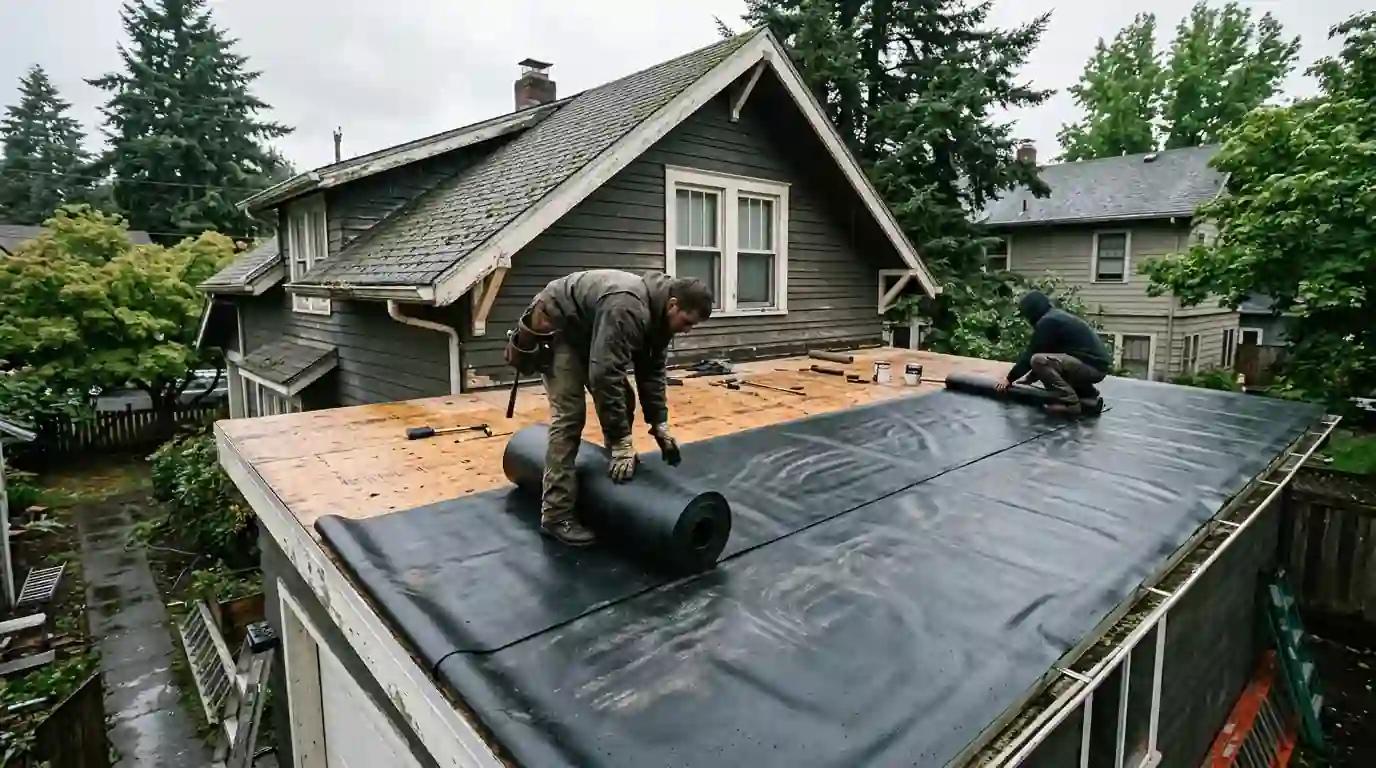
Materials for apartment & multifamily roofing come from manufacturers such as Malarkey, GAF, Owens Corning, CertainTeed, Carlisle and Velux, chosen for the job rather than the logo.
What does multifamily roofing cost in the Portland area?
Multifamily pricing depends heavily on building size, access and how many sections the work is split into. These figures reflect typical 2026 Portland metro jobs.
| Work | Typical Portland range |
|---|---|
| Fourplex shingle replacementper building | $27,860 to $46,320 |
| Garden apartment shingle replacementper sq ft | $6.85 to $10.40 |
| Flat roof TPO replacementper sq ft | $9.15 to $14.65 |
| Leak repair on a multifamily roofper repair | $485 to $1,935 |
| Condition report for an HOA or ownerper building | $395 to $1,280 |
Treat these figures as a budgeting guide only. Each building is priced after we walk its roofs and hand you a written estimate.
What moves the price:
- Number of buildings and roof sections
- Pitch, height and lift or crane access
- Decking replacement after tear-off
- Drain, scupper and parapet work
- Tenant protection and phasing needs
What Portland weather and building types mean for multifamily roofs
Our wet season runs roughly from October through May, so we try to schedule full replacements on large complexes between late spring and early fall. When a building cannot wait, we work in smaller sections and watch the forecast closely. Garden apartments in Gresham and Beaverton often sit under mature Douglas firs, which means heavy needle loads in gutters, moss on shaded slopes and valleys that clog by December.
Older brick and wood frame apartment buildings in Richmond, Irvington and St. Johns usually have flat roofs behind parapets, with internal drains or scuppers that clog with bigleaf maple leaves. Condo rows built in the last twenty years in Hillsboro and Happy Valley tend to have steeper pitches, more valleys and lots of roof penetrations. Each type needs a different crew setup, staging plan and material choice.
Why managers and boards bring us in for their buildings
Plans boards can actually vote on
You get a written scope per building, photos and a phasing schedule in plain language, so a board meeting can decide on facts instead of guesses and owners can see exactly what their assessment pays for.
Daily dry-in on every section
We never leave a tenant ceiling under open decking overnight. Each section is either finished or fully underlaid and sealed before the crew leaves, even when the weather turns.
One phone line around the clock
Managers and residents can call (503) 917-5484 any hour. If a storm hits mid project, we come back out to check temporary seals and drains rather than waiting for the next scheduled day.
Shingle and membrane work together
Many buildings mix pitched and low-slope roofs. We handle both, so the transition where a shingle roof meets a flat section gets detailed by the same people who installed each side.
Apartment & Multifamily Roofing questions from Portland homeowners
How much notice do Portland apartment tenants need before roof work starts?
We suggest giving residents at least several days of notice for a multifamily roofing job, and longer for big complexes. Your lease terms and Oregon landlord rules set the legal minimum, so check with your property manager or attorney. We provide notice text covering work hours, parking changes and what to move away from top floor walls.
Can you replace an HOA condo roof one building at a time?
Yes. Many Portland HOAs phase roof replacement over two or three seasons to spread out assessments. We write the full plan up front, price each building separately and keep the same materials and colors so the complex still matches when the last building is finished.
Do residents need to leave while you roof their apartment building?
Usually not. Residents stay home during multifamily roofing in Portland, but tear-off days are loud and can shake wall hangings. Top floor tenants should take down pictures and cover items in closets near the roof. People who work nights may want to plan around the noisiest days on the posted schedule.
How long does a fourplex roof replacement take in Portland?
Most fourplex roof replacements take two to four working days in dry weather, depending on pitch, layers to remove and how much decking needs replacing. Low-slope porch or rear additions add time. In the wet season we may stretch the job so every section is dried in before evening rain.
What do you check on a flat roof over a Portland apartment block?
On a flat apartment roof we check membrane seams, parapet caps and counterflashing, drains and scuppers, ponding areas, rooftop unit curbs and any soft decking. We also look at how needles and maple leaves collect, since clogged drains cause most of the flat roof leaks we see on older Portland buildings.
Can you help a Portland HOA plan its roof reserves?
We can give your HOA a condition report with photos, estimated remaining life for each roof and typical replacement ranges in current dollars. Your reserve specialist or accountant builds the actual study, but our findings give them real roof data instead of a generic age estimate.
Where we do this work most
We cover the whole metro. These are the places we are on roofs most often:
Related roofing services
Commercial Roofing
A commercial roof protects inventory, equipment, tenants and rent. We install new and replacement roofs on Portland warehouses, storefronts, offices...
Flat Roof Replacement
When a Portland flat roof has more patches than original membrane, it's time to start over. We strip it to the deck, fix the drainage and install a...
TPO Roofing
TPO is a single-ply membrane with seams welded by hot air instead of glued. On Portland low-slope roofs that sit wet for months, those fused seams...
Roof Inspection
A clear, photo-backed report on your Portland roof, for buying or selling a home, after a windstorm or before winter, with an honest read on how many...
Roof Maintenance
A regular tune-up keeps a Portland roof ahead of the rain. We clear debris, renew sealant, check every boot and flashing and flush gutters on a...
Need apartment & multifamily roofing in Portland?
Call and tell us what you are seeing. We answer 24/7 and can usually talk you through the next step on the first call.