Reroofing and chimney flashing for 1920s homes in Beaumont-Wilshire, Portland, OR 97213
Beaumont-Wilshire's 1920s Tudors, English cottages and Colonials have steep roofs, tall chimneys and complex valleys. We reroof them with the detail they need and fix the chimney and valley leaks that older work left behind.
Beaumont-Wilshire homes were mostly built in the 1920s and carry steep, cut-up roofs with multiple gables, valleys and tall brick chimneys. Those features are where leaks start. We replace failed valley metal and chimney flashing, clear moss from the shaded slopes, and when a roof is worn out, we tear off, rebuild the deck and reroof with proper ice and water shield in every valley.
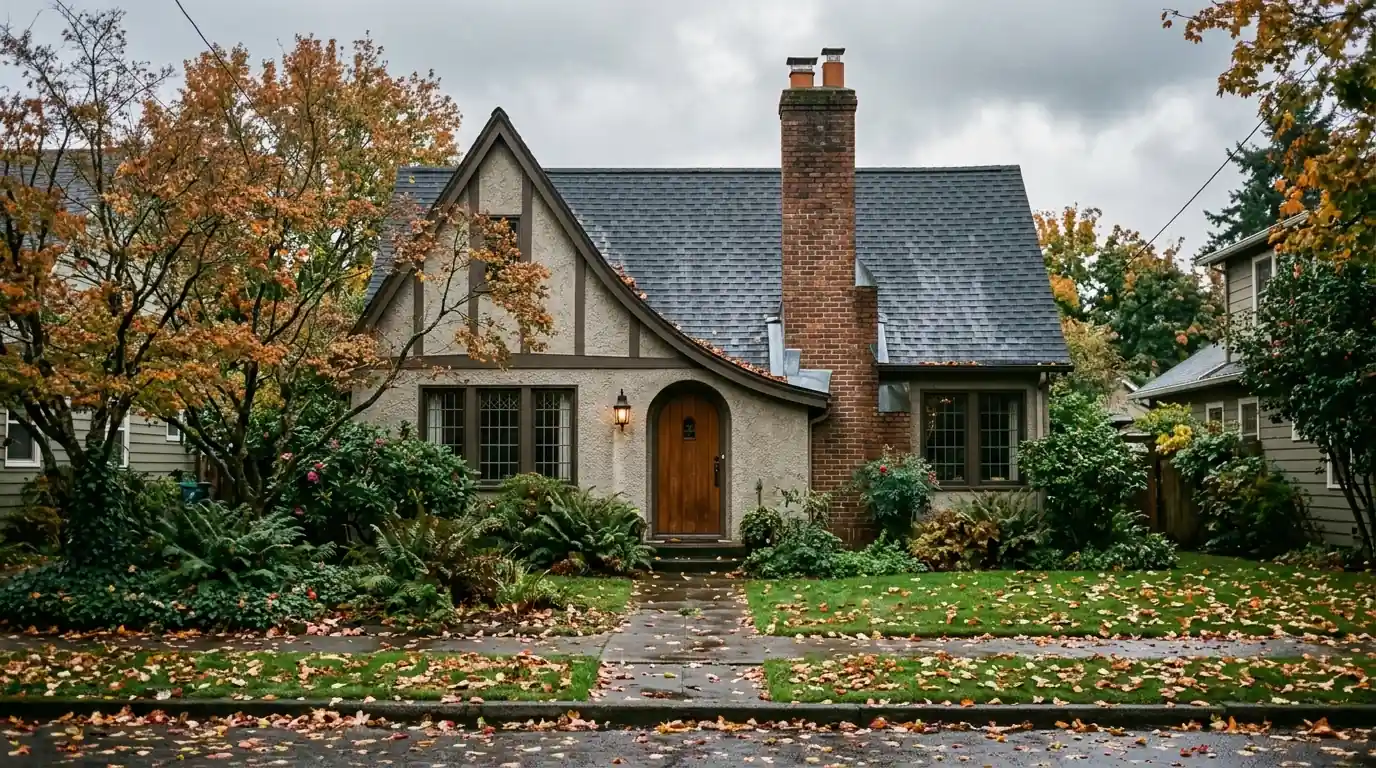
Beaumont-Wilshire spreads north from the Alameda Ridge, with the shops and cafes of NE Fremont Street running through the middle and Wilshire Park anchoring the northeast corner. Most of the homes went up during the building boom of the 1920s, and they show it: English cottage and Tudor Revival houses with steep front gables, Dutch Colonials with gambrel roofs, and Craftsman bungalows on the flatter blocks to the north.
These are handsome roofs, but they're also some of the more complicated ones in Northeast Portland. A single Tudor might have five or six valleys, an eyebrow or arched entry roof, and a chimney rising through the steepest slope. We plan each job around those details, give you a written estimate, and answer the phone 24/7 at (503) 917-5484.
Why are Beaumont-Wilshire roofs harder to get right?
Along the ridge and the streets just north of it, the English cottage style dominates. Roof pitches of 10 in 12 or steeper are common, with cross gables meeting in closed valleys and front gables that sweep low over an arched door. Some of these houses still have the look of a rolled eave from their original cedar or composition design. Every one of those shapes needs flashing and underlayment done by hand, and shortcuts from past reroofs show up as stained plaster below the valleys.
Closer to Wilshire Park and the north edge of the neighborhood, the homes shift toward bungalows and Colonials with simpler gables but large brick chimneys. Big street trees and the park's firs drop needles into valleys and gutters every fall. Because the ridge slopes, some homes sit higher than their neighbors and take the full force of winter storms, while others stay shaded and grow thick moss on the north side.
Which roof problems do we fix most in Beaumont-Wilshire?
Worn closed valleys on steep roofs
Valleys carry the most water on a cut-up Tudor roof. When old shingles were woven without metal or ice and water shield underneath, the valley wears through first. We rebuild valleys with membrane and open metal where the design allows.
Tall chimneys with tired flashing
Steep pitches mean chimney flashing has to climb higher and work harder. We replace step flashing, cut new counterflashing into the mortar, and build a cricket on the uphill side so water and needles don't pile up behind the brick.
Moss on shaded steep slopes
Steep north slopes under neighboring trees grow moss fast. Scraping it off by hand tears shingles. We soft wash with a low-pressure treatment, clear the valleys and gutters, and add zinc strips to slow it from coming back.
Plaster ceiling stains under valleys
Lath and plaster ceilings in these homes show water quickly and hide where it started. We trace the path from the stain back up through the attic to the real entry point before we replace anything.
Storm exposure on the ridge edge
Homes on the Alameda Ridge edge catch strong winter winds. Shingles nailed too high or with old adhesive strips lift and crease. We reseal or replace loose tabs and use a proper nailing pattern on any new work.
Roofing services in Beaumont-Wilshire
Beaumont-Wilshire's steep 1920s roofs keep us busiest with reroofs, flashing work and moss control, plus synthetic slate for owners who want a period look.
Roof Replacement
When patches stop holding and the shingles are bare, curling or shedding granules, a full reroof is the smarter spend. We replace Portland roofs from...
Chimney Flashing Repair
Portland's old brick chimneys are the single most common leak point we see. Proper chimney flashing uses two layers of metal, one woven into the...
Roof Flashing Repair
Most roof leaks in Portland start at a joint, not in the open field of shingles. Flashing at dormers, sidewalls, valleys and roof edges is where...
Roof Moss Removal
Moss on a Portland roof is almost a given under the firs. We take it off by hand and brush, treat what is left and add zinc so it grows back slower.
Roof Leak Repair
A stain on a Portland ceiling is rarely under the hole that caused it. We trace the water back along rafters and decking to the true entry point...
Synthetic Slate & Shake Roofing
Want the look of slate or cedar without the weight, the splitting or the yearly moss fight? Composite slate and shake give Portland homes that...
Gutter Guards
Not every gutter guard can stop Douglas fir needles. We fit Portland homes with guards matched to the trees overhead, so gutters keep flowing through...
Wind & Storm Damage Repair
After an east wind event or a Portland ice storm, the damage on a roof is often subtle: creased tabs, broken seal strips and loose ridge caps that...
How we handle a steep Beaumont-Wilshire roof
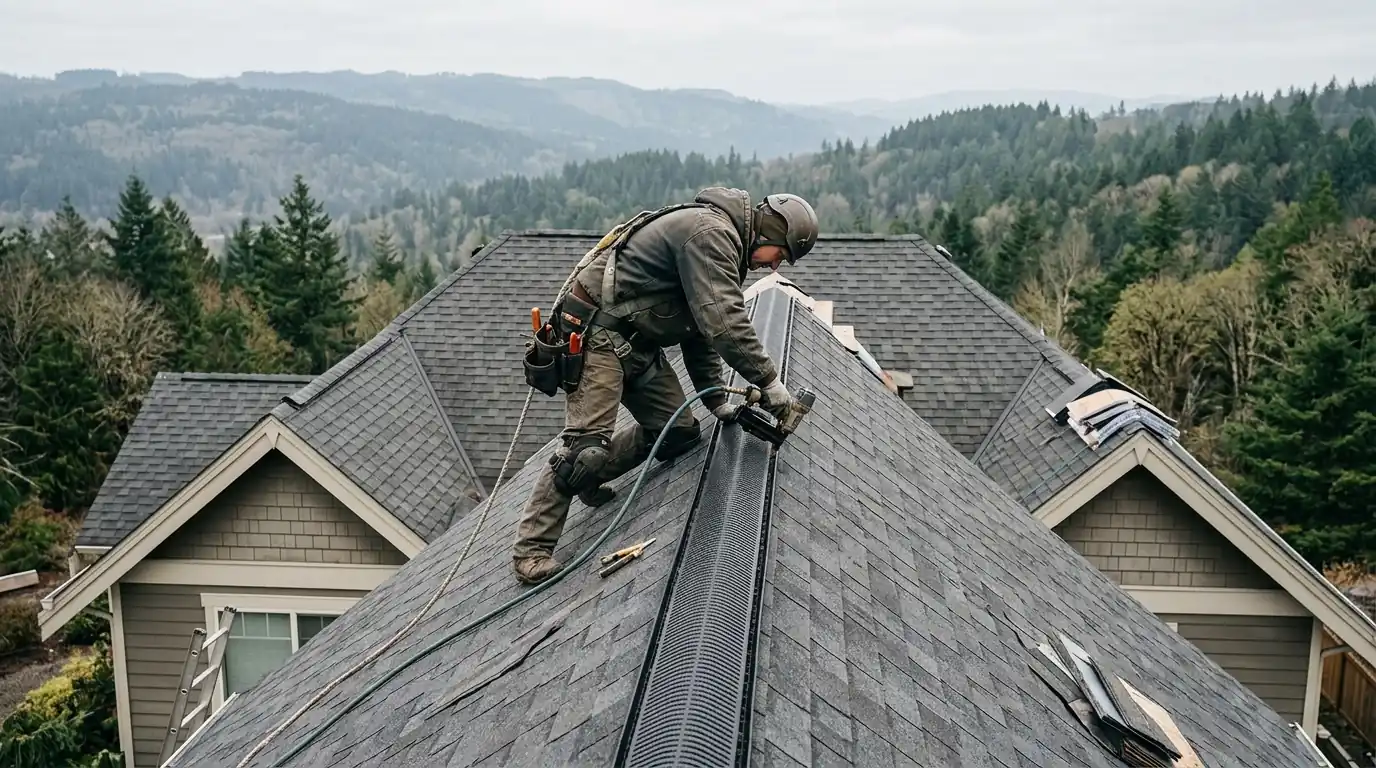
Steep pitches here mean we use roof jacks, toe boards and fall protection on nearly every job, and that setup is part of the estimate from the start. Some homes on the ridge have terraced front yards and steps up from the street, so we stage materials carefully and protect masonry, plantings and walkways. On reroofs we keep a tarp ready on each open section and dry it in before the end of the day. You'll see photos of the valleys and chimney before and after.
Roofing questions from Beaumont-Wilshire
What roofing material suits a 1920s Tudor in Beaumont-Wilshire?
Many Beaumont-Wilshire owners choose a heavy architectural shingle in a dark or weathered color, which suits the steep Tudor lines. Others go with synthetic slate, such as DaVinci, for a more period look without the weight of real slate. We'll show you samples against your house and price both options.
Why does my Beaumont-Wilshire ceiling leak under a valley?
On the steep, cut-up roofs in Beaumont-Wilshire, valleys carry a lot of water from two slopes at once. If the original valley had no metal or membrane underneath, or the shingles have worn thin, water gets through during long rains. Rebuilding the valley with ice and water shield usually stops it.
How long does a reroof take on a steep Beaumont-Wilshire home?
Most Beaumont-Wilshire reroofs take three to five working days because steep pitches need full safety setups and the many valleys and chimneys take hand work. Larger homes with lots of gables or deck repair can take a bit longer. We dry in every section the same day it's opened.
Nearby places we roof
Roof trouble in Beaumont-Wilshire?
Call and describe what you are seeing. We answer 24/7 and send a roofer as soon as one is free.