Attic and roof ventilation for Portland homes
Damp attics are common in Portland winters. We balance soffit intake with ridge or roof exhaust so moist air leaves the attic before it condenses on cold decking and grows mold.
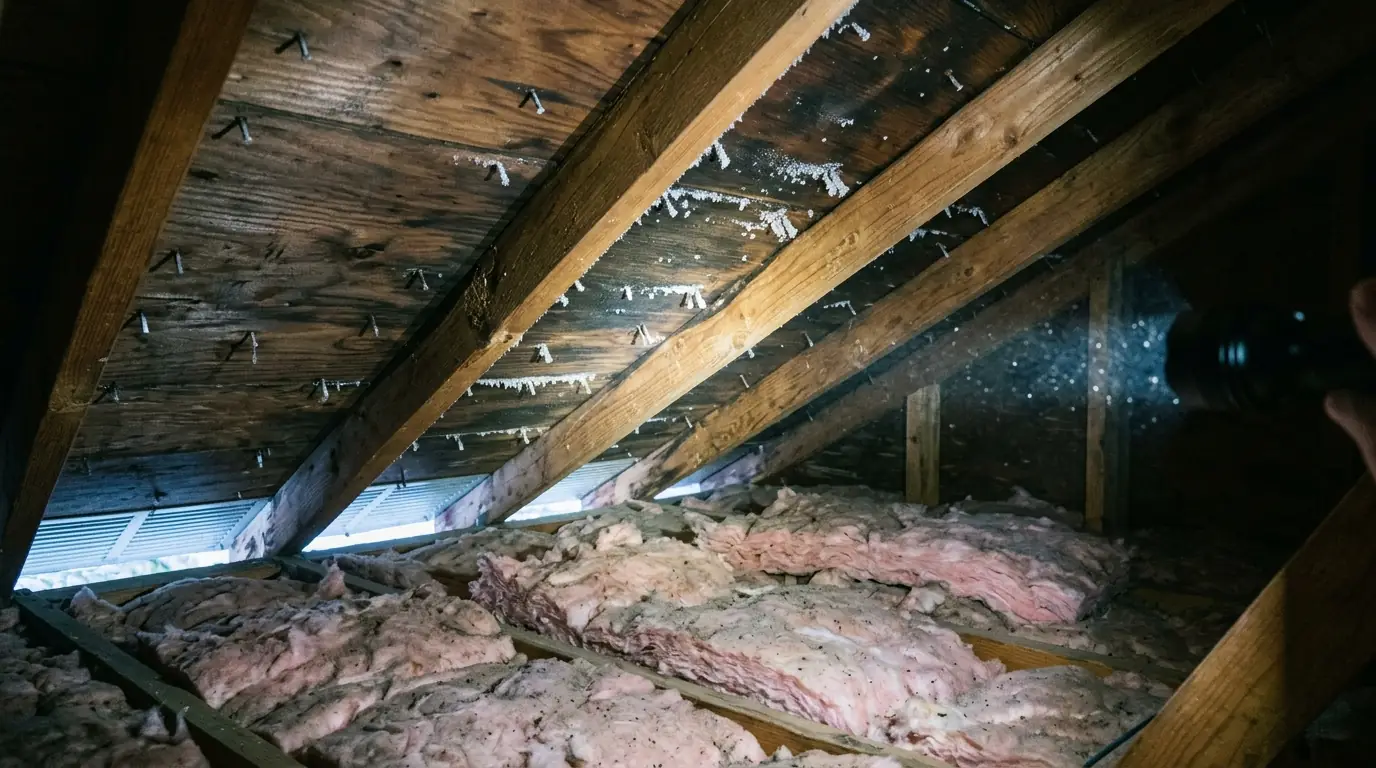
Attic ventilation in Portland works by pulling cool, dry outside air in at the soffits and letting warm, moist air out near the ridge. When intake and exhaust are out of balance or blocked, moisture from the house condenses on the cold underside of the roof deck in winter, causing dripping nails, dark staining and mold. Fixing it usually means clearing or adding soffit vents and installing ridge vent.
Every home pushes moisture into the attic. Showers, cooking, breathing and drying clothes all add water vapor to indoor air, and some of it leaks up through ceiling gaps and light fixtures. In a well ventilated attic, that moist air keeps moving and leaves through the roof vents. In a poorly ventilated one, it hangs around and finds the coldest surface it can.
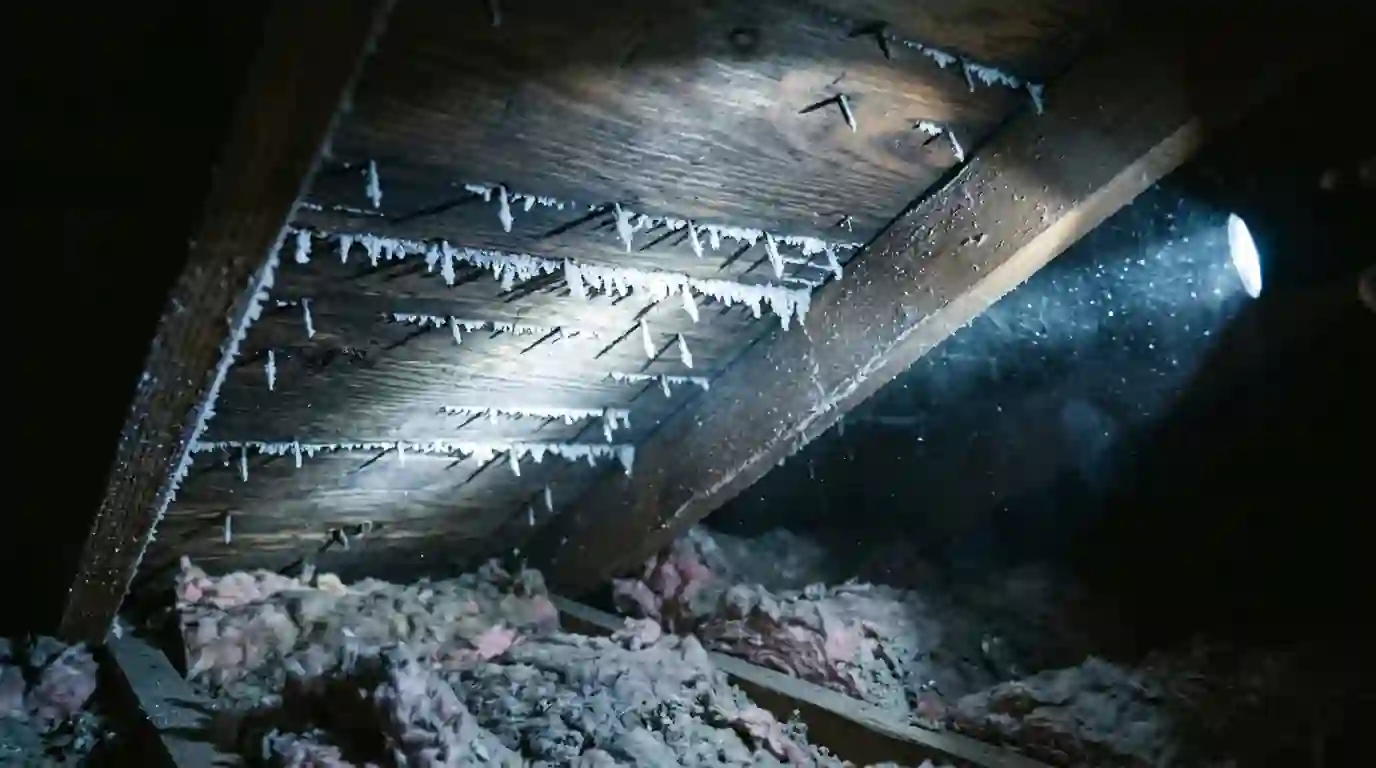
During a Portland cold snap, that surface is the underside of the roof sheathing. Water vapor condenses into frost or droplets on the plywood and the nail tips. When the weather warms, it drips onto insulation and ceilings, and owners think the roof is leaking when it is really the attic sweating. Over a few winters, the decking darkens and mold spreads.
We fix ventilation by looking at the attic as a system. Intake at the eaves has to match exhaust near the ridge, air needs a clear path between them, and bath fans need to vent outside. Getting those three right does more than any single vent ever could. It also protects the shingles, which age faster when the deck below them stays damp all winter.
Is your attic holding too much moisture?
These are the most common signs of poor ventilation we see in Portland attics.
Frost or droplets on nail tips
On cold mornings, look at the nails poking through the roof deck. White frost or water beads on the tips mean warm, moist air is reaching the cold sheathing and condensing there.
Dark staining on roof sheathing
Gray or black patches on the underside of the decking, often heaviest on the north slope, are a sign of repeated condensation and mold growth. Fresh plywood should look light and dry.
Ceiling spots that appear after cold snaps
Stains that show up after a freeze and thaw, not after heavy rain, often come from attic condensation dripping onto insulation rather than from a roof leak.
Musty smell in upper rooms
A damp, earthy odor in upstairs bedrooms or closets can come from moisture and mold in the attic above. It usually gets worse in late winter and early spring.
Shingles wearing fast or curling
Trapped heat in summer and moisture in winter both age shingles from below. Curling, blistering or premature granule loss on an otherwise young roof can point to poor attic airflow.
Bath fans that vent into the attic
Older and remodeled homes often have bath fan ducts that end in the attic or under a soffit instead of outdoors. That dumps steam straight into the space you need to keep dry.
How much does roof ventilation work cost in Portland?
Ventilation pricing depends on the attic size, roof shape and how much of the system needs to change. These numbers reflect recent Portland metro jobs.
| Work | Typical Portland range |
|---|---|
| Ridge vent installationper roof | $485 to $1,135 |
| Soffit vents added or cleared, with bafflesper home | $415 to $1,265 |
| Box vent installationper vent | $165 to $335 |
| Bath fan rerouted through roofper fan | $335 to $715 |
| Full attic ventilation upgradeper home | $1,385 to $3,240 |
Every attic is different, so these numbers are a general guide only. You get a firm price after we inspect the attic and roof and write an estimate.
What moves the price:
- Attic size and access
- Roof shape and ridge length
- Number of soffit vents needed
- Fan ducts to reroute
- Mold cleanup or decking repair
How we balance airflow from soffit to ridge
Inspect the attic and roof
We go into the attic to check for frost marks, mold, wet insulation and blocked soffits, then measure the attic floor area. On the roof we note existing vents, their type and their condition.
Calculate intake and exhaust needs
Using the attic floor area, we figure how much net open vent area the attic needs and split it between intake at the eaves and exhaust near the ridge, with slightly more intake than exhaust.
Open up or add soffit intake
Many Portland attics have soffit vents covered by insulation or painted shut. We clear them, add baffles so air can pass over the insulation and cut in new soffit vents where there are not enough.
Install ridge or roof exhaust
Where the roof has a usable ridge, we cut the decking back and install a shingle-over ridge vent. Hip roofs and short ridges may get low profile box vents instead, placed near the top of the slope.
Remove conflicting vents
Mixing ridge vents with gable vents or powered fans can short-circuit airflow so the eaves never pull air. We close off conflicting vents and patch the roof so one clear path remains.
Reroute bath and kitchen fans
Fan ducts that end in the attic get extended through the roof or a wall with a proper hood and damper, using insulated duct so moist air does not condense inside the pipe.
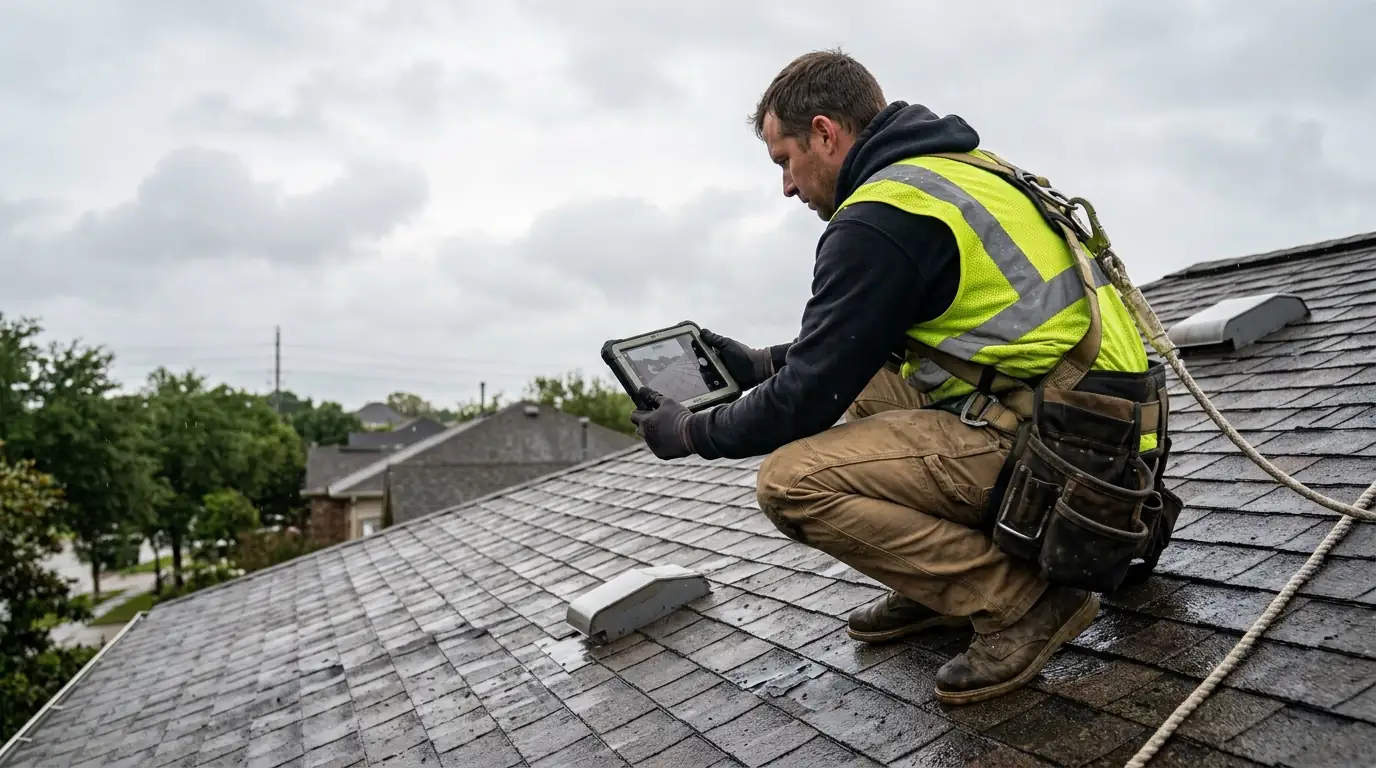
Materials for attic & roof ventilation come from manufacturers such as Malarkey, GAF, Owens Corning, CertainTeed, Carlisle and Velux, chosen for the job rather than the logo.
Which vent setup suits your roof?
We pick vent types based on roof shape, attic layout and existing openings.
Continuous soffit intake
A strip vent or perforated soffit panel running along the eaves. It supplies even intake along the whole roof edge and pairs best with ridge vent, but needs baffles above it so insulation does not block the flow.
Shingle-over ridge vent
A low vent along the peak, capped with ridge shingles so it blends in. It lets warm air escape along the full ridge and is the most effective exhaust for gable roofs with a long ridge line.
Low profile box vents
Square vents installed near the top of the roof. They work on hip roofs and roofs with short ridges where ridge vent does not fit, and several are spaced to give enough exhaust area.
Gable end vents
Louvers in the gable walls, common on older Portland homes. They can work alone on simple attics, but should not be mixed with ridge vent, so we often close them when adding ridge exhaust.
Why Portland winters are hard on poorly vented attics
Portland winters are mild but long and damp. Outdoor air is often near saturation from November through March, and when a clear night drops temperatures below freezing, the roof deck cools fast. Warm indoor air leaking into the attic hits that cold plywood and condenses. We see this most on north slopes, where the sun never dries the decking out between cold snaps.
Older homes in Eastmoreland and Mount Tabor often have tiny soffit vents or none at all, plus gable vents that cannot move enough air. Newer homes in Hillsboro and Wilsonville may have plenty of vents on paper but soffits buried under blown-in insulation. Both end up with damp attics and mold on the sheathing, just for different reasons.
Why our ventilation fixes solve the moisture problem
We start in the attic
We look at frost marks, stains and blocked soffits before recommending anything, so you get the vents your attic actually needs instead of a standard add-on.
Intake and exhaust sized together
Adding exhaust without intake can pull warm air from the house into the attic. We size both and keep the airflow path clear from soffit to ridge.
Roof and attic work in one visit
Cutting ridge vent, patching old vent holes, rerouting fans and setting baffles all happen together, so the roof stays tight and the attic gets a complete fix.
Attic & Roof Ventilation questions from Portland homeowners
Why is my Portland attic wet in winter when the roof does not leak?
Usually it is condensation. Warm, moist air from the house rises into the attic and condenses on the cold roof deck during Portland cold snaps. Without enough intake and exhaust ventilation, the moisture stays and drips onto insulation, stains ceilings and grows mold on the sheathing.
How much attic ventilation does a Portland home need?
A common guideline is one square foot of net open vent area for every 150 square feet of attic floor, or one per 300 with a good vapor retarder, split between intake and exhaust. We measure your attic and check local building rules before recommending vent sizes.
Can I mix ridge vents and gable vents on my Portland home?
It is generally best not to. When a ridge vent and gable vents are both open, air can enter one gable and exit the ridge without pulling air from the soffits, leaving the lower attic stagnant. We usually close gable vents when installing ridge vent with proper soffit intake.
Will better roof ventilation stop mold in my Portland attic?
Balanced ventilation, air sealing and venting bath fans outside remove the conditions mold needs. Existing mold on the sheathing may still need cleaning or treatment, and badly damaged decking may need replacing. Ventilation keeps it from coming back.
Does attic ventilation help shingles last longer in Portland?
Yes. Good airflow keeps the deck drier in winter and cooler in summer, which reduces shingle blistering, curling and rot from below. Many shingle manufacturers also list proper attic ventilation as part of their installation requirements.
Where we do this work most
We cover the whole metro. These are the places we are on roofs most often:
Related roofing services
Attic Insulation
Thin or settled insulation lets heat slip out of Portland homes all winter. We air seal the attic floor, set baffles at the eaves and blow in an...
Roof Inspection
A clear, photo-backed report on your Portland roof, for buying or selling a home, after a windstorm or before winter, with an honest read on how many...
Dry Rot & Roof Deck Repair
A soft spot underfoot on the roof or a sag you can see from the street points to rotted sheathing below the shingles. We open Portland roofs, remove...
Pipe Boot & Vent Repair
The rubber collar around a plumbing vent is often the first part of a Portland roof to fail, usually years before the shingles. Replacing a cracked...
Roof Replacement
When patches stop holding and the shingles are bare, curling or shedding granules, a full reroof is the smarter spend. We replace Portland roofs from...
Need attic & roof ventilation in Portland?
Call and tell us what you are seeing. We answer 24/7 and can usually talk you through the next step on the first call.