EPDM rubber roofing for Portland flat roofs
EPDM is the black rubber sheet on thousands of Portland garages, dormers and additions. We install new fully adhered rubber roofs and repair the seams and edges on older ones.
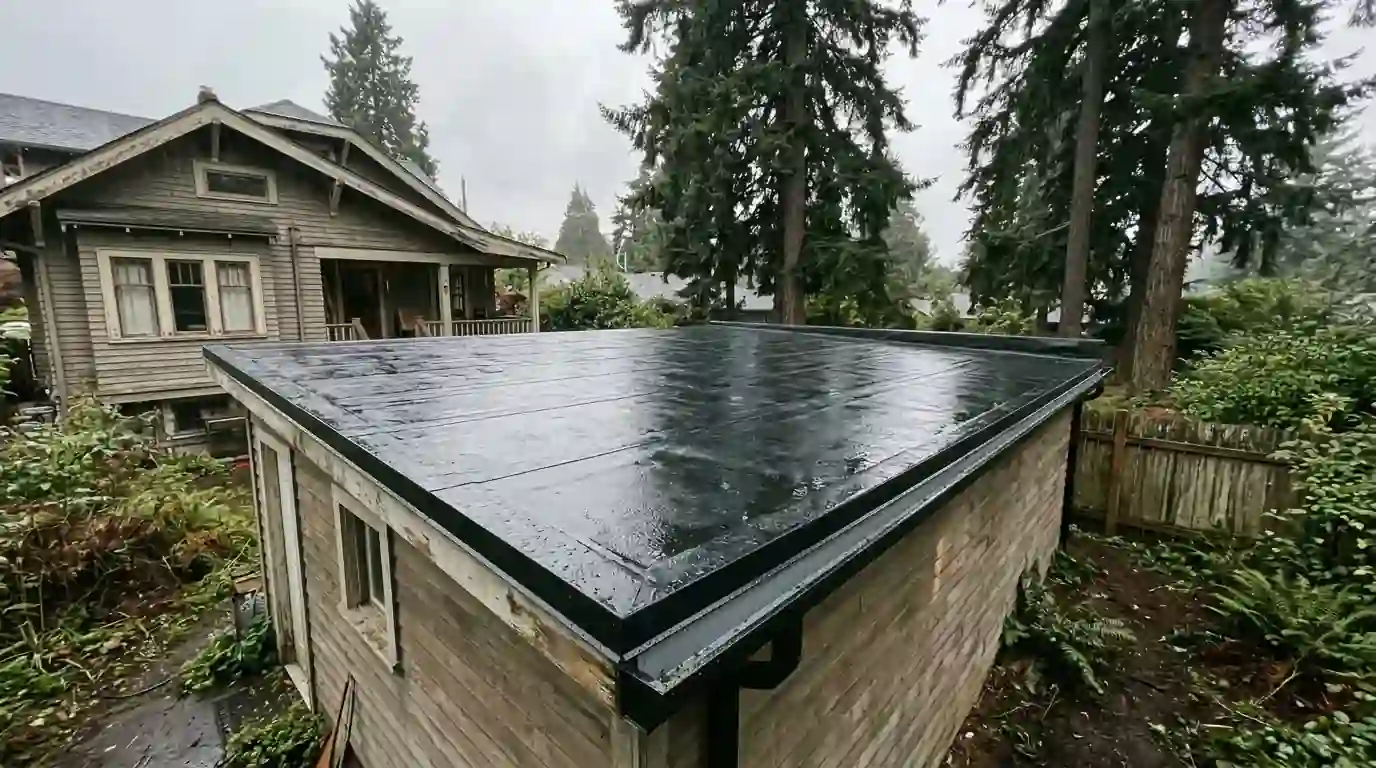
EPDM rubber roofing in Portland typically costs $8.90 to $13.60 per square foot for a new fully adhered roof with tear-off, and $385 to $1,270 for most seam and flashing repairs. EPDM is a synthetic rubber membrane, usually 60 mil, that stays flexible in cold weather and can often be installed in one piece on small roofs, which leaves no field seams to fail.
EPDM has been around since the 1960s, and you can see why on small Portland roofs. A single sheet can often cover a whole garage, shed dormer or rear addition without one seam in the middle. It doesn't crack in a January freeze, it shrugs off ponding, and it's easy to repair years later because rubber bonds well to rubber with the right primer and tape.
Where EPDM goes wrong is at its edges and seams. Older roofs were often glued with contact cement that has long since dried out, or ballasted loosely with the edges barely secured. We install new EPDM fully adhered to a cover board with taped seams and termination bars at walls, and we repair aging rubber roofs by cleaning, priming and taping problem areas rather than smearing sealant on them.
Which EPDM system is right for your roof?
EPDM comes in different thicknesses and attachment methods, and the right choice depends on the roof size and use.
60 mil fully adhered
Our standard for homes and small buildings. Glued to a cover board, so it won't flutter in wind or shift over time. Seams are taped and edges terminated with metal.
90 mil heavy duty EPDM
A thicker sheet for roofs with regular foot traffic, roof decks or exposure to falling branches. More puncture resistant, slightly higher material cost, and very durable in our climate.
Single sheet installation
On roofs small enough, we install one piece with no field seams at all. Garages, dormers and porches often qualify, which removes the most common failure point entirely.
EPDM under a roof deck
Rubber membrane under pedestals and deck tiles or sleepers. The deck surface protects the rubber from sun and traffic, and the membrane can be reached for repairs by lifting deck sections.
What problems show up on older EPDM roofs?
Rubber roofs fail in predictable places, and most of these are easy to see on a quick roof check.
Seams peeling apart
Old contact cement seams lose grip and open up, especially at the ends of laps. You may see a dark line where the top sheet has lifted, and wind gradually pulls it farther open.
Membrane pulling from edges
EPDM shrinks a little over time. On older roofs it pulls away from walls and drip edges, stretching the flashing until it tears or leaves a gap where the membrane meets the wall.
Bridging at inside corners
When rubber shrinks across the angle where a roof meets a wall, it spans the corner instead of lying flat. Those taut bridges tear easily when someone steps on them.
Punctures from branches or tools
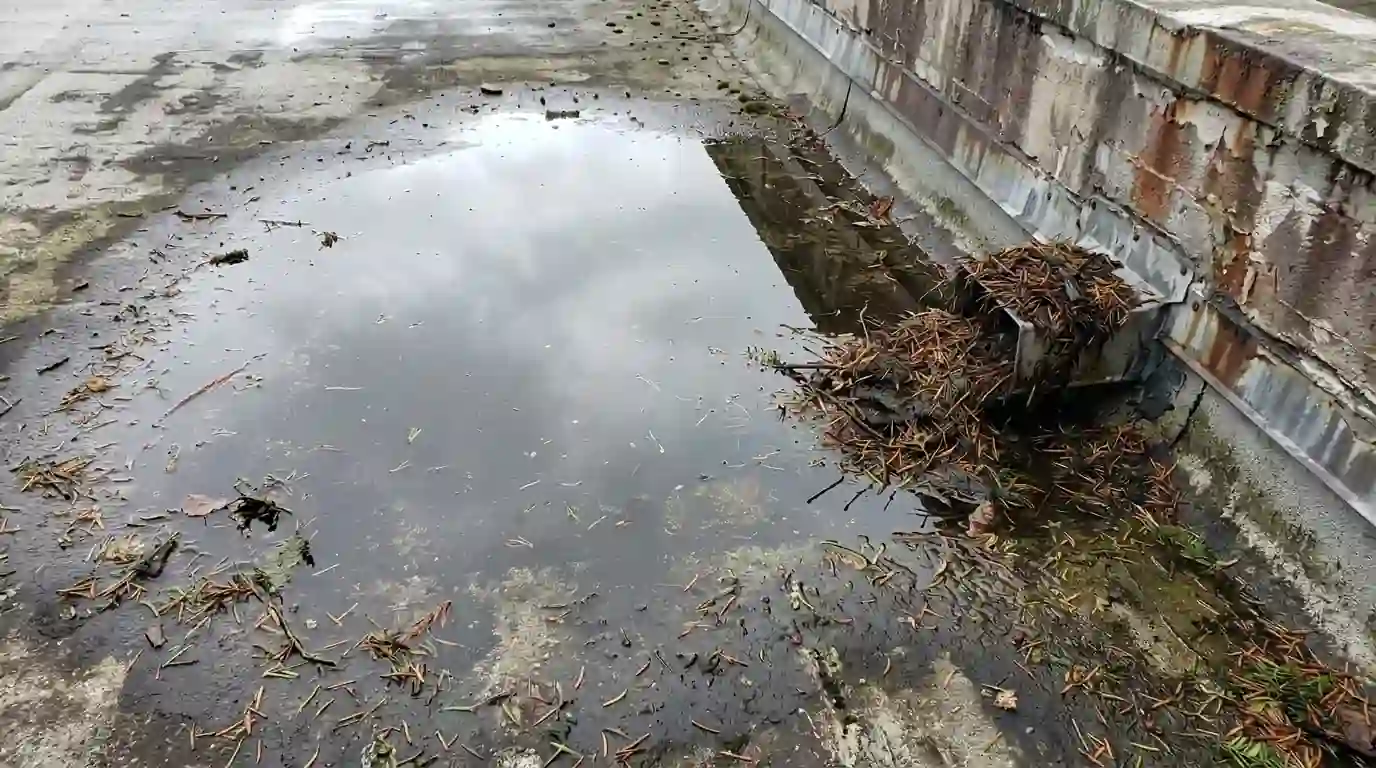
Falling fir limbs, dropped tools and sharp debris can pierce the sheet. A small hole near a drain can leak for months before a stain appears inside.
Chalky, crazed surface
Decades of sun leave EPDM chalky and finely cracked on top. The sheet may still be watertight, but it signals the roof is nearing the end of its useful life.
How we install EPDM so the edges and seams hold
Strip to a sound deck
Old rubber, adhesive and any wet insulation come off. We repair the deck and install insulation or a cover board, which gives the new membrane a clean, uniform surface to bond to.
Relax the sheet first
EPDM is unrolled and left to relax for about half an hour so wrinkles flatten and the sheet settles before gluing. Skipping this step leads to ripples and stress at corners later.
Fully adhere the field
Half the sheet is folded back, bonding adhesive goes on both the board and the rubber, and the sheet is rolled into place. Then the other half gets the same treatment.
Tape every seam
Seam areas are cleaned and primed, then joined with factory seam tape and rolled with a hand roller. Seam ends and T-joints get cover strips and lap sealant at the edges.
Terminate at walls and edges
Wall flashing runs up under siding or counterflashing, with a termination bar screwed along the top edge. At the roof edge, new drip edge metal and cover tape seal the membrane to the trim.
Boot and seal penetrations
Pipes get molded EPDM boots, and vents and skylights get curb flashing with inside and outside corners. We check every lap and seal before calling the roof done.
Materials for epdm rubber roofing come from manufacturers such as Malarkey, GAF, Owens Corning, CertainTeed, Carlisle and Velux, chosen for the job rather than the logo.
What does EPDM roofing cost in Portland in 2026?
These are typical installed ranges for EPDM in the Portland metro. Small roofs cost more per square foot because setup and edge work take the same effort.
| Work | Typical Portland range |
|---|---|
| 60 mil EPDM, tear-off and newper sq ft | $8.90 to $13.60 |
| 90 mil heavy duty EPDMper sq ft | $10.30 to $15.20 |
| Garage or dormer roof, smallper roof | $2,470 to $5,180 |
| Seam and flashing repairper repair | $385 to $1,270 |
| Wall termination and edge rebuildper linear ft | $27.60 to $44.30 |
These are typical Portland ranges, not a quote. Your actual price comes after we see the roof in person and put the estimate in writing.
What moves the price:
- Sheet thickness
- Roof size and seams needed
- Tear-off and deck repair
- Walls, curbs and penetrations
- Roof deck above membrane
- Access and height
Where EPDM works best around Portland
EPDM is common on detached garages, shed dormers and low-slope rear additions across older east side neighborhoods. In Woodstock, Concordia and Mount Tabor, we often find rubber roofs from the 1980s and 1990s with seams that have been tarred over several times. The cool, damp climate is actually kind to rubber itself; it's the old adhesives and loose edges that give out.
EPDM is also a good fit under roof decks and on low roofs that see foot traffic, because it flexes rather than cracking. On homes near Forest Park and in the West Hills, fir branches drop on roofs every winter, and rubber takes those hits better than some thinner membranes. Keeping the drains clear and checking for punctures each fall goes a long way.
Why our EPDM roofs keep their edges tight
Taped seams, not old cement
We use primer and factory seam tape on every joint. Taped seams outlast the contact cement used on many older Portland rubber roofs by a wide margin.
Termination bars at walls
Metal termination bars hold the flashing edge firmly so the rubber can't pull away from the wall as it ages. It's a small detail that prevents a common failure.
Repairs that bond properly
When we fix older rubber, we clean and prime the area and use compatible tape and patches. Roof cement and caulk don't bond to EPDM and simply peel off.
EPDM Rubber Roofing questions from Portland homeowners
How long does EPDM rubber roofing last in Portland?
A fully adhered 60 mil EPDM roof commonly lasts 25 to 30 years in Portland, and heavier sheets can go longer. Our cool climate is easy on rubber. Seams and edges are where problems start, which is why we use taped seams and termination bars on every new roof.
Can an old EPDM roof in Portland be patched?
Yes, in most cases. We clean the rubber, apply primer, and add EPDM patches or seam tape over the problem. That bonds well even to older rubber. If the membrane has shrunk badly from the walls or has many open seams, replacement makes more sense.
Is EPDM a good choice for a Portland garage roof?
It's one of the best. Most garage roofs are small enough for a single sheet with no field seams, EPDM handles ponding and freezing temperatures well, and it's easy to repair. We often install 60 mil fully adhered rubber on detached garages across the east side.
Why is my black EPDM roof in Portland so hot in summer?
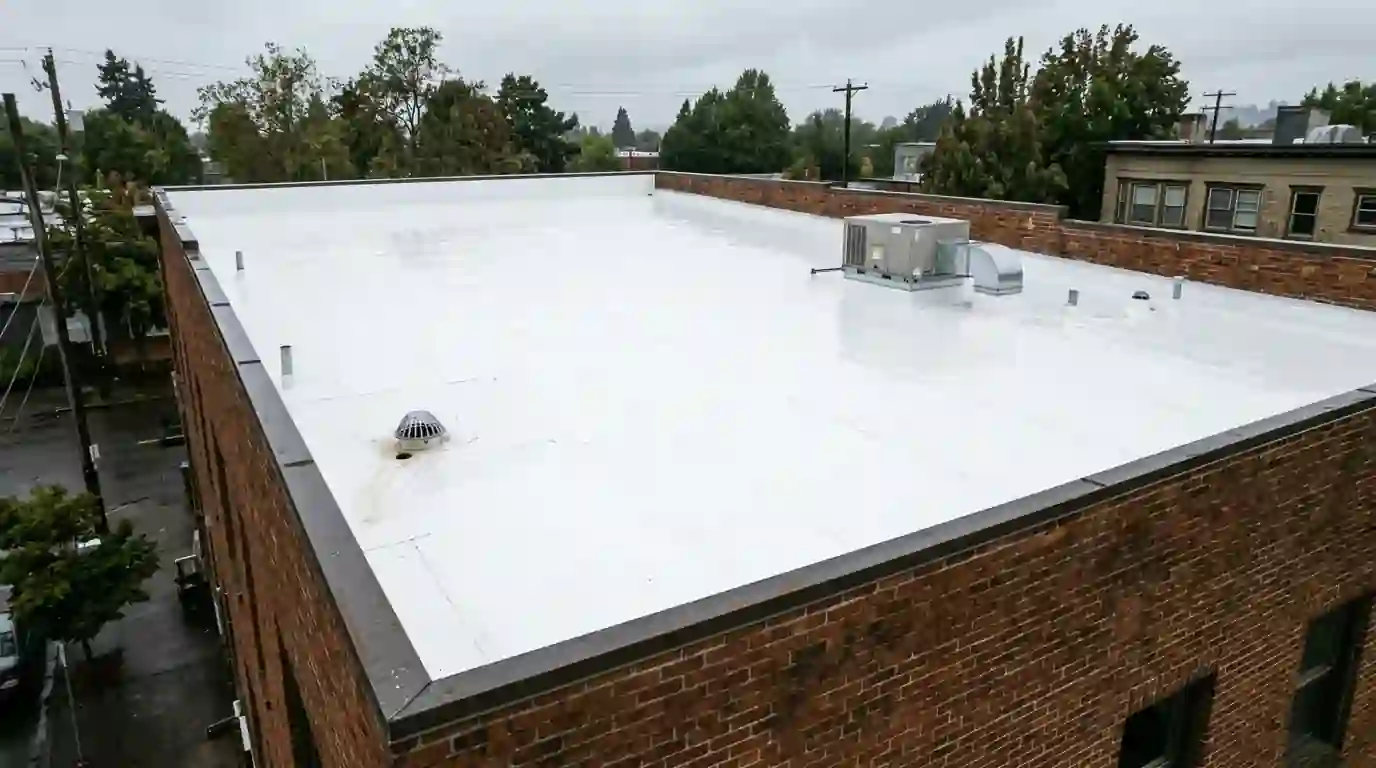
Black rubber absorbs sunlight, so the roof surface can get very warm on August afternoons. That matters most when living space sits right below. If heat is a concern, adding insulation during replacement or choosing white TPO instead are both options we can walk you through.
Can I use roof cement to fix a leak on my Portland EPDM roof?
Asphalt roof cement doesn't bond to EPDM and can even soften the rubber over time. It may stop a drip for a few weeks, then peel away. A proper repair uses EPDM primer, seam tape or a rubber patch rolled into place.
Where we do this work most
We cover the whole metro. These are the places we are on roofs most often:
Related roofing services
Flat Roof Repair
Low-slope roofs in Portland hold water for months at a time. We find where it's getting in, repair the membrane, seams and drains, and get your flat...
Flat Roof Replacement
When a Portland flat roof has more patches than original membrane, it's time to start over. We strip it to the deck, fix the drainage and install a...
TPO Roofing
TPO is a single-ply membrane with seams welded by hot air instead of glued. On Portland low-slope roofs that sit wet for months, those fused seams...
Dry Rot & Roof Deck Repair
A soft spot underfoot on the roof or a sag you can see from the street points to rotted sheathing below the shingles. We open Portland roofs, remove...
Roof Maintenance
A regular tune-up keeps a Portland roof ahead of the rain. We clear debris, renew sealant, check every boot and flashing and flush gutters on a...
Need epdm rubber roofing in Portland?
Call and tell us what you are seeing. We answer 24/7 and can usually talk you through the next step on the first call.