Emergency roof tarping in Portland to keep the rain out
When a Portland roof has a hole too big to fix that night, a properly anchored tarp keeps rain out of the house for weeks while repairs, insurance and materials get sorted out.
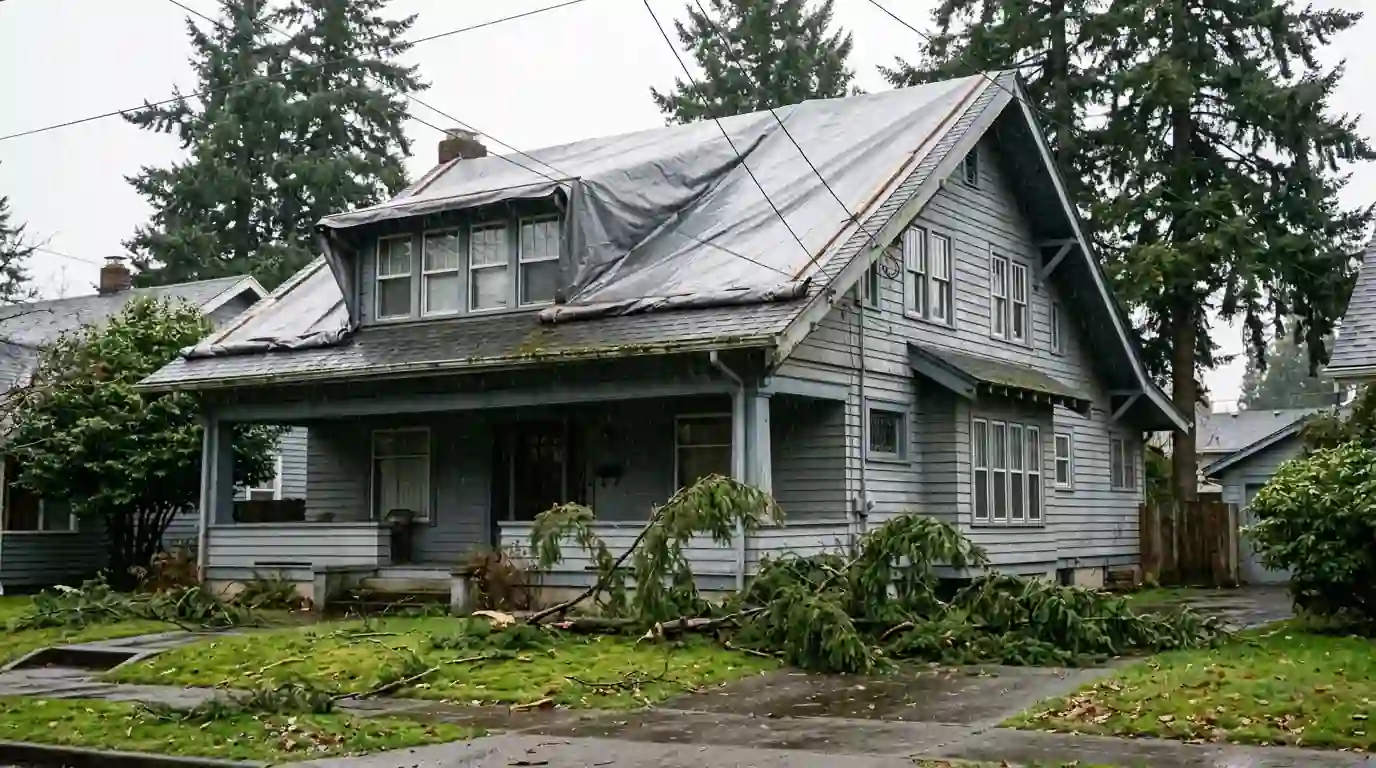
Emergency roof tarping in Portland typically costs $435 to $2,690, depending on the size of the opening and the roof pitch. We cover the damaged area with a heavy reinforced tarp, run it over the ridge where possible, and fasten it with wood battens screwed through to the framing instead of loose sandbags. A good tarp lasts 60 to 90 days in Portland weather. Call (503) 917-5484.
A tarp is not a roof repair. It is a temporary roof, put on to buy time when the real repair cannot happen yet. Maybe a branch punched through the decking, maybe wind stripped a whole section to bare wood, or maybe the insurance adjuster needs to see the damage before anything is torn out. In each case, the house still needs to stay dry through whatever weather Portland sends next.
The difference between a tarp that works and one that fails is almost entirely in how it is anchored. A blue tarp held down with bricks will be in the neighbor's yard by morning when the wind picks up. A tarp that is sized past the damage on every side, wrapped over the ridge, and screwed down through wood battens into the roof framing can ride out weeks of storms with very little movement.
We put the same care into tarping that we put into any other roofing job, because a poorly installed tarp can cause more damage than it prevents. Tarps that flap tear shingles around them. Tarps that end mid-slope channel water underneath. Tarps fastened with nails straight through the plastic leak at every hole. We avoid all of that, and we come back to check the tarp after heavy weather until the permanent repair is done.
When a tarp is the right call instead of an immediate repair
These situations usually call for tarping first and permanent work later.
Hole through the decking
When a branch, chimney cap or debris punches through the sheathing, the framing and decking have to be rebuilt before new roofing goes on. A tarp protects the opening until that carpentry can be scheduled.
Large section stripped by wind
If wind tore off many square feet of shingles and underlayment, replacing them may take matched materials and a dry day. A tarp keeps the exposed decking from soaking in the meantime.
Waiting on an insurance adjuster
Insurers usually want damage left visible for inspection but also expect you to prevent further loss. A tarp does both: it keeps water out without hiding or altering the damage underneath.
Materials on order
Specialty products like cedar shakes, synthetic slate or a discontinued shingle color can take time to arrive. Tarping lets the house stay dry without settling for a mismatched quick fix.
Weather too wet for repair
During a long run of Portland rain, a full repair may need a dry window that is days away. A tarp is the practical bridge until the weather opens up.
How we install a roof tarp that stays put through Portland storms
Measure the damaged area
We measure the opening and plan a tarp that extends at least three to four feet past the damage on every side, and over the ridge when the damage sits on the upper half of a slope.
Clear sharp debris first
Broken branches, torn shingles and exposed nails are removed or flattened so they will not puncture the tarp. If decking is broken, we may screw plywood over the hole first for support.
Lay a heavy reinforced tarp
We use thick, UV-resistant polyethylene tarps with reinforced edges, not lightweight hardware store tarps. The tarp is laid flat with the uphill edge over the ridge or tucked under shingles above.
Anchor with wood battens
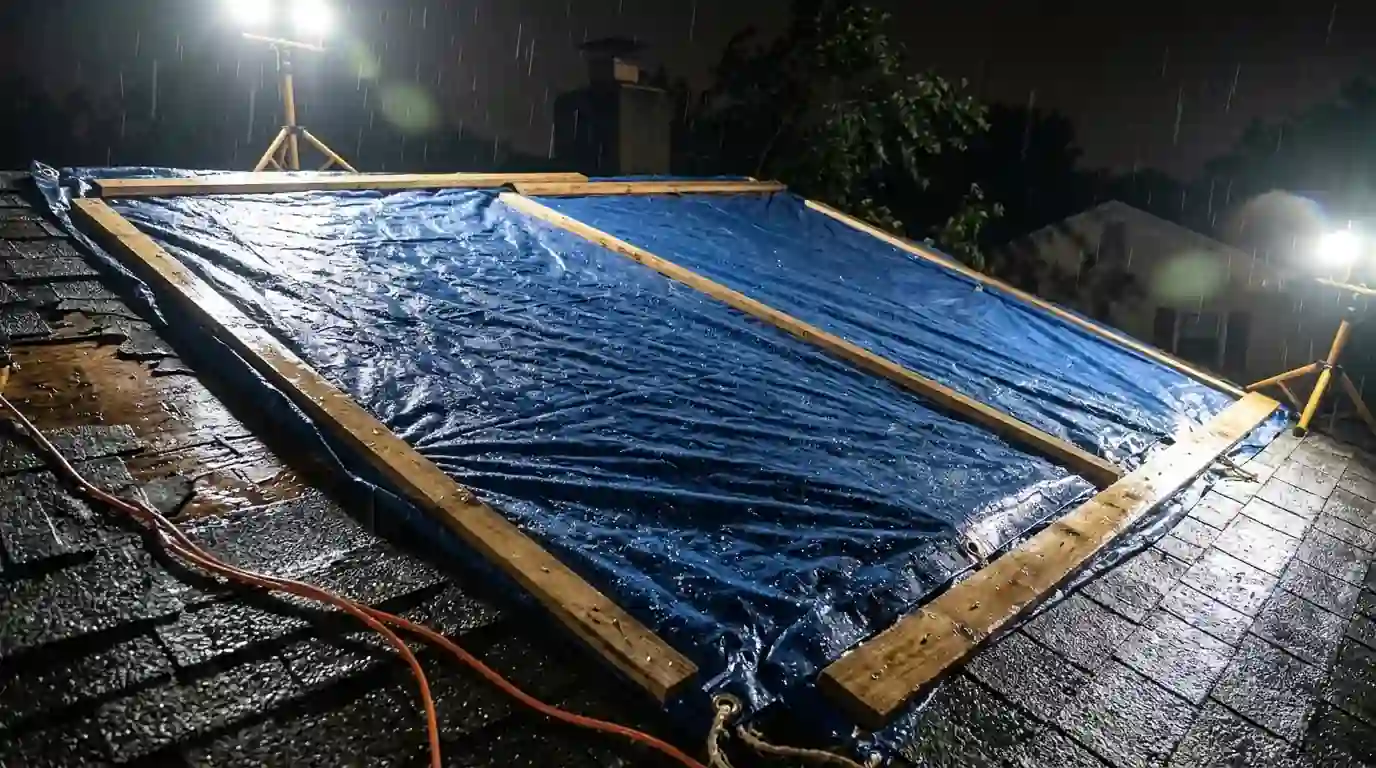
The tarp edges are rolled around 2x4 battens and screwed through into the roof framing. Battens spread the holding force across the whole edge so wind cannot grab a single corner.
Shed water off the bottom edge
We make sure the downhill edge drains onto shingles or into the gutter, not onto open decking. Water should run over the tarp and off the roof, never pool or slip under it.
Check after strong weather
Tarps loosen over time. We return after major wind or rain to retighten battens and patch any wear, and we remove the tarp entirely when the permanent repair begins.
How long a tarp lasts in Portland's wind and rain
A well-installed tarp usually holds 60 to 90 days in Portland, sometimes longer, but our wet season is hard on them. Constant rain is not the main threat; wind is. East wind gusting through Troutdale and Gresham and winter storms rolling over the West Hills test every edge of a tarp. Battens screwed to framing are what let a tarp survive those events, which is why we never rely on sandbags or tires.
Tree damage is the most common reason we tarp in Portland. Neighborhoods with big Douglas firs and bigleaf maples, like Eastmoreland, Laurelhurst and Hillsdale, see limbs come down in every major windstorm, and the January 2024 ice storm left many roofs needing tarps for weeks while tree removal and insurance were sorted out. On steep lots in the Southwest Hills, we plan access and anchoring carefully before going up.
Materials for emergency roof tarping come from manufacturers such as Malarkey, GAF, Owens Corning, CertainTeed, Carlisle and Velux, chosen for the job rather than the logo.
Tarp types and coverage options for different damage
The right setup depends on how big the opening is and how long the tarp needs to last.
Over-the-ridge tarp
The most secure layout. The tarp runs from below the damage, up over the ridge and partly down the other side, so rain cannot get in at the top edge. Best for damage near the peak.
Tucked-under-shingle tarp
For damage low on a long slope, the top edge of the tarp slides under the shingle course above and is battened below, keeping water running over it instead of under it.
Plywood plus tarp
When decking is broken through, we screw a plywood sheet over the hole first to support the tarp and keep it from sagging into the opening and collecting water.
Shrink wrap for long waits
For large or long-term covers, heat-shrunk plastic wrap fastened at the edges holds tighter than a tarp. It suits jobs where repairs will take months, such as major tree damage.
What emergency roof tarping costs in Portland in 2026
Tarping prices depend on the size of the cover, roof pitch and whether the decking needs to be supported first.
| Work | Typical Portland range |
|---|---|
| Small tarp over a single damaged areaper tarp | $435 to $865 |
| Large over-the-ridge tarpper tarp | $895 to $1,780 |
| Plywood patch plus tarpper opening | $715 to $1,465 |
| Shrink wrap cover for long-term protectionper section | $1,385 to $2,690 |
| Tarp check and retighten visitper visit | $135 to $285 |
Use these as a rough guide, not a quote. You get a real price after an on-roof look and a written estimate, and tarping is often covered under a storm claim.
What moves the price:
- Size of the opening
- Roof pitch and height
- Need for plywood support
- Night or holiday call-out
- How long the cover must last
What separates a tarp that holds from one that fails
Anchored to framing, not weighted
Battens screwed through to the rafters hold a tarp through east wind gusts. Bricks and sandbags slide off as soon as the tarp starts moving.
Sized well past the damage
A tarp that stops right at the edge of the hole leaks around it. Extending several feet past on every side gives water a long path to shed safely.
Checked until the repair starts
We come back after heavy weather to tighten and patch, so you are not climbing a ladder in the rain to fix a loose corner yourself.
Emergency Roof Tarping questions from Portland homeowners
How long can a roof tarp stay on a Portland house?
A tarp anchored with battens usually lasts 60 to 90 days here, sometimes longer with checks. UV exposure is limited in winter, so wind and abrasion are what wear tarps out. If repairs will take longer, shrink wrap is a sturdier option. Either way, the permanent repair should happen as soon as practical.
Can I tarp my own roof after storm damage in Portland?
It is possible on a low, dry roof, but wet Portland shingles are slick and storm-damaged roofs can have weak decking. Most falls happen during exactly this kind of job. If you do it, use battens, work from a secured position and never go up in wind or ice.
Does emergency roof tarping damage my shingles?
Screws through battens leave small holes, but we place them in areas that will be repaired anyway or seal them when the tarp comes off. A tarp that flaps loose does far more harm by grinding granules and tearing shingles, which is why we fasten them tightly.
Will insurance cover emergency roof tarping in Portland?
Most policies cover reasonable steps to prevent further damage after a covered event, and tarping is the standard example. Keep the invoice and photos we provide. Coverage decisions are your insurer's, so check your policy, but tarping is commonly reimbursed as part of a storm or tree claim.
What color tarp do you use and does it matter?
Color matters less than thickness and reinforcement. We use heavy reinforced tarps, often gray, silver or brown, with UV protection. The thicker material resists tearing at the battens and holds up far better than thin blue tarps through repeated Portland storms.
Where we do this work most
We cover the whole metro. These are the places we are on roofs most often:
Related roofing services
Emergency Roof Repair
When water is pouring into a Portland home late at night, the goal is simple: get a roofer on site, stop the water, and leave the roof sealed until a...
Fallen Tree Roof Repair
A fir limb or whole tree on a Portland roof is a framing problem as much as a roofing problem. Rafters, ceiling joists and decking often need...
Roof Insurance Claim Help
After wind, ice or a falling limb damages your Portland roof, we document the damage, protect the house and give you a detailed roofing estimate to...
Dry Rot & Roof Deck Repair
A soft spot underfoot on the roof or a sag you can see from the street points to rotted sheathing below the shingles. We open Portland roofs, remove...
Related reading
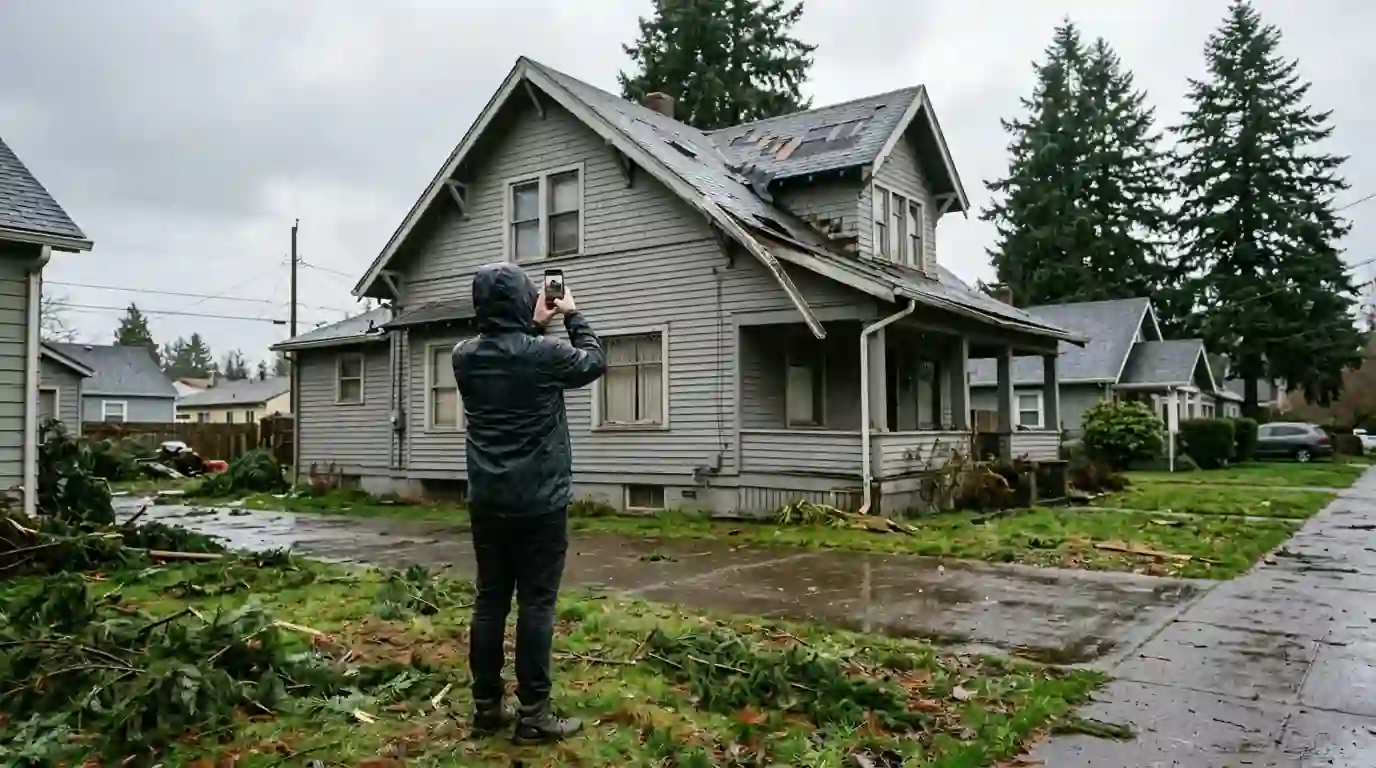
Documenting a Roof Damage Claim in Oregon
Good records make a roof damage claim easier to explain and easier to review. Here is what Oregon homeowners can document now, before a storm, and what to capture in the hours and weeks after damage.
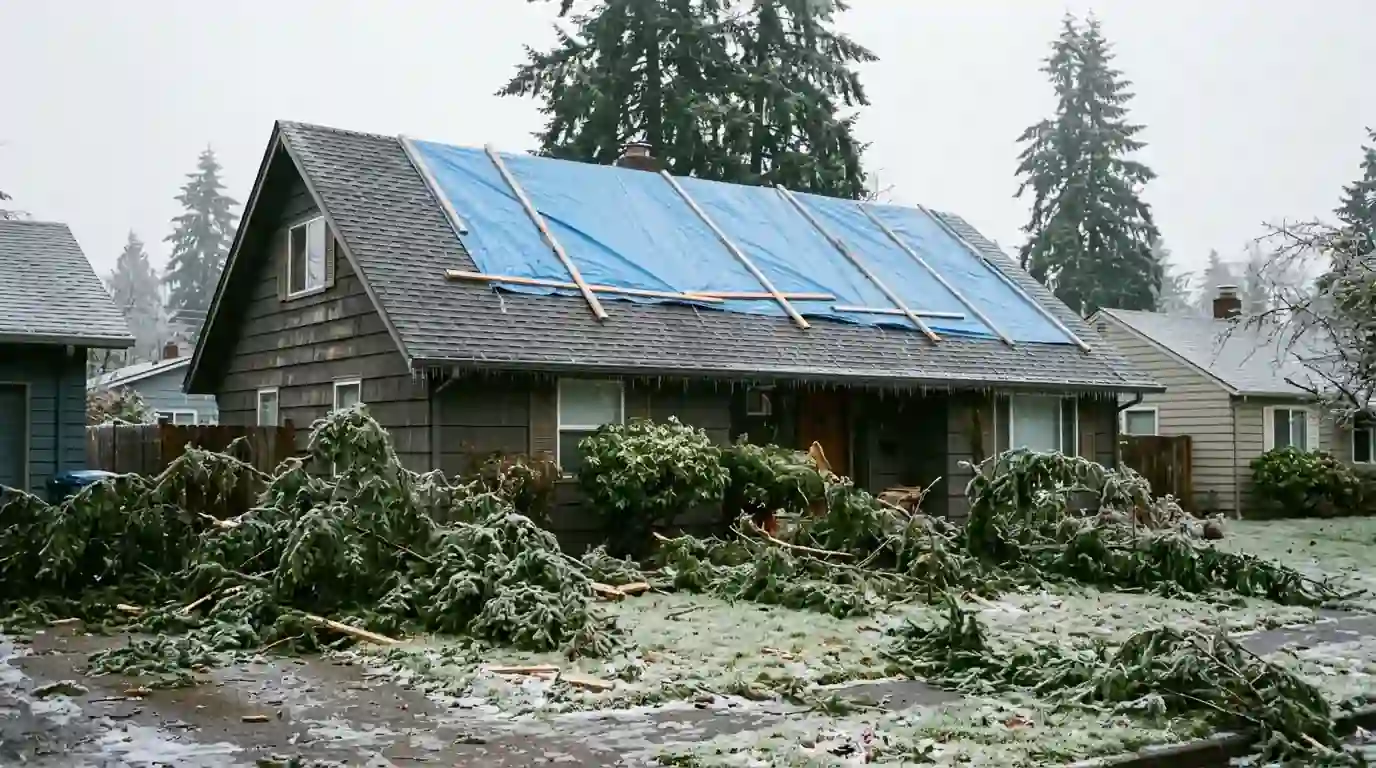
What to Do After Wind or Ice Damages Your Roof
When the east wind roars out of the Gorge or ice coats every branch, roofs take a beating. Here is what to do in the first hours and days, in the right order, starting with keeping everyone safe.
Need emergency roof tarping in Portland?
Call and tell us what you are seeing. We answer 24/7 and can usually talk you through the next step on the first call.