Portland's worst roof days tend to come from two directions. The east wind funnels out of the Columbia River Gorge in winter and slams into Troutdale, Gresham and the east side of the city with gusts that peel shingles and drop trees. Ice storms, like the one in January 2024, coat branches and power lines until they snap under the weight, often onto roofs. Both can leave a house with missing shingles, a punctured deck or a tree limb sitting in the attic.
In the confusion right after a storm, it's easy to do things in the wrong order or take risks that aren't worth it. This guide lays out the sequence we'd want any homeowner to follow, from the first minutes through getting the roof dried in and repaired. If you need help at any point, call (503) 917-5484. We answer 24/7.
What should you do in the first hour to keep everyone safe?
Before you think about the roof, think about people. A damaged roof can wait an hour. An injury can't be undone. Work through these in order:
- Get everyone out of rooms where the ceiling is sagging, cracked or dripping heavily, since wet drywall can drop without warning
- Stay well away from downed power lines and anything they touch, including fences, gutters and wet ground, and call the utility
- If water is coming through near light fixtures or outlets, shut off power to that area at the panel if you can do it from a dry spot
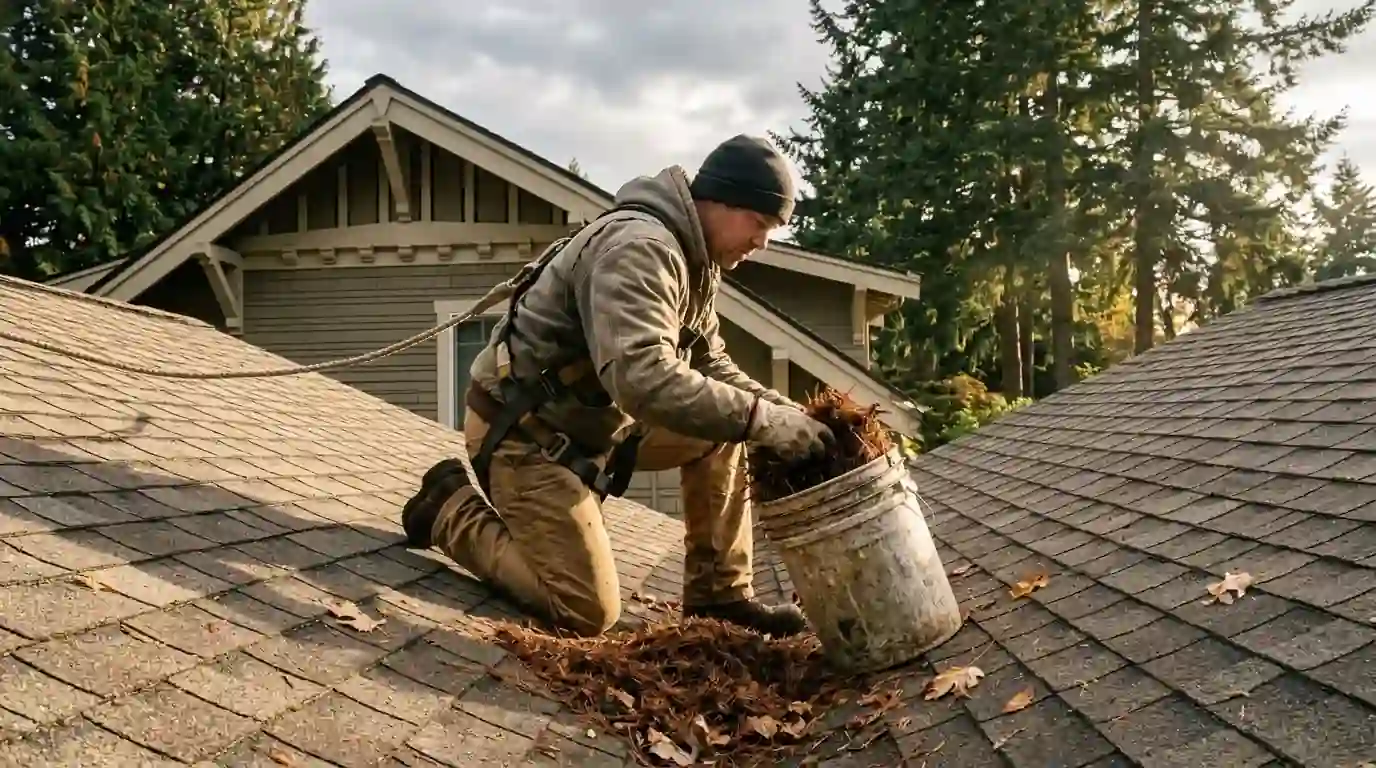
- Never climb onto a roof during or right after a storm; ice, wet shingles, loose debris and weakened framing make it extremely dangerous
- If a tree is resting on the house, keep people out of the rooms beneath it until the load is removed
How can you limit water damage inside before help arrives?
Once everyone is safe, focus on slowing down the water. Move furniture, rugs, electronics and anything valuable out of the way of drips. Put buckets or containers under active leaks, and lay towels around them to catch splashing.
If a ceiling is bulging with trapped water, poke a small hole at the lowest point with a screwdriver and let it drain into a bucket. That sounds counterintuitive, but it relieves the weight and often saves the rest of the ceiling from collapsing. Stand to the side when you do it.
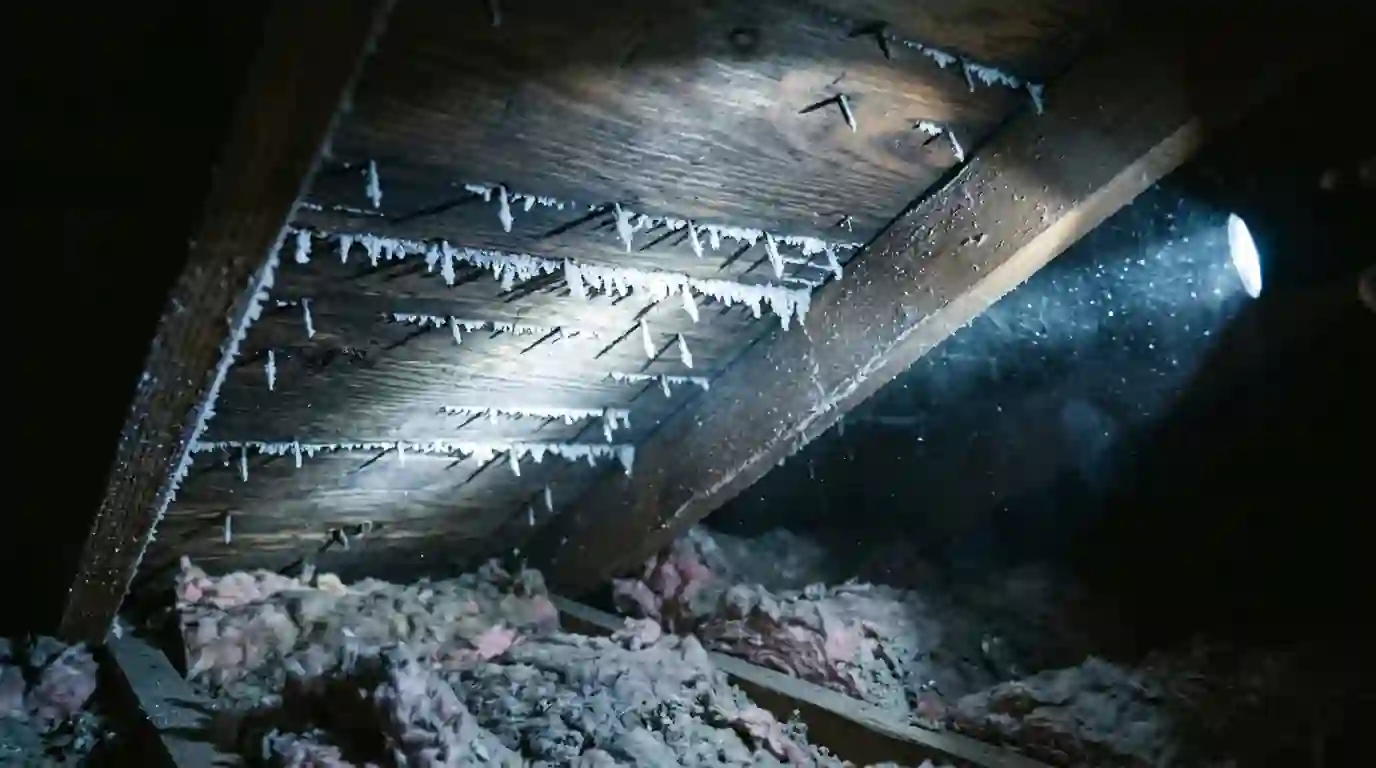
In the attic, if you can get there safely, set containers under drips and lay plastic sheeting over insulation that's getting wet. Wet insulation loses its value and holds moisture against the drywall below, so keeping it dry where you can makes the cleanup smaller.
Why do photos matter so much, and what should they show?
Good documentation made right after a storm is one of the most useful things you can have, both for your own records and for any insurance claim. Take photos and short videos before you clean up or move debris, as long as it's safe to do so.
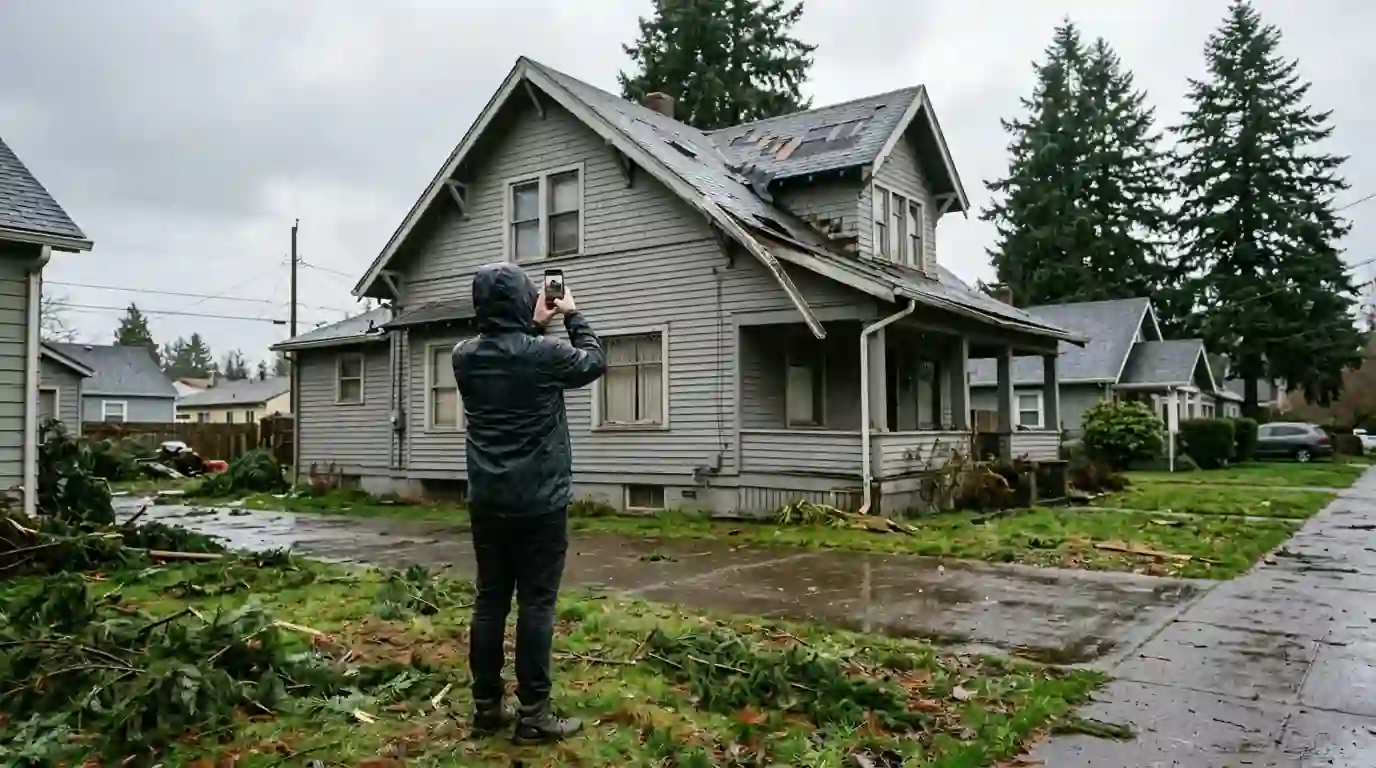
From the ground, photograph every side of the house, including any missing shingles, bent flashing, damaged gutters and fallen branches. Get wide shots that show where things are, then closer shots of specific damage. Indoors, photograph ceiling stains, wet insulation, damaged belongings and any standing water. Note the date and time, and write down what the storm was doing when you first noticed the damage.
Keep receipts for anything you buy to protect the house, like tarps, buckets or fans, and for any emergency service you call. Don't throw away damaged items until you've documented them.
When does a roof need emergency tarping?
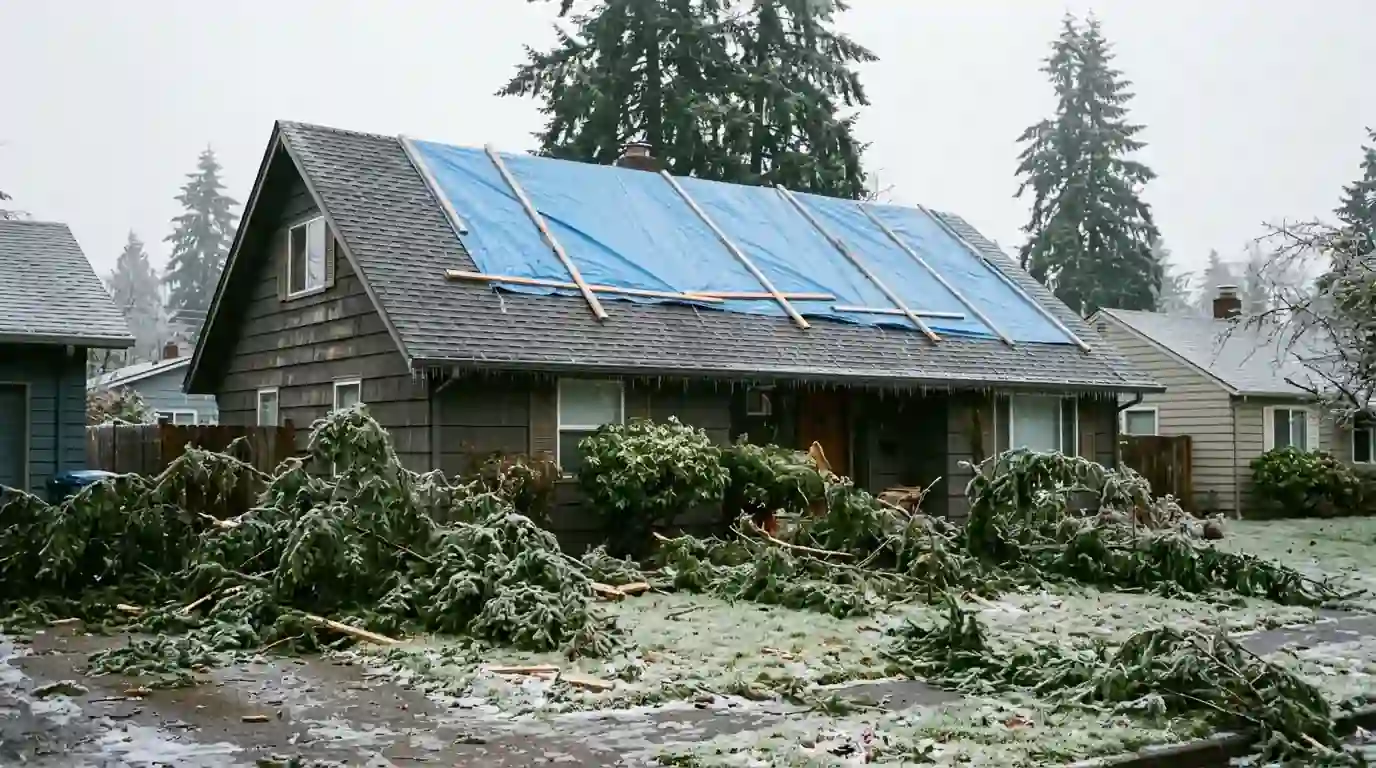
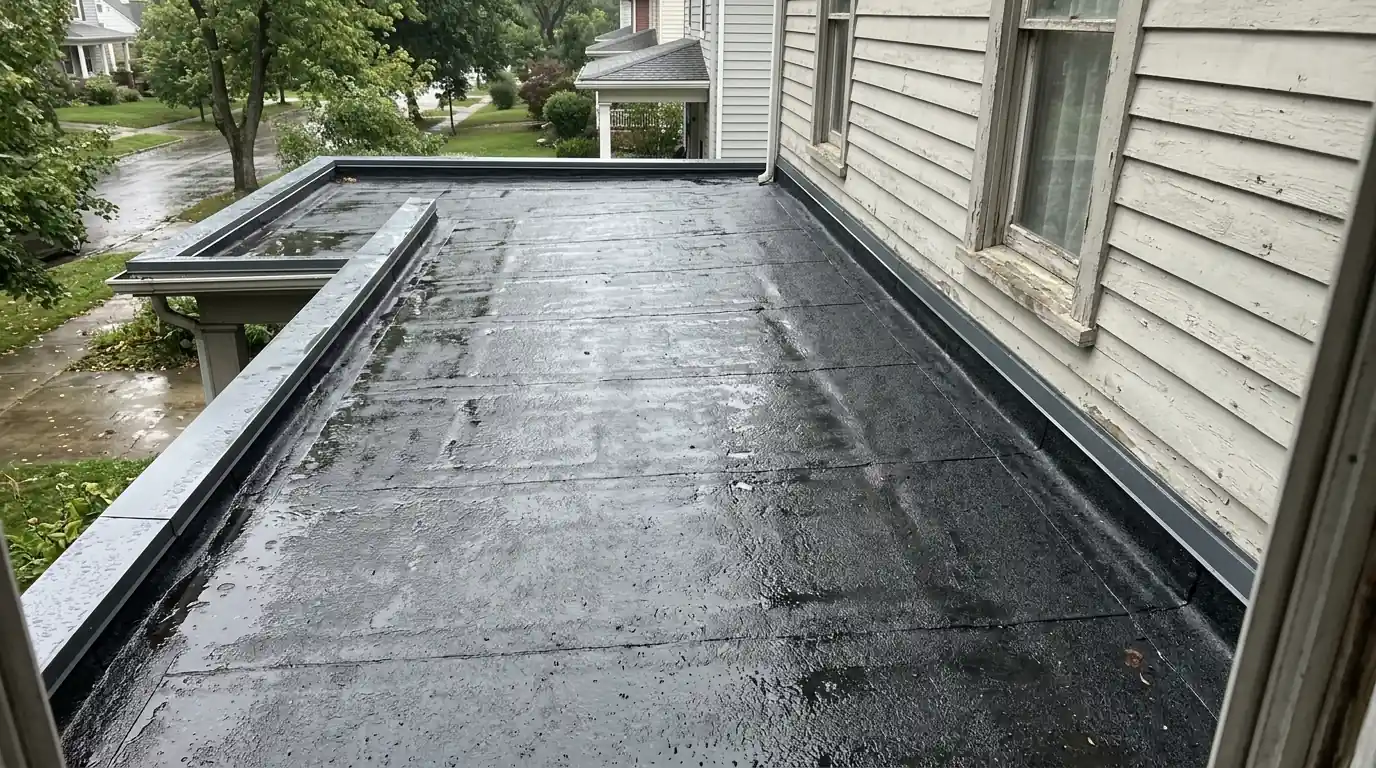
If there's an opening in the roof, a section of missing shingles over exposed underlayment, or a tree limb that punctured the deck, the roof needs to be covered until it can be repaired. Portland rarely gives us a dry week in winter, so leaving an opening uncovered usually means more water in the attic and walls with each passing storm.
When we tarp, we use heavy reinforced tarps that extend over the ridge so water can't run under the top edge. We secure them with wood battens screwed through the tarp into the deck rather than relying on bricks or sandbags, which slide and blow off in the next gust. Where a limb went through, we remove what we safely can, then cover the hole with plywood before tarping over it.
Emergency tarping in the Portland area typically runs $385 to $1,140 depending on the size of the area, roof pitch and whether debris has to be removed first. That's a typical 2026 range, not a quote; the real price comes from what we find on the roof and is put in writing.
What happens when a tree or large limb lands on the roof?
Ice storms and east winds bring down a lot of Douglas firs and bigleaf maples around Portland, and the weight of a trunk or large limb can crack rafters as well as decking. Don't try to cut or pull it off yourself. A limb under tension can shift suddenly, and removing it without supporting the roof can make the damage worse.
The usual sequence is tree removal by an arborist with proper rigging, then our roofers assess the framing and deck, make temporary repairs and dry the roof in. Once the structure is checked, we replace damaged rafters or sheathing and rebuild the roof surface with matching materials as closely as we can.
Gutters and fascia often take a hit too. A falling limb can tear gutters loose, crush downspouts and crack the fascia board behind them, which then lets water run down the siding and into the wall. We look at all of it during the same visit so nothing gets missed when the main roof work is planned.
How do permanent repairs come together after the storm?
After the roof is covered and dry, we go back for a full inspection. Wind damage isn't always obvious. Shingles that look intact may have lost their seal and creased, which leaves them ready to tear off in the next blow. We check the whole roof, not just the area that leaked, along with flashing, ridge caps, gutters and vents.
You'll get a written estimate with photos showing each item. Many storm repairs involve replacing a few dozen shingles, resetting flashing and fixing gutters. Bigger events can mean replacing whole slopes or the entire roof. We'll explain what we see and why, so you can make the call with full information.
Call (503) 917-5484 any time of day or night. We answer 24/7, and we'll get someone out to cover the roof and start sorting things out.
Key takeaways
- Get people away from sagging ceilings and downed lines before thinking about the roof.
- Never climb onto a wet or icy roof after a storm.
- Photograph damage inside and out before cleanup, and keep every receipt.
- A properly battened tarp over the ridge keeps water out until permanent repairs are made.
- Leave tree removal to an arborist, then have the framing and deck checked.
Written and edited by Grady Pelham, Roofing Articles Editor at MY Construction Roofing. Last updated June 24, 2026.