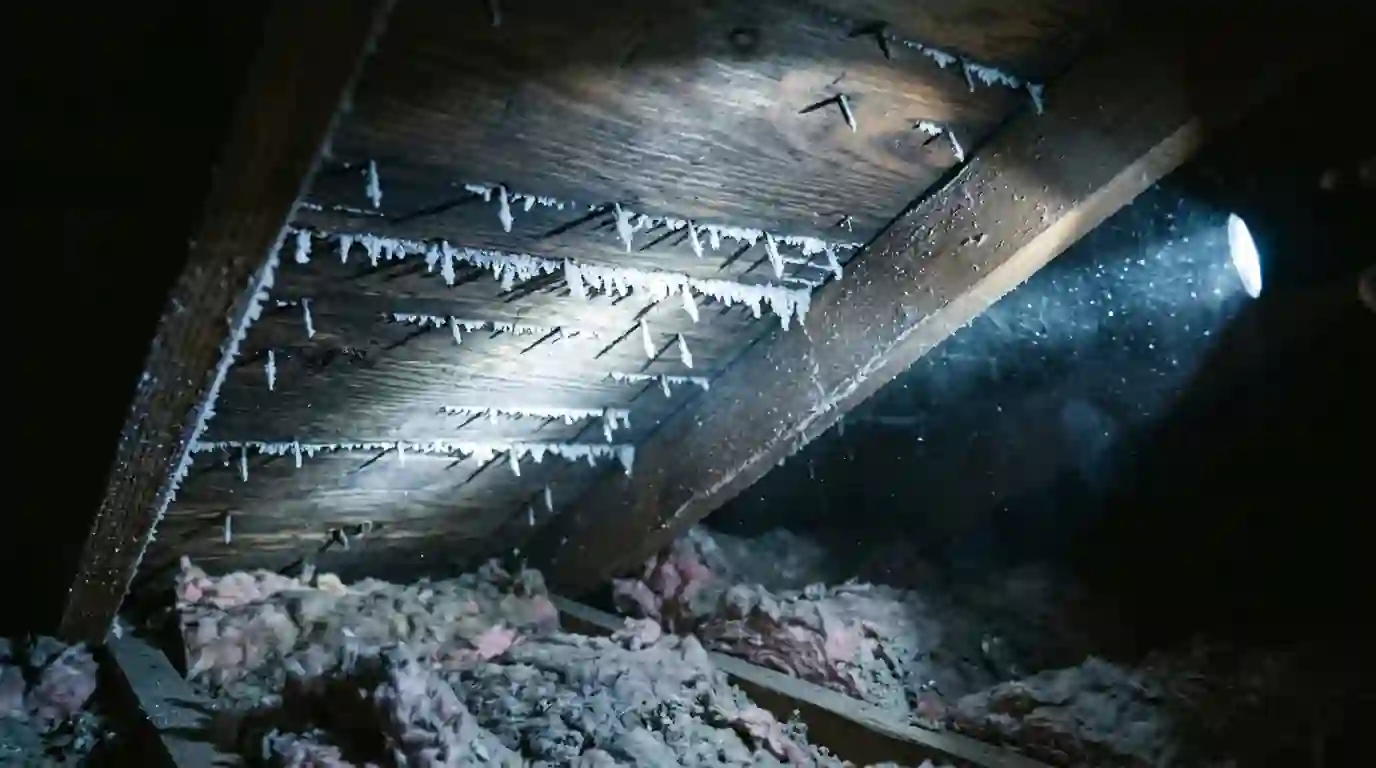
Every winter, when a cold snap settles over Portland and the nights drop well below freezing, we get calls about mysterious attic leaks. Water drips from nail tips, insulation feels damp, and a ceiling stain appears even though it hasn't rained in days. Often the roof is fine. What's happening is condensation: warm, moist air from the living space reaching the cold underside of the roof deck and turning to frost, then melting when the weather warms.
Condensation and leaks need very different fixes. Replacing shingles won't stop frost in an unvented attic, and adding vents won't stop water coming through a cracked pipe boot. Below we walk through how to tell them apart, what causes each, and what the right repair usually looks like.
Does the water show up when it rains or when it turns cold?
Timing is the single best clue. A roof leak follows the rain. It shows up during or shortly after a storm, gets worse with wind-driven rain from a certain direction, and dries up in a dry spell.
Condensation follows the temperature. It builds during clear, cold nights, often the dry, frosty stretches when the east wind is blowing and humidity indoors is high from cooking, showers and closed windows. Then, when the weather breaks and temperatures rise, the frost on the underside of the deck melts all at once. That sudden melt can look exactly like a leak, which is why homeowners are often surprised to find water in the attic on a sunny day.
If you can, keep a short log: the date, the weather and where you saw water. A pattern usually appears within a couple of weeks.
Where is the moisture, and what does it look like?
Pattern matters as much as timing. A leak tends to be concentrated. Water runs along a rafter or the underside of the deck from a single entry point, often near a chimney, plumbing vent, skylight or valley. You'll usually find a stain trail leading uphill toward the source.
Condensation is spread out. You'll see frost or droplets on many nail tips across a wide area, especially on the north slope and in the upper part of the attic where warm air collects. The sheathing may show a general dark or black discoloration rather than a single stain. Insulation will be damp on the surface over a broad area rather than soaked in one spot. Here's a quick comparison:
- Leak: one stain with a trail, near a roof penetration, worse in wind-driven rain
- Condensation: frost on many nails, spread across a slope, worse in cold dry weather
- Leak: wet insulation in a single patch, sometimes with a drip line on the drywall below
- Condensation: musty smell, mold spotting and dark sheathing across the upper attic
What causes condensation in Portland attics?
Two things together: warm, humid air getting into the attic and not enough ventilation to carry it back out. Most houses leak air upward through gaps around recessed lights, attic hatches, plumbing chases, chimney openings and top plates. Older Portland homes, including many Craftsman and Old Portland houses, have plenty of these paths.
Bathroom and kitchen fans that vent into the attic instead of through the roof or a wall are a common culprit. So are attics where insulation was blown in over soffit vents, cutting off the intake air that ventilation depends on. Without intake at the eaves, a ridge vent can't pull air through, and moisture stays put.
Add a cold snap, and the roof deck turns into a cold surface for that moisture to collect on. The colder and longer the snap, the more frost builds up, and the bigger the melt when it ends.
Recent upgrades can make it worse. New windows, weatherstripping and a tighter front door keep heat in, which is good, but they also trap more indoor moisture. If the attic was marginal before, a tighter house can push it over the edge. Daily habits matter too: drying laundry indoors, long hot showers without running the fan and lots of houseplants all add water vapor that ends up looking for the coldest surface it can find.
How do we confirm a roof leak?
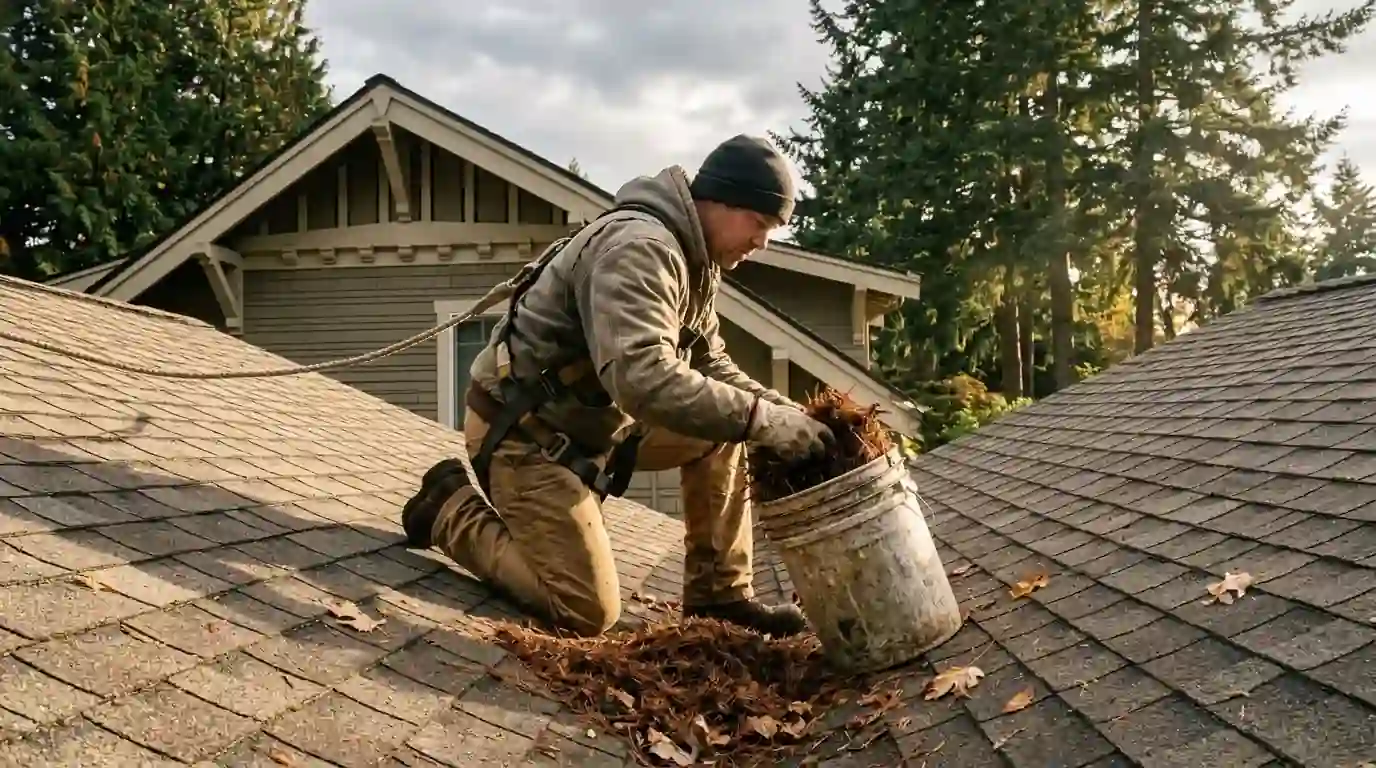
If the clues point toward a leak, we start where the water shows up in the attic and work uphill on the roof. The most common sources on Portland roofs are cracked rubber pipe boots, worn step flashing where a roof meets a wall or dormer, gaps in chimney counterflashing, aging skylight seals and valleys packed with fir needles that back water up under the shingles.
When the source isn't obvious, we can run controlled water tests, wetting one section of roof at a time while someone watches from the attic. It's slow, but it pins down the entry point so the repair goes in the right place instead of patching the wrong spot.
Typical leak repairs in the Portland area run $385 to $1,140 for a pipe boot, flashing or small shingle repair, and more if decking needs replacement. That's a typical 2026 range; the real number comes after an on-roof look and a written estimate.
What fixes attic condensation for good?
The fix comes in two parts: stop moist air from getting into the attic, and give what does get in a way out. Done together, they usually solve it.
- Seal the air paths from the house below: around light fixtures, the attic hatch, plumbing and wiring holes, and the chimney chase
- Route every bathroom and kitchen fan through a roof or wall vent with a proper damper, never into the attic
- Clear blocked soffit vents and install baffles so insulation can't cover them again
- Balance intake at the eaves with exhaust at the ridge so air moves steadily through the attic
- Top up insulation after air sealing, so the ceiling stays warm and the attic stays cold
Could it be both at once?
Sometimes it is. A small leak at a pipe boot can wet the insulation, and that added moisture then feeds condensation across the attic. Or an attic with heavy condensation can rot the sheathing to the point where nails loosen and shingles start to leak. When we inspect, we look at the whole picture rather than stopping at the first problem we find.
If you're seeing water in your attic and can't tell which it is, call (503) 917-5484. We answer 24/7. We'll check the roof and the attic together, show you photos of what we find and explain which fix fits the problem.
Key takeaways
- Water that shows up after rain points to a leak; water after a cold snap points to condensation.
- Leaks leave a single stain trail near a penetration, while condensation spreads across a slope.
- Bath fans venting into the attic and buried soffit vents are common causes of condensation.
- Condensation is fixed with air sealing plus balanced ventilation, not new shingles.
- Sometimes both problems exist together, so have the roof and attic checked at the same visit.
Written and edited by Grady Pelham, Roofing Articles Editor at MY Construction Roofing. Last updated October 8, 2026.