Fascia and soffit repair for Portland roof edges
Soft fascia behind the gutter, peeling soffit paint or birds nesting in the eaves usually means water has been getting past your roof edge. We rebuild fascia and soffits on Portland homes so the gutters hang straight again.
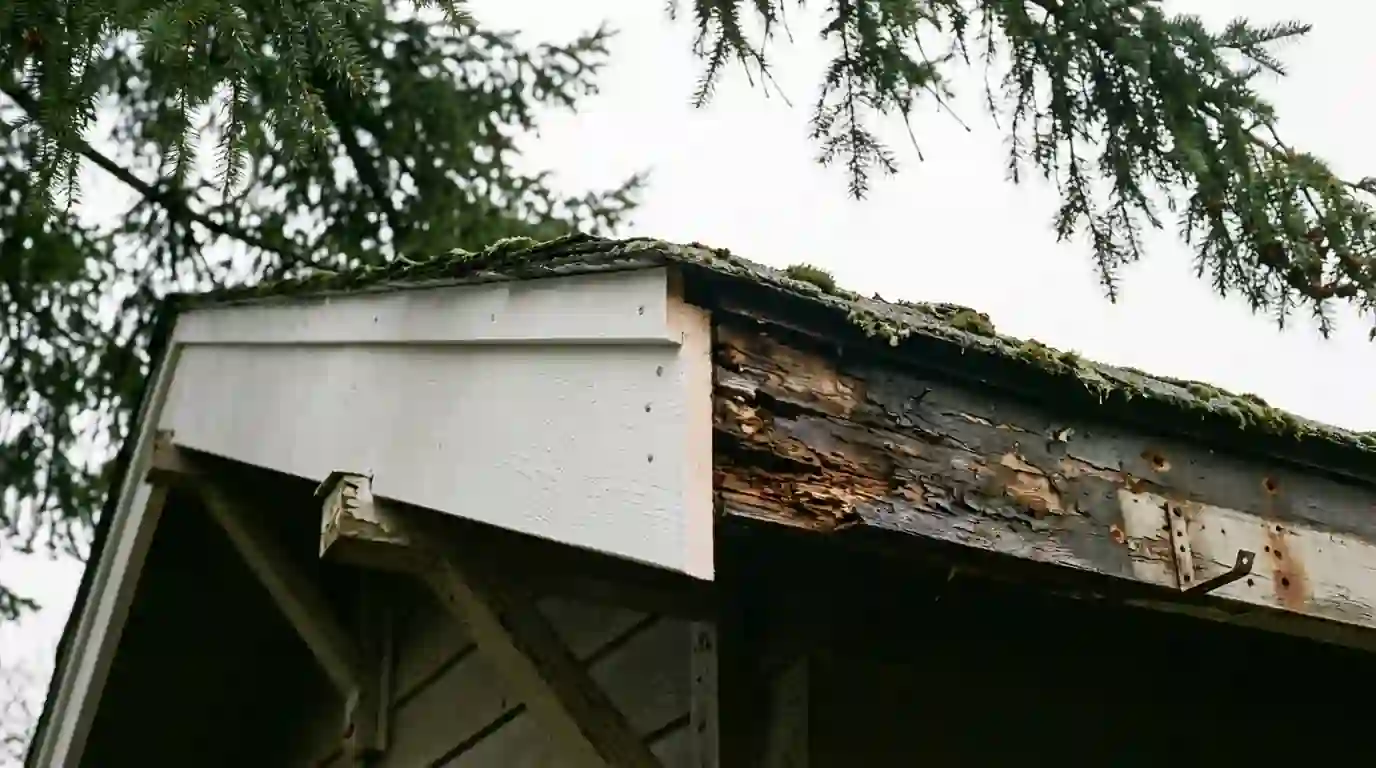
Fascia and soffit repair in Portland means pulling the gutter, cutting out rotted fascia board, checking the rafter tails behind it, installing primed new trim, adding drip edge so water clears the wood, and rehanging the gutter. A short section usually runs $385 to $940, while a full house of fascia commonly lands between $2,860 and $6,740 depending on height and access.
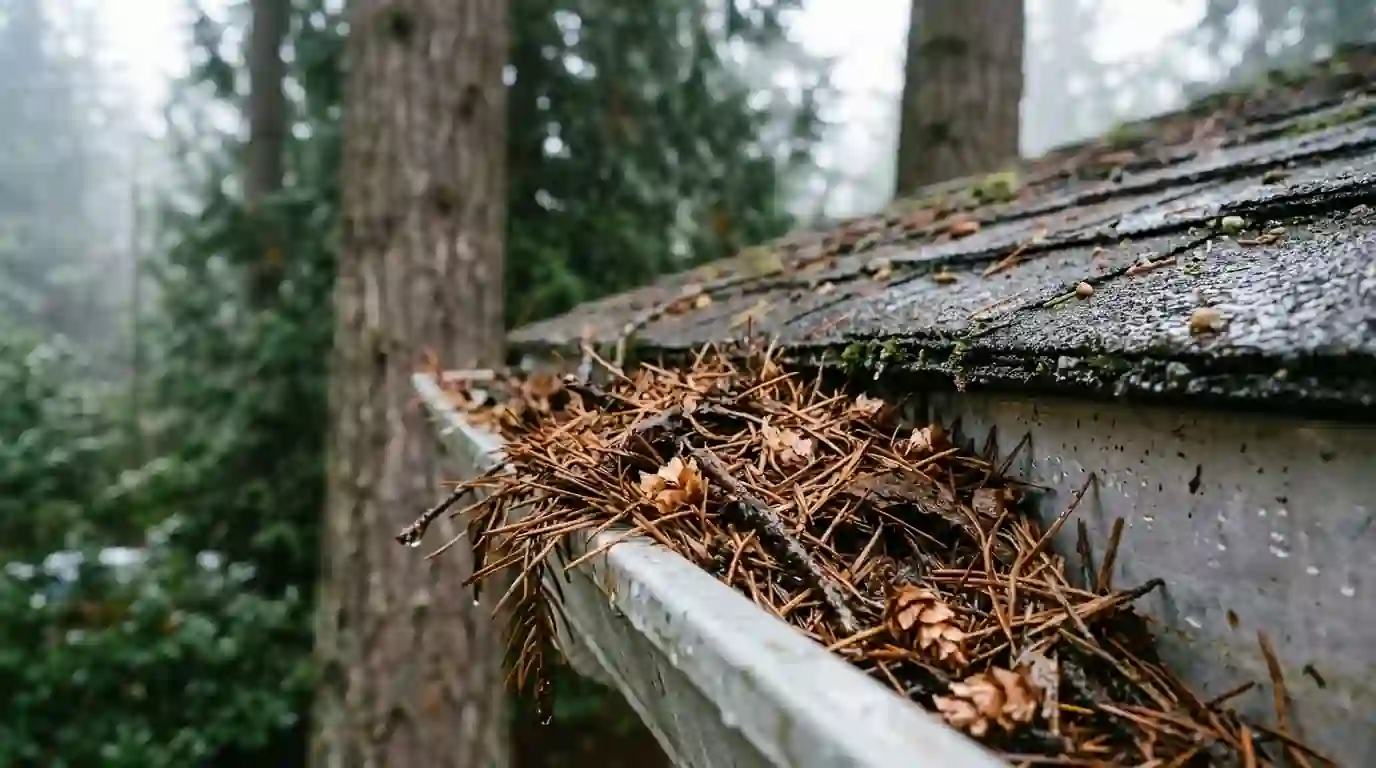
Fascia is the trim board along the bottom edge of your roof, and it carries your gutters. The soffit is the underside of the overhang, the flat surface you see when you stand under the eave and look up. Both stay out of sight until something goes wrong, and in Portland that usually starts with a gutter full of Douglas fir needles spilling water over the back edge for a few winters running. The wood stays wet from October into May, paint lets go, and the board softens from the inside out.
Most of the calls we get start with a gutter pulling away from the house or a dark stain creeping down the siding below a corner. By then the fascia nails have nothing solid to grab. We treat it as a roof edge problem, not a paint problem, because new trim fails again in a few seasons if the drip edge, gutter pitch and soffit ventilation are not corrected at the same time. You can reach us on (503) 917-5484 around the clock.
Which trim material makes sense for your eaves?
The right material depends on the age of the house, how visible the eaves are and how much maintenance you want.
Primed cedar or fir fascia
Real wood matches older Portland homes and takes paint well. Cedar resists rot better than pine. Primed on all sides and painted every several years, it holds up nicely and keeps the original look on a Craftsman or Old Portland house.
Fiber cement trim boards
Fiber cement does not rot, swell or attract insects, and it holds paint longer than wood. It is heavier and needs careful cutting, but it is a solid choice for the wettest north and east facing runs.
PVC trim boards
Cellular PVC shrugs off moisture completely and never needs paint for protection. It expands with heat, so joints need proper spacing and fasteners. It works well on modern homes and behind gutters that collect heavy fir debris.
Aluminum fascia wrap
Coil aluminum bent to fit over sound wood gives a low maintenance finish. We only wrap boards that are solid, because sealing rot inside metal just hides the problem until the gutter tears loose.
Vented aluminum or vinyl soffit
Perforated soffit panels replace solid plywood and add steady intake airflow for the attic. They pair well with a ridge vent and help keep the roof deck dry through long Portland winters.
How do you know your fascia or soffit needs work?
Walk around the house on a dry afternoon and look up at the eaves for these clues.
Gutters pulling away from boards
A gutter that tips outward or has a gap behind it often means the hangers have lost their bite in soft fascia. Push gently on the board with a screwdriver from a ladder; if it sinks in, the wood is rotting.
Peeling paint at the corners
Paint blisters and peels first where two fascia boards meet at an outside corner, because water wicks into the end grain there. Bare gray wood at the corners is an early warning worth acting on.
Stains streaking down siding
Long dark streaks below the gutter line show water running behind the gutter instead of into it. That water soaks the fascia, then the top course of siding, and sometimes the wall sheathing underneath.
Sagging or loose soffit panels
Plywood soffits delaminate when moisture reaches them from above, and the layers bow down between the framing. Vinyl or aluminum panels can slip out of their channels when the fascia they hang from moves.
Birds, wasps or squirrels nesting
Gaps where a soffit meets the fascia or wall make a perfect entry. Squirrels and roof rats chew the softened edges wider, and once they reach the attic they tear up insulation and wiring.
Painted over or blocked vents
Soffit vents caked with old paint or packed with insulation from the attic side stop air moving. The attic runs damp, the roof deck gets condensation, and the overhang stays wet longer than it should.
What a proper roof edge rebuild looks like
Probe and map the damage
We walk the full perimeter with a ladder and an awl, probing every fascia run and corner. Soft sections get marked so the written estimate shows exactly which lengths are coming out and which boards are still sound enough to keep.
Pull gutters and remove rot
The gutter comes down carefully so it can go back up if it is in good shape. We cut out rotted fascia back to solid wood, scarf the joints at an angle, and pull any crumbling soffit panels.
Check rafter tails and blocking
With the fascia off, the rafter tails and frieze blocking are exposed. Soft tails get sistered or cut back and rebuilt, because new fascia nailed to rotten framing will loosen within a winter or two.
Install primed trim on all sides
New boards are primed on every face and both ends before they go up, then fastened with stainless or hot-dipped galvanized nails. Outside corners get tight miters and sealant so water stays out of the end grain.
Add drip edge and gutter apron
We slip metal drip edge under the first course of shingles so runoff drops into the gutter instead of sliding behind it. On older roofs without any edge metal, this one detail does most of the long-term protection.
Rehang gutters with correct pitch
Gutters go back up on hidden hangers spaced about every two feet, pitched toward the downspouts. We flush the downspouts, finish paint the new trim to match, and clean up nails and old wood before leaving.
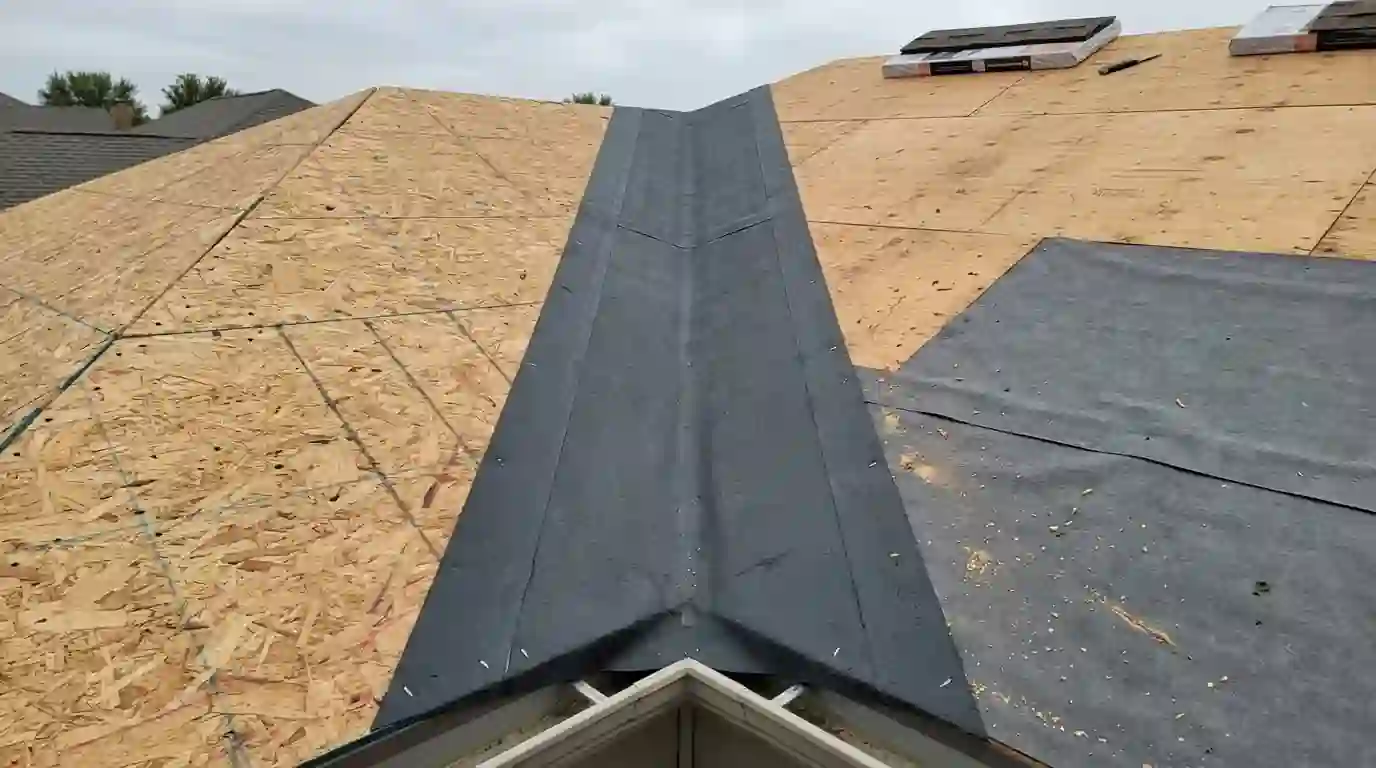
Materials for fascia & soffit repair come from manufacturers such as Malarkey, GAF, Owens Corning, CertainTeed, Carlisle and Velux, chosen for the job rather than the logo.
What does fascia and soffit repair cost in Portland?
Most jobs are priced by the length of trim replaced and how hard the eaves are to reach. Two story walls and steep lots add staging time.
| Work | Typical Portland range |
|---|---|
| Short fascia section, up to about 16 feetper section | $385 to $940 |
| Full fascia replacement, typical one or two story homeper home | $2,860 to $6,740 |
| Soffit panel repair at a damaged areaper area | $465 to $1,280 |
| Converting solid soffits to vented panelsper home | $1,940 to $4,370 |
| Gutter removal and rehang during trim workper job | $315 to $865 |
Use these Portland figures as a starting point only. Once we have probed the boards and seen the rafter tails, you get a written estimate with the real number.
What moves the price:
- Linear feet of rotted board
- Rafter tail or blocking repairs
- Story height and ladder access
- Trim material chosen
- Paint matching and finish coats
- Gutter condition and reuse
Why Portland roof edges rot faster than most
Our wet season runs roughly eight months, and the fascia board sits right where the most water concentrates. On the tall fir lots of Irvington, Laurelhurst and the West Hills, gutters fill with needles and cones by November, then overflow every storm until someone climbs up to clear them. The water pours down the back of the gutter and soaks the fascia. Many older Portland homes were also built with no drip edge at all, so roof runoff wraps under the shingle edge and wets the top of the board every time it rains.
Craftsman and Foursquare houses add their own challenge. Their deep overhangs and exposed rafter tails look great, but the tails are open end grain that drinks water. In St. Johns and Arbor Lodge we see a lot of original tongue and groove fir soffits, which we can patch with matching boards rather than covering with vinyl. Out east in Gresham and Troutdale the Gorge wind drives rain sideways under the eaves, so soffit gaps and loose corner trim on the windward side tend to fail first.
What you get when we rebuild your eaves
Roofers who fix the cause
We look at the shingle edge, drip edge and gutter pitch along with the trim, because new fascia only lasts when the water that rotted the old board is sent somewhere else.
Framing checked, not covered
Every soft board comes off so we can see the rafter tails behind it. You get photos of what we found, and nothing rotten gets wrapped in metal and left behind.
Trim that matches your house
We mill and shape replacement boards to match original Craftsman profiles where needed, so a repaired section blends in with the rest of the eave line once painted.
One call from probe to paint
Gutter removal, carpentry, drip edge, rehanging and finish paint happen in one visit plan. Call (503) 917-5484 and we will set up a time to look at it.
Fascia & Soffit Repair questions from Portland homeowners
Can fascia repair on a Portland house be done in the rainy season?
Yes. We work through the winter and simply plan around the heaviest rain days. New boards are primed on all sides before they go up, so they are protected even if the finish coat has to wait for a dry spell. Leaving rotted fascia until summer often means the gutter falls or the rafter tails behind it soften further.
Should I replace fascia and gutters at the same time?
It often makes sense. The gutter has to come down anyway, so if it is dented, leaking at the seams or too small for the fir needles your trees drop, replacing it during fascia work saves a second round of labor. If the gutters are sound, we rehang them on new hidden hangers.
Is it worth keeping the original wood soffits on an older Portland home?
On many Craftsman and Foursquare homes, yes. Original tongue and groove fir soffits are often mostly sound with a few damaged boards near the corners. We replace those boards with matching stock and leave the rest, which keeps the character of the house and usually costs less than covering everything.
Why does my fascia keep rotting even after it was replaced?
Usually the cause was never fixed. Missing drip edge, a gutter hung too low, overflowing downspouts or an attic with no airflow will rot the next board too. When we replace fascia we correct those details at the edge so the new trim stays dry between storms.
Can animals really get into the attic through the soffit?
They can, and in Portland it happens often. Squirrels and roof rats look for soft or gapped soffit corners and chew them open. We close those gaps with solid trim and screened vent panels so air still moves into the attic but animals cannot follow.
Where we do this work most
We cover the whole metro. These are the places we are on roofs most often:
Related roofing services
Gutter & Downspout Repair
Leaking seams, sagging runs, hangers pulled out of the fascia and downspouts that dump at the foundation. We repair Portland gutters so they carry...
Dry Rot & Roof Deck Repair
A soft spot underfoot on the roof or a sag you can see from the street points to rotted sheathing below the shingles. We open Portland roofs, remove...
Attic & Roof Ventilation
Damp attics are common in Portland winters. We balance soffit intake with ridge or roof exhaust so moist air leaves the attic before it condenses on...
Seamless Gutter Installation
Seamless aluminum gutters formed on site to fit your Portland home, sized for our long rainy season and fitted with downspouts that move water away...
Roof Repair
Portland roofs rarely fail all at once. A few torn shingles, a cracked ridge cap or a soft valley can be fixed cleanly and matched to what you have...
Need fascia & soffit repair in Portland?
Call and tell us what you are seeing. We answer 24/7 and can usually talk you through the next step on the first call.