Tree damage repair and moss removal in Southwest Hills, Portland, OR 97201
In the Southwest Hills, tall Douglas firs, steep lots and winding roads make roofing a different job than on the flats. We repair tree damage, clear moss from shaded roofs and replace large, complex roofs on hillside homes with views.
Southwest Hills roofs sit under tall Douglas firs and bigleaf maples on steep, shaded lots. That means heavy moss, needle-packed valleys and gutters, and real risk of limbs coming down in winter storms. We remove moss with soft washing, repair tree damage and rebuild punctured decks, and reroof the large, multi-level roofs these homes often have, including cedar shake and metal.
The Southwest Hills rise above downtown Portland along the West Hills, threaded by winding roads like SW Vista Avenue, Patton Road and Fairmount Boulevard, with Council Crest at the top and Washington Park and Forest Park close by. Homes here range from early 1900s houses near the old streetcar lines to midcentury moderns and large newer homes built into the slope for the views of the city, the river and Mount Hood.
What ties them together is the setting. Lots are steep, trees are tall, and many roofs get only a few hours of sun a day in winter. Moss grows fast, needles pile up, and storms bring down limbs. We work on these roofs with the access, safety setup and tree awareness they need, and we answer 24/7 at (503) 917-5484 when a branch comes through.
What makes a Southwest Hills roof different?
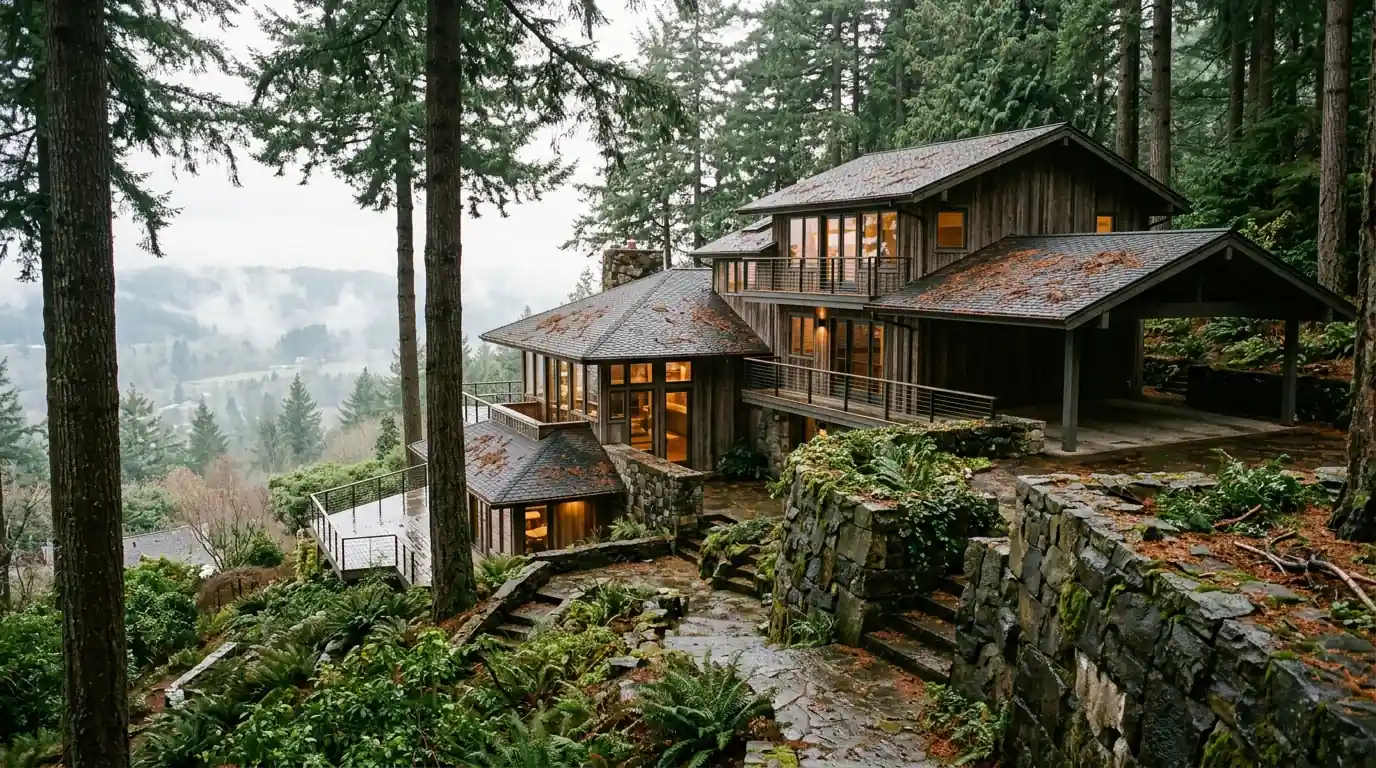
Many Southwest Hills homes are built on the hillside with the street side at one level and the back dropping two or three stories toward the canyon. Roofs are often large and broken into several levels, with low-slope sections over decks and garages, long valleys, skylights and big chimneys. Older homes may still have cedar shake or have switched to architectural shingles, while midcentury houses carry low-pitch or flat roofs with wide overhangs and clerestory windows.
Douglas firs and bigleaf maples tower over most lots. Needles, cones and leaves land on the roof year round, and the shade keeps north and east slopes damp through most of the wet season. Homes higher up toward Council Crest catch more wind and occasional snow and ice, while those deeper in the canyons stay shaded and grow the thickest moss we see in Portland.
What roof problems come with tall trees and steep lots?
Limbs and trees on the roof
Winter wind and ice storms, like the January 2024 event, bring fir limbs down onto West Hills roofs. We tarp the opening the same day, remove debris, then rebuild rafters, decking, underlayment and shingles to match.
Heavy moss on shaded slopes
Roofs under dense canopy stay wet for months and grow thick moss that lifts shingles and holds water. We soft wash it off rather than pressure washing, which strips granules, and install zinc strips to slow regrowth.
Valleys and gutters packed with needles
Fir needles pile up in valleys and gutters faster here than almost anywhere in the city. Water backs up under the shingles and overflows onto decks. Regular cleaning and gutter guards built for needles help most.
Aging cedar shake roofs
Shake roofs under heavy shade weather unevenly, split and grow moss and lichen. We replace broken shakes and restore what can be saved, or price a reroof in new shake, synthetic shake or metal when the roof is worn through.
Low-slope sections on hillside homes
Decks, garages and midcentury roof lines often use flat or low-slope sections. When those surfaces were shingled or the membrane has aged, leaks follow. We replace them with TPO, EPDM or torch-down and flash the wall joints.
Roofing services in Southwest Hills
Tree damage, moss and needle-clogged gutters drive most Southwest Hills calls, along with shake repair and full reroofs on larger hillside homes.
Fallen Tree Roof Repair
A fir limb or whole tree on a Portland roof is a framing problem as much as a roofing problem. Rafters, ceiling joists and decking often need...
Roof Moss Removal
Moss on a Portland roof is almost a given under the firs. We take it off by hand and brush, treat what is left and add zinc so it grows back slower.
Emergency Roof Tarping
When a Portland roof has a hole too big to fix that night, a properly anchored tarp keeps rain out of the house for weeks while repairs, insurance...
Cedar Shake Repair & Restoration
A shake roof with moss in the gaps, a few split pieces and gray, tired wood often has years left in it. We repair and restore existing cedar roofs in...
Metal Roofing
Metal roofs shrug off the things that wear Portland roofs down: constant rain, moss, fir needles and wind. We install standing seam and ribbed metal...
Gutter Guards
Not every gutter guard can stop Douglas fir needles. We fit Portland homes with guards matched to the trees overhead, so gutters keep flowing through...
Skylight Repair
Skylights bring welcome light into Portland homes through the gray months, but they are also a hole in the roof. Most skylight leaks come from the...
Roof Replacement
When patches stop holding and the shingles are bare, curling or shedding granules, a full reroof is the smarter spend. We replace Portland roofs from...
How we get a roof job done on a West Hills slope
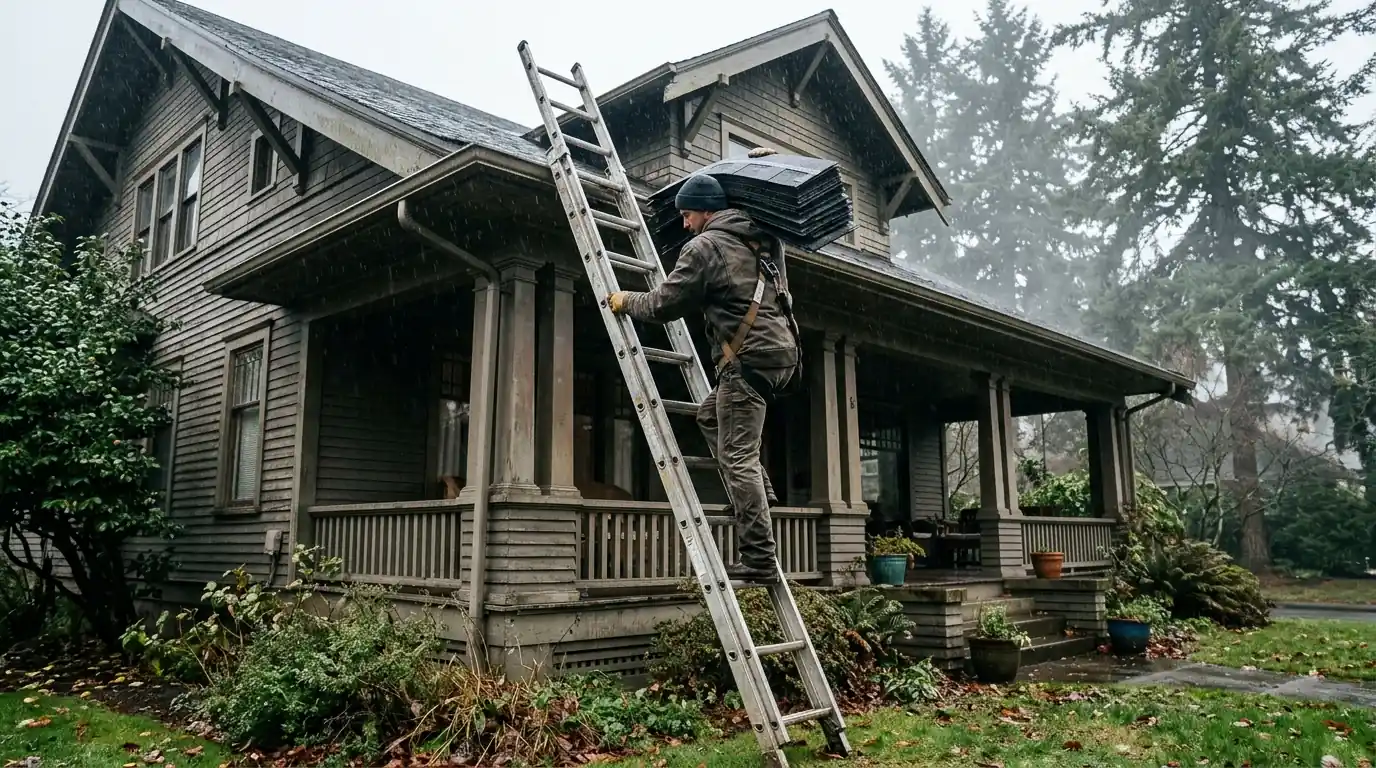
Narrow, winding roads and steep driveways mean we often bring smaller trucks and stage materials in stages, sometimes with a roof conveyor or hoist on the high side. Parking on curving streets takes planning, so we coordinate with you before delivery day. Steep pitches and tall drop-offs on the downhill side call for full fall protection on every job. We protect decks, landscaping and glass, and we give you a written estimate that already includes the access and safety setup.
Roofing questions from Southwest Hills
How often should I remove moss from my Southwest Hills roof?
On heavily shaded Southwest Hills roofs, most homeowners need moss treatment every year or two. We soft wash the moss off in late summer or early fall, clear valleys and gutters, and add zinc strips near the ridge. Treating it before it gets thick protects the shingles and keeps water flowing off the roof.
What should I do if a fir limb falls on my Southwest Hills roof?
Stay out of the rooms under the damage and call us at (503) 917-5484, any hour. We come out, tarp the opening to stop water, and photograph everything for your insurance claim. Once the tree is cleared, we repair framing and decking and match the roofing so the patch blends in.
Is metal roofing a good choice for Southwest Hills homes under trees?
Standing seam metal works well on many Southwest Hills homes. Needles and moss have a harder time holding on to smooth metal panels, and it sheds snow and debris on steep pitches. It costs more up front than shingles, but it handles heavy shade and debris well. We can price both for comparison.
Nearby places we roof
Roof trouble in Southwest Hills?
Call and describe what you are seeing. We answer 24/7 and send a roofer as soon as one is free.