Roof flashing repair at Portland walls, valleys and edges
Most roof leaks in Portland start at a joint, not in the open field of shingles. Flashing at dormers, sidewalls, valleys and roof edges is where water gets in, and where careful metalwork keeps it out.
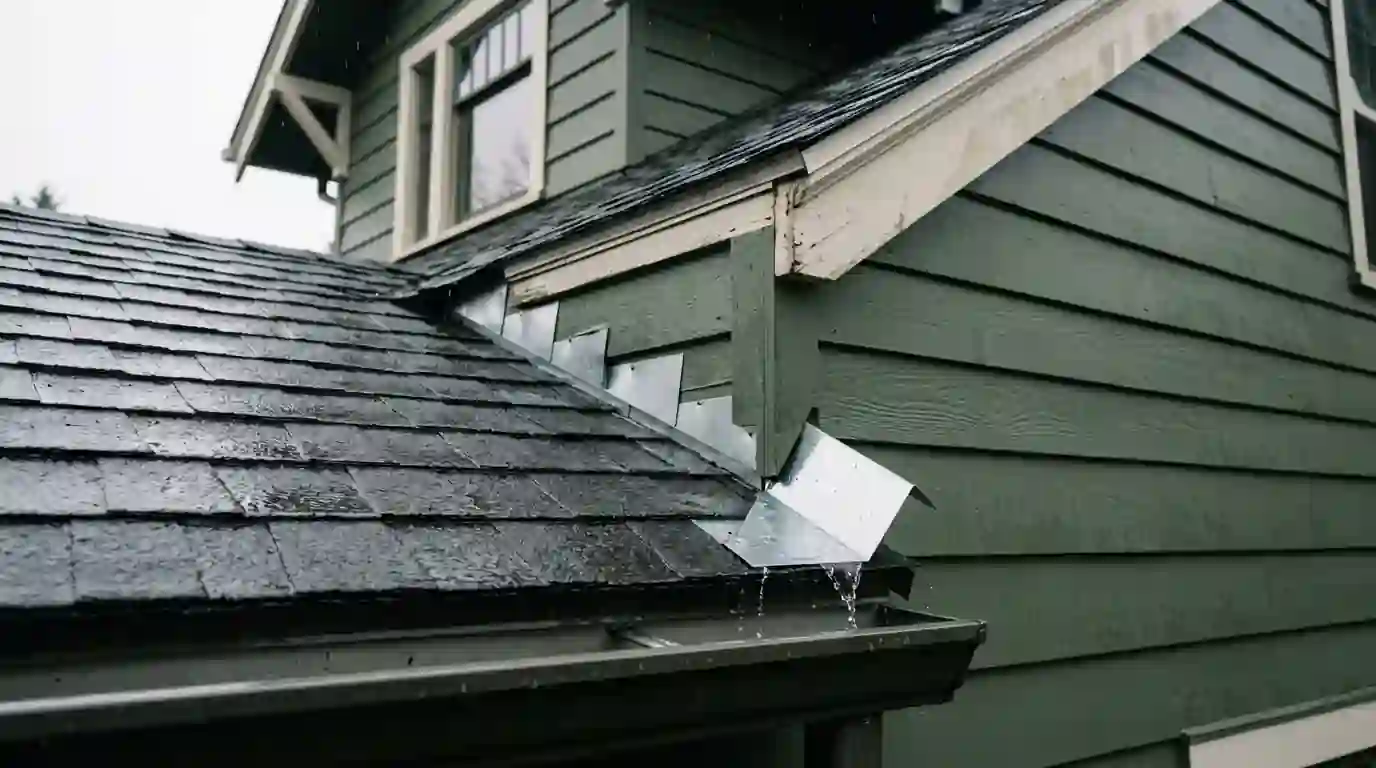
Roof flashing repair in Portland generally costs $395 to $3,180, depending on the location and length of the flashing. Common jobs include rebuilding step flashing where a roof meets a wall or dormer, adding missing kickout flashing, replacing rusted valley metal, and installing drip edge along eaves and rakes. We remove the surrounding shingles, install new metal correctly lapped, and reshingle. Call (503) 917-5484.
Flashing is the thin metal that covers every joint where a roof changes direction or meets something else: a sidewall, a dormer face, a lower roof tucked under a second story, a valley between two slopes, the edge where shingles end at the gutter. Shingles alone can shed water across a flat plane, but at those joints they need metal underneath and alongside them to turn water back onto the roof surface.
Because flashing sits partly hidden under shingles and siding, it is easy to forget until it fails. When it does, the leak often looks mysterious. Water slips behind a dormer wall and stains a closet ceiling. A missing kickout at the bottom of a roof-to-wall joint sends water inside the siding and rots the wall sheathing for years before anyone notices. A rusted open valley lets water drip onto decking in the middle of the roof.
Repairing flashing properly means opening up the joint, removing old metal and replacing it with new pieces lapped in the right order, so water always runs from one piece onto the outside of the next. It is fussy work, and it is exactly the work that keeps a roof dry. Done once and done right, new flashing usually stays in service through at least one more shingle replacement.
Flashing types and when each one is used
Each joint on a roof calls for a specific kind of flashing.
Step flashing
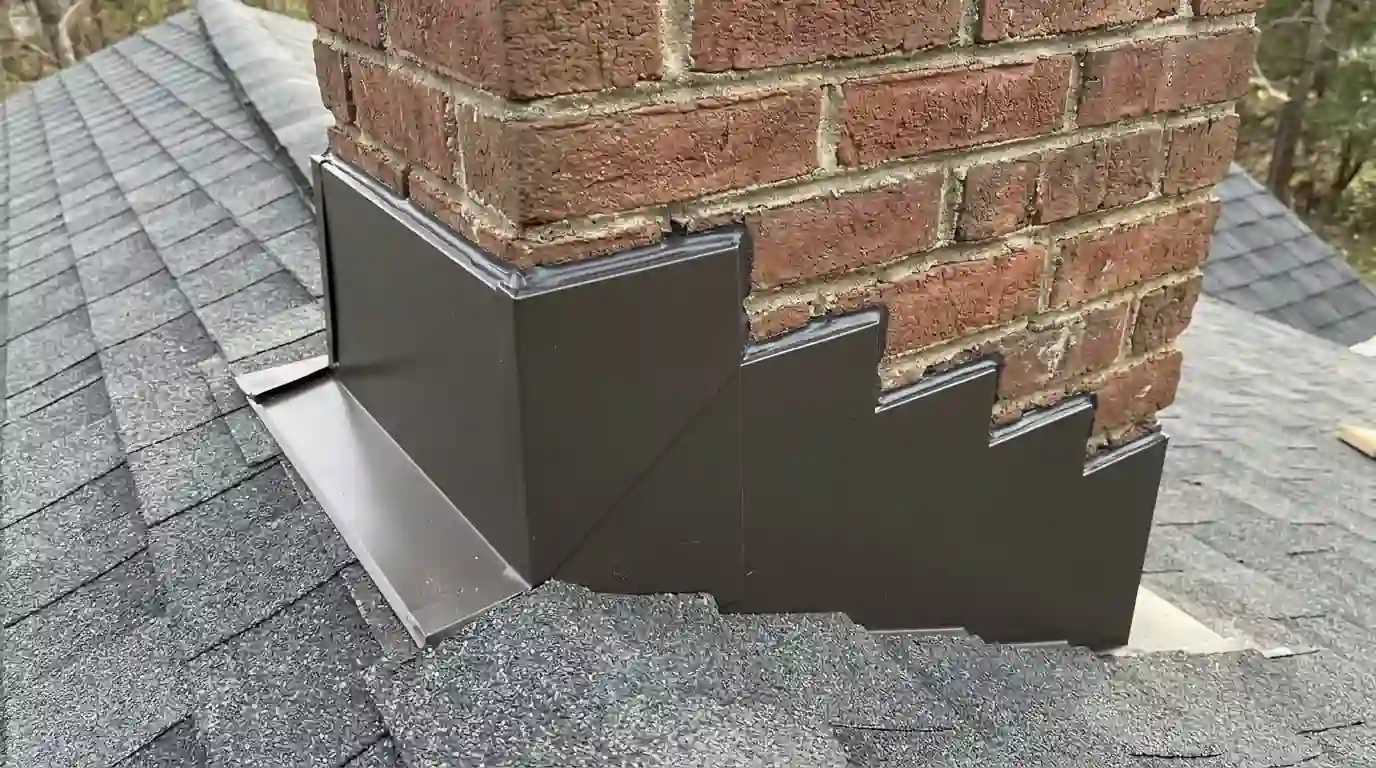
Small L-shaped pieces woven in with each shingle course along a sidewall or dormer. Because each piece overlaps the next, water steps down and out. It is the standard for any slope meeting a wall.
Kickout flashing
A short angled diverter at the bottom of a roof-to-wall joint that throws water into the gutter. It is inexpensive, often missing on older homes and one of the most valuable flashing upgrades.
Valley flashing
Open metal valleys use a wide sheet of prefinished steel or copper down the center. Closed valleys rely on ice and water shield underneath. We repair or convert them depending on the roof.
Drip edge and apron flashing
Drip edge runs along eaves and rakes to carry water clear of the fascia. Apron flashing covers the joint where the top of a slope meets a wall. Both are simple, effective pieces.
Where roof flashing usually fails on a house
These are the joints that cause the most flashing calls we get.
Dormer walls and cheeks
Dormers have sidewalls on both sides and a face at the front, each needing step flashing. Stains inside a dormer room or in the ceiling below it often trace back to a gap in this flashing.
Roof meeting a second story
Where a lower roof runs into a taller wall, step flashing must be tucked behind the siding. Siding replacements and repainting often damage or seal over this flashing incorrectly.
Missing kickout at the wall base
Where a roof edge ends against a wall, a small angled kickout should turn water into the gutter. Without it, water runs down inside the wall and rots siding and framing below.
Rusted or split valley metal
Open metal valleys on older Portland homes rust through after decades. Pinholes and split seams let water onto the decking right where the most water on the roof flows.
Headwall flashing at a roof top
Where the top of a slope meets a vertical wall, a single long apron flashing covers the joint. When it pulls away or is lapped wrong, water sheets behind it into the wall.
Missing or bent drip edge
Without drip edge at the eaves and rakes, water wicks back under the shingles onto the fascia and deck edge. It is a common source of rot along the roofline on older roofs.
How we repair flashing so water always laps outward
Find the failed joint
We trace staining inside and look at the joint from the roof. On walls, we check where siding meets the roof, whether a kickout exists and whether the flashing is still tucked behind the siding or sealed over it.
Open shingles and siding carefully
Our roofers lift or remove shingles along the joint and, where needed, loosen the bottom courses of siding so the old flashing can come out without damaging the wall above.
Replace rotted wood under the joint
Leaks at flashing usually soften the decking and sometimes the wall sheathing. We cut out soft wood, replace it and cover the joint with ice and water shield before new metal goes in.
Install new flashing in order
Step flashing is woven one piece per shingle course. Headwall and apron flashing go under the siding and over the shingles. Every piece laps over the one below so water only ever runs outward.
Add kickouts and drip edge
We install kickout flashing at every roof-to-wall termination and drip edge along eaves and rakes where it is missing. These small parts stop a large share of the water damage we see.
Restore siding and shingles
Siding is reset over the flashing with proper clearance from the roof, and shingles are reinstalled or replaced. We water test the joint when the leak history makes that worthwhile.
Materials for roof flashing repair come from manufacturers such as Malarkey, GAF, Owens Corning, CertainTeed, Carlisle and Velux, chosen for the job rather than the logo.
Typical 2026 roof flashing repair costs in Portland
Price depends on the length of the joint, how much siding or shingle must come off, and whether rot is found.
| Work | Typical Portland range |
|---|---|
| Kickout flashing installper kickout | $165 to $385 |
| Step flashing rebuild along a sidewallper run | $745 to $1,815 |
| Dormer flashing rebuildper dormer | $1,185 to $3,180 |
| Valley metal replacementper valley | $985 to $2,465 |
| Drip edge install on an existing roofper linear foot | $5.85 to $11.45 |
Flashing jobs vary a lot by joint, so these are starting ranges and not a quote. Your real price comes after an on-roof look at the joint and a written estimate.
What moves the price:
- Length and number of joints
- Siding type to remove and reset
- Rotted decking or wall sheathing
- Roof pitch and access
- Metal type, steel or copper
Flashing problems common to Portland houses
Portland's housing stock is full of the joints flashing has to cover. Craftsman bungalows in Concordia, Woodstock and Sellwood-Moreland often have shed or gabled dormers. Old Portland and Foursquare homes in Irvington have porch roofs running into the main wall. Mid-century and newer homes in Beaverton and Hillsboro add complex rooflines with multiple roof-to-wall joints. Each one is a place where flashing has to be correct.
Our long wet season finds every weakness. Months of rain mean a missing kickout soaks the same wall again and again, and wall rot from that one omission is among the most common hidden damage we find. Many older homes also had siding replaced or painted over the years, with flashing caulked to the wall instead of tucked behind it. That works for a while, then fails once Portland's rain finds the crack.
Why careful flashing work saves your walls and roof
Correct lapping, every piece
Flashing only works when each piece overlaps the one below. We build it in that order rather than relying on sealant to make up for metal set the wrong way.
Kickouts added where missing
We install kickouts wherever a roof ends against a wall, because that one small piece prevents years of hidden wall rot.
Siding handled with care
We work flashing back behind the siding instead of caulking metal to its face, and we reset siding with proper clearance so it does not wick water.
Roof Flashing Repair questions from Portland homeowners
What is kickout flashing and does my Portland home need it?
Kickout flashing is a small angled piece at the bottom of a roof-to-wall joint that diverts water into the gutter. Any home where a roof edge ends against a wall needs one. Many older Portland houses never had them, and the result is often rotted siding and sheathing below the joint.
Can roof flashing be repaired without replacing siding?
Usually, yes. We loosen and lift the lowest courses of siding along the joint, install new flashing behind it, and reset the siding. If the siding is rotten from years of leaks, some pieces will need replacing. We point that out before starting.
Why does my Portland dormer leak only in some storms?
Dormer leaks that appear in wind-driven rain often come from step flashing or the dormer face, where rain is pushed sideways under laps. Leaks in steady rain more often point to a valley or a headwall. We check each joint on the dormer to find which one is letting water in.
Is caulk an acceptable repair for roof flashing?
Only as a finishing seal, not as the repair itself. Caulk dries out and cracks in a few Portland seasons. Flashing has to be lapped so it sheds water without depending on sealant. We remove caulked-over joints and rebuild them with properly installed metal.
Should flashing be replaced during a roof replacement?
Yes. Reusing old step flashing, valley metal and drip edge during a reroof saves little and often leaves the weakest parts of the old roof in place. On any reroof we replace flashing at walls, valleys and edges along with the shingles.
Where we do this work most
We cover the whole metro. These are the places we are on roofs most often:
Related roofing services
Chimney Flashing Repair
Portland's old brick chimneys are the single most common leak point we see. Proper chimney flashing uses two layers of metal, one woven into the...
Roof Leak Repair
A stain on a Portland ceiling is rarely under the hole that caused it. We trace the water back along rafters and decking to the true entry point...
Fascia & Soffit Repair
Soft fascia behind the gutter, peeling soffit paint or birds nesting in the eaves usually means water has been getting past your roof edge. We...
Dry Rot & Roof Deck Repair
A soft spot underfoot on the roof or a sag you can see from the street points to rotted sheathing below the shingles. We open Portland roofs, remove...
Need roof flashing repair in Portland?
Call and tell us what you are seeing. We answer 24/7 and can usually talk you through the next step on the first call.