Synthetic slate and shake roofing for Portland homes
Want the look of slate or cedar without the weight, the splitting or the yearly moss fight? Composite slate and shake give Portland homes that character with a roof made for our rain.
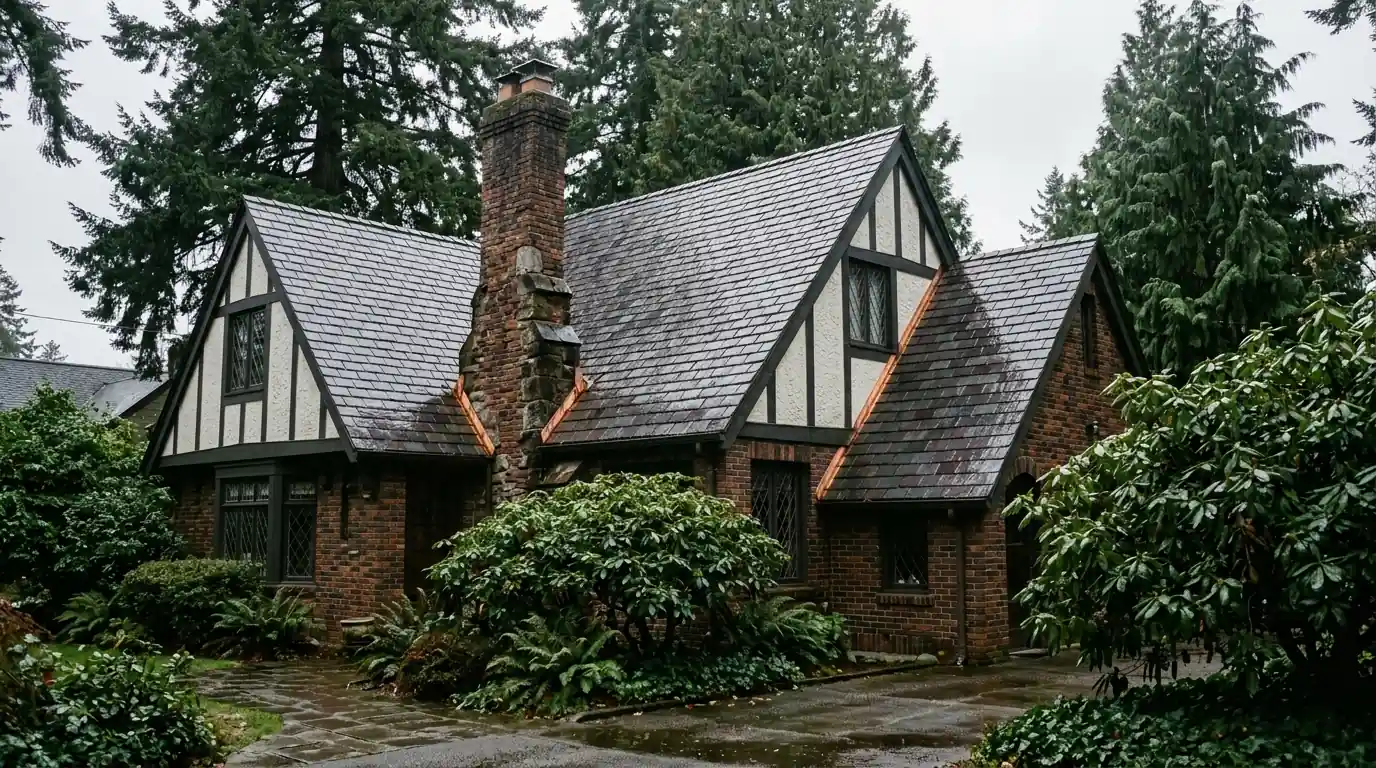
Synthetic slate and shake roofs in Portland use molded composite tiles, such as DaVinci Roofscapes, that mimic natural slate or hand split cedar. They are installed over solid decking with synthetic underlayment, ice and water shield and matching hip and ridge pieces. They resist moss, rot and impact and weigh far less than real slate. Installed costs commonly run $1,480 to $2,360 per square.
Composite roofing solves a problem many Portland homeowners face. Your house was built to wear slate or cedar, or you simply love how those roofs look, but real slate is heavy and costly, and real cedar needs regular moss control and treatment in our climate. Synthetic slate and shake tiles are molded from engineered polymers, with color blended through the material, and they are shaped from real slate and shake to look authentic from the street.
These products install much like a premium shingle roof, one tile at a time over solid decking, but they need careful attention to layout, color blending and flashing. Mixing tile widths and shades in the right pattern is what makes a composite roof look natural rather than manufactured. We install DaVinci and similar composite lines on older homes, historic districts and new custom builds across the metro. Call (503) 917-5484 to see samples and talk through options.
Composite slate versus composite shake
Both products share the same benefits, but they create very different looks.
Composite slate
Thin, flat tiles with chiseled edges that look like natural quarried slate. Popular blends range from single gray to mixed purples and greens. It suits Tudors, Colonials and formal older homes.
Composite shake
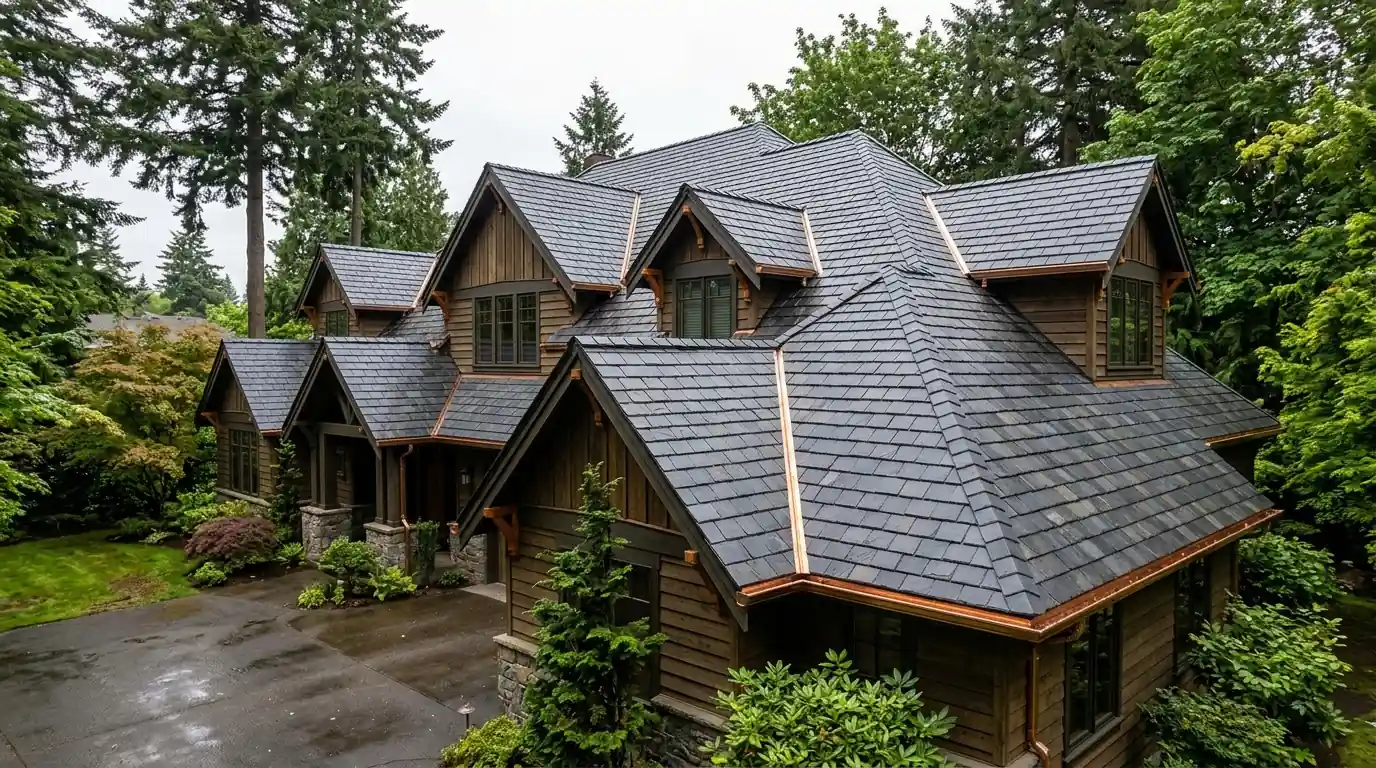
Thick, textured tiles shaped from real hand split cedar. Color blends imitate new cedar or aged gray. It is a natural fit for Craftsman, cottage and lodge style homes that once had wood roofs.
Multi-width tile systems
Some lines offer several tile widths mixed on the roof for a more natural, handmade look. It takes more planning but produces a roof that looks less uniform and more authentic.
Single-width tile systems
A single tile width installs faster and costs somewhat less. It still looks convincing from the street and works well on modern homes or simple roof shapes.
When composite slate or shake makes the most sense
These roofs fit some homes and owners especially well.
You love cedar but not upkeep
Synthetic shake gives you the thick butt lines and textured look of cedar without cleaning keyways, treating wood or fighting moss every few years. It does not split, cup or rot in Portland rain.
The house calls for slate
Tudors, Colonials and grand older homes in Portland often look best with slate. Composite slate offers that look at a fraction of the weight, so the framing usually needs no reinforcement.
You are in a historic area
In districts like Irvington, Ladd area streets near Richmond and parts of Laurelhurst, a roof that matches the period look matters. Composite slate and shake can satisfy neighborhood character concerns well.
You want impact and fire resistance
Many composite tiles carry high impact and fire ratings. That matters under big trees prone to dropping limbs and for homes near wooded slopes where fire is part of the conversation.
You plan to stay for decades
Composite roofs cost more upfront than asphalt but last much longer with little maintenance. Owners planning to stay many years often find the long-term value works out well.
How we install a composite slate or shake roof
Pick profile and color blend
We bring sample tiles and show how manufacturers blend colors, from single tone slate to multi-shade cedar weathering. Choosing a blend that suits the house and nearby homes is the most important design decision.
Tear off and flatten the deck
Old roofing comes off, decking is repaired, and solid plywood is installed where needed. Composite tiles need a solid, flat deck, and we fix humps and soft spots so tiles lie evenly.
Underlayment and ice shield
Ice and water shield goes at eaves, valleys, and around penetrations, with synthetic underlayment across the field. Drip edge and starter tiles are set in the color matching the finished roof.
Lay tiles with mixed widths
Tiles go down in a random but planned pattern of widths and colors, following the manufacturer layout guidance. Exposures stay consistent, and joints offset between courses so water never finds a straight path.
Flash with copper or matching metal
Valleys, walls and chimneys get step flashing and counterflashing in copper or color-matched metal. Composite slate roofs often look best with copper details that weather to a rich brown over time.
Hip, ridge and final review
Matching hip and ridge tiles cap the roof, and ventilation is balanced so the attic stays dry. We check every slope for blend and alignment and clean up all scraps and fasteners.
Materials for synthetic slate & shake roofing come from manufacturers such as Malarkey, GAF, Owens Corning, CertainTeed, Carlisle and Velux, chosen for the job rather than the logo.
What does synthetic slate or shake cost in Portland?
Composite roofs cost more than asphalt and often similar to real cedar. These ranges include tear-off, underlayment and flashing.
| Work | Typical Portland range |
|---|---|
| Composite shake, installed with tear-offper square | $1,480 to $2,240 |
| Composite slate, installed with tear-offper square | $1,560 to $2,360 |
| Typical Portland home, full composite roofper home | $37,640 to $74,320 |
| Copper valley and wall flashing upgradeper roof | $2,180 to $6,430 |
Composite pricing depends heavily on the tile line and blend, so treat these as rough guides. Firm pricing comes in a written estimate after we measure the roof.
What moves the price:
- Slate or shake profile
- Single or multi-width tiles
- Roof size and complexity
- Copper or painted metal flashing
- Deck repairs needed
- Pitch and access
Why composite roofs suit Portland homes so well
The biggest advantage here is moss resistance. Real cedar under the firs of Alameda, Beaumont-Wilshire or Mount Tabor needs regular cleaning and treatment, and natural slate can still grow moss on its rough surface in deep shade. Composite tiles absorb almost no water, dry quickly and give moss a much harder time taking hold. A rinse every so often keeps them looking clean, with no granules to lose and no wood fibers to damage.
Weight matters for older Portland homes too. Many Craftsman and Old Portland houses were framed for wood shingles, not heavy stone. Composite slate weighs a fraction of real slate, so it usually goes on without structural work. In Lake Oswego and the Southwest Hills, owners of larger homes with complex rooflines choose composite slate or shake to get a high-end look while avoiding the cost of reinforcing the framing.
What sets our composite installations apart
Color blends that look natural
We follow manufacturer blend patterns and adjust on the roof so no single color or width clusters in one spot, which is what keeps composite roofs from looking manufactured.
Flashing details done properly
Copper or matching metal flashing is fitted carefully at every wall, valley and chimney so the premium roof has premium details at its weakest points.
Honest material comparisons
We compare composite, real cedar and architectural asphalt for your specific home so you understand the tradeoffs in cost, upkeep and look before you decide.
Synthetic Slate & Shake Roofing questions from Portland homeowners
Does synthetic slate look real on Portland homes?
Good composite slate looks very convincing from the street, especially with a mixed color blend and multiple tile widths. Up close, you can tell it is not stone, but from the sidewalk most people cannot. Careful layout and copper flashing help a lot with the authentic look.
Is DaVinci composite roofing good for Portland weather?
Yes. DaVinci and similar composite tiles absorb very little water, resist moss and rot, and handle freeze and thaw cycles well. That makes them a strong match for our long wet season and the occasional ice storm.
How much does synthetic shake weigh compared to cedar in Portland homes?
Composite shake weighs roughly the same as cedar and far less than real slate or concrete tile. Most homes framed for wood shingles or shakes can take composite without structural reinforcement, though we always check the framing during inspection.
Can synthetic slate be installed in Portland historic districts?
In many cases, yes. Composite slate and shake can match the period look of older homes well. Historic district rules vary, so it is worth checking with the city or neighborhood guidelines for your property before choosing a product.
Does composite roofing need moss treatment in Portland?
Much less than cedar or asphalt. Moss struggles to grow on composite because the material does not hold water. In deep shade, a light rinse or cleaning every few years keeps the roof looking clean. No preservative treatments are needed.
Where we do this work most
We cover the whole metro. These are the places we are on roofs most often:
Related roofing services
Cedar Shake Roofing
Few roofs suit an old Portland house like real western red cedar. We install new shake roofs that look right on Craftsman, Tudor and lodge style...
Roof Replacement
When patches stop holding and the shingles are bare, curling or shedding granules, a full reroof is the smarter spend. We replace Portland roofs from...
Asphalt Shingle Roofing
Asphalt shingles cover most Portland roofs, but the line you pick, the granules on it and how each shingle is nailed decide how well it handles eight...
Chimney Flashing Repair
Portland's old brick chimneys are the single most common leak point we see. Proper chimney flashing uses two layers of metal, one woven into the...
Roof Inspection
A clear, photo-backed report on your Portland roof, for buying or selling a home, after a windstorm or before winter, with an honest read on how many...
Need synthetic slate & shake roofing in Portland?
Call and tell us what you are seeing. We answer 24/7 and can usually talk you through the next step on the first call.