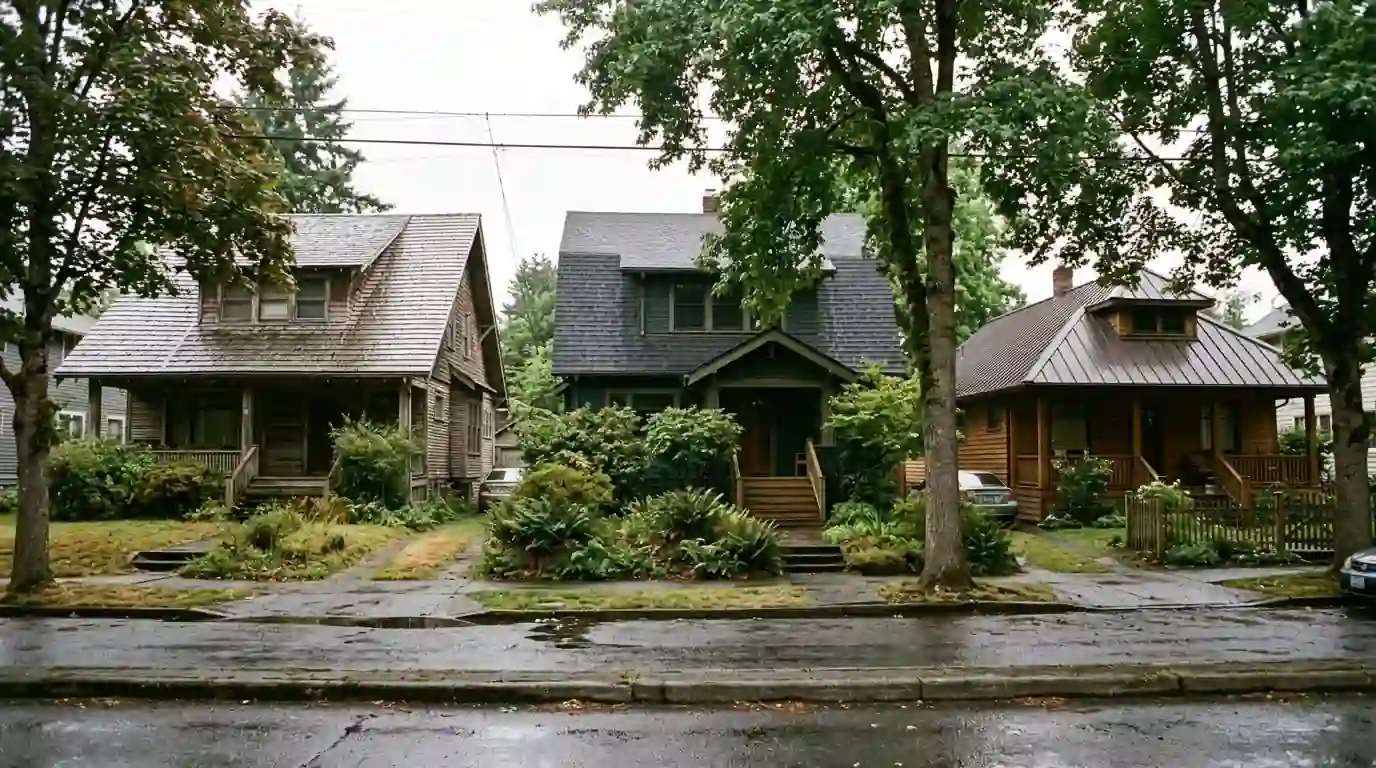
Walk through Eastmoreland or the older streets around Mount Tabor and you'll see all three: weathered silver cedar on a 1920s Tudor, charcoal architectural shingles on the Craftsman next door, and a dark bronze standing seam roof on a remodeled bungalow around the corner. Each one can be the right choice. Each also behaves differently under eight months of rain, heavy tree cover and the occasional ice storm.
Rather than rank them, this article looks at how each material handles the specific conditions Portland roofs face, what each costs to install and maintain, and which kinds of houses and owners tend to be happiest with each one. Prices are typical 2026 ranges for the Portland metro and get confirmed with a written estimate after we've seen the roof.
How does each material handle months of steady rain and moss?
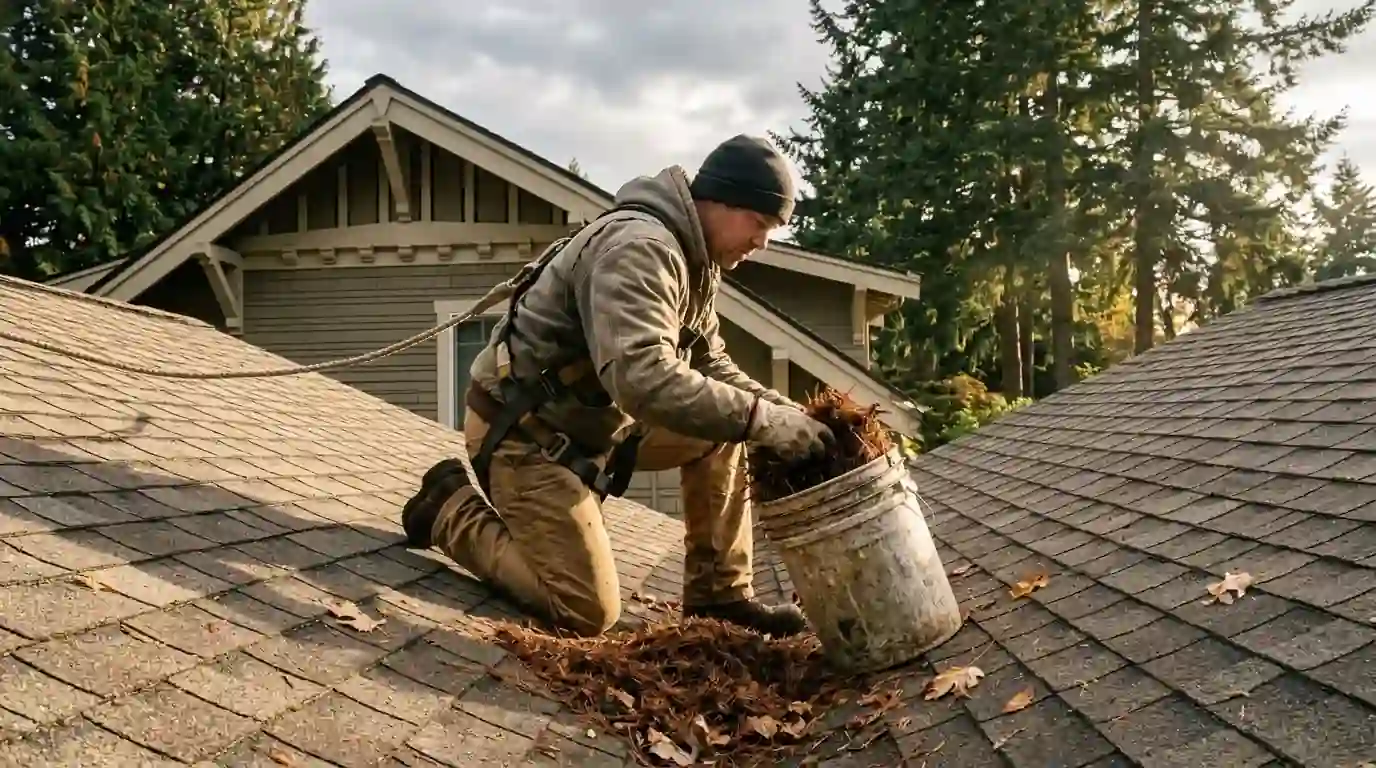
Rain alone doesn't hurt a well-built roof. Rain that sits does. Architectural asphalt sheds water well when it's new, but as granules wear, the surface holds moisture longer and moss moves in, especially under firs and on north slopes. Regular moss removal and zinc strips keep it in check.
Cedar is wood, and wood that stays wet decays. Shakes installed with proper spacing and breathable underlayment dry between storms. Shakes under heavy shade, packed with needles and moss, cup, split and rot years early. Cedar in Portland only works well with steady cleaning and treatment.
Standing seam metal is the clear winner here. Water and needles slide off, there's no granule surface for moss to grip, and the concealed fasteners sit above the water line under the seams. You may see some algae streaking on shaded panels, but it doesn't damage the roof. The tradeoff is noise and condensation: metal over a solid deck with good underlayment is quiet in a downpour, and a vented attic keeps the underside of the panels from sweating on cold nights.
Which roof stands up best to east winds and ice storms?
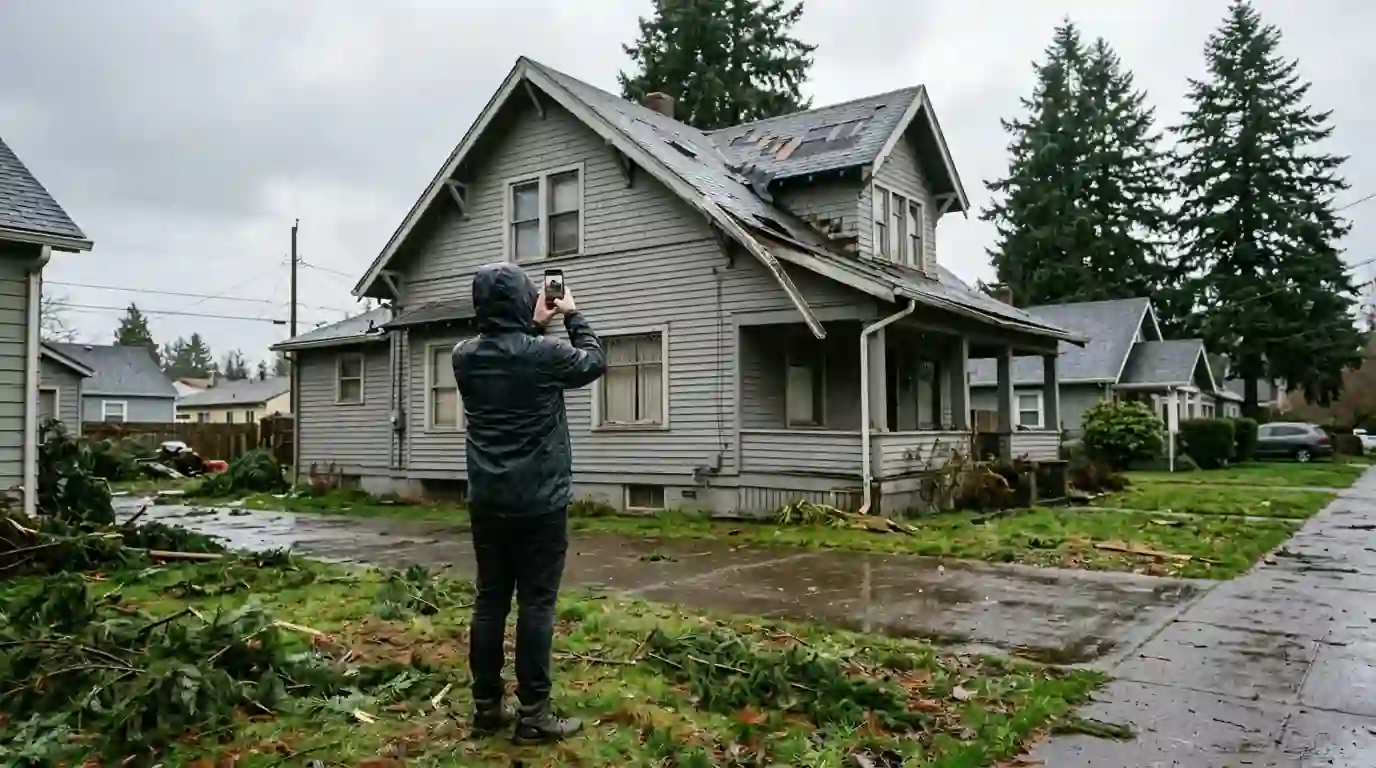
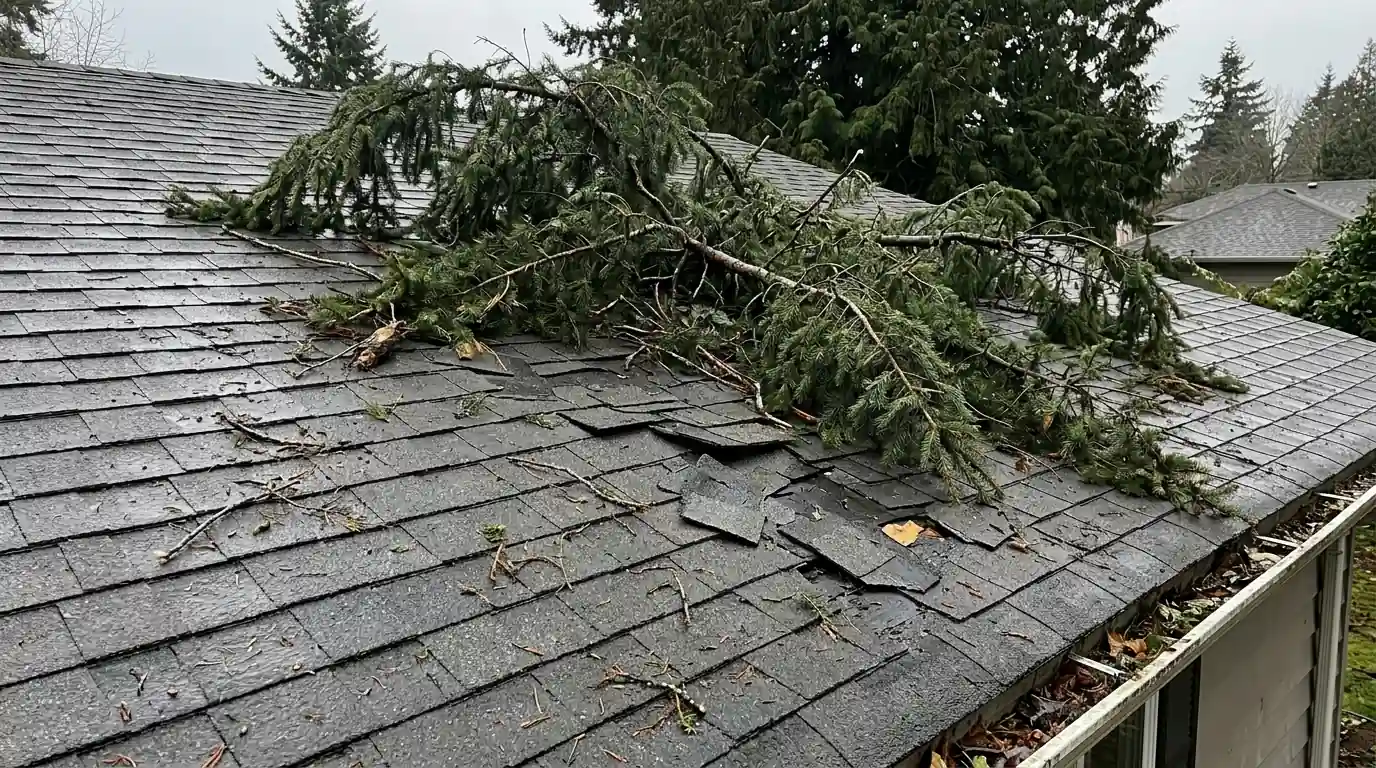
The east wind that pours out of the Columbia River Gorge hits Troutdale, Gresham and the east side of Portland hardest, and the January 2024 ice storm showed how much weight and wind a roof can take in one event. Each material responds in its own way:
- Architectural asphalt holds well when the sealant strips have sealed down and nailing is correct, but aging shingles that have lost their seal lift and crease in strong gusts
- Cedar shake resists wind when properly nailed, though dry, brittle shakes can split under falling ice and branches
- Standing seam metal handles wind uplift very well and sheds ice and snow, but falling limbs can dent panels and sliding ice needs snow guards over doors and walkways
What does each option cost to install and keep up?
Installed price is only part of the story. Upkeep over the life of the roof shifts the comparison, especially for cedar. These are typical 2026 Portland ranges for a full tear-off and install, plus a rough sense of maintenance. Treat them as typical figures, not a quote: your real price comes from an on-roof look and a written estimate that accounts for pitch, decking and access.
- Architectural asphalt: $565 to $865 per square installed; moss treatment and gutter clearing every one to two years under trees
- Cedar shake: $1,240 to $1,890 per square installed; cleaning and treatment every few years, plus periodic shake replacement
- Standing seam metal: $1,180 to $1,760 per square installed; occasional checks of sealant, pipe boots and snow guards
Will the roof suit the style of your house?
Appearance matters, and Portland neighborhoods have strong character. Cedar fits naturally on Tudors, English cottages and rustic homes in the West Hills, where the silver gray weathering blends with tree cover. It's the most traditional look, and on certain houses nothing else quite matches it.
Architectural asphalt is the most flexible choice. Dimensional shingles from Malarkey, GAF or CertainTeed come in shades that suit Craftsman, Foursquare, ranch and newer suburban homes alike. Some lines mimic the shadow lines of shake at a fraction of the cost and upkeep.
Standing seam metal reads modern, though darker colors with narrow panels look at home on farmhouse styles, mid-century houses and contemporary infill. On a traditional Craftsman it can work well on porch roofs and dormers as an accent while the main roof stays in shingles. If you live in a historic district or have an HOA, check their rules before choosing a material.
Does your roof structure limit the choice?
Many older Portland homes were originally roofed in cedar over spaced boards called skip sheathing. That works for shakes because air moves through the gaps, but asphalt shingles and most metal systems need a solid deck. Switching from cedar to either one usually means adding plywood or OSB over the boards, which adds cost but also stiffens the roof.
Weight is rarely a problem for these three. Asphalt and cedar weigh about the same, and metal is lighter than both. Pitch matters more. Standing seam can go on fairly low slopes, while asphalt shingles need more pitch to shed water properly, and cedar does best on steeper roofs where water runs off quickly.
Penetrations make a difference too. A roof with several skylights, a chimney and plumbing vents is more work in metal, since each one needs custom flashing that matches the panels. That's not a reason to avoid metal, just a reason the price can climb on busy roofs.
Which material fits which kind of owner?
After walking a lot of Portland roofs with homeowners, we see a few clear patterns in who ends up happy with what:
- Asphalt suits most people who want a solid, good-looking roof at a fair price and don't mind moss care under trees
- Cedar suits owners of period homes who value the look and accept regular cleaning and treatment as part of owning it
- Metal suits people planning to stay a long time, homes under heavy needle fall and anyone who wants the least upkeep
- Synthetic shake from makers like DaVinci suits owners who love the cedar look but want far less maintenance
How do we help you narrow it down?
We start with your house rather than a brochure. That means checking the deck from the attic, measuring pitch on each slope, noting how much shade and needle fall each face gets and looking at how the neighbors' roofs have aged. Then we price two or three options side by side in writing, so you can see what the difference in cost buys.
Call (503) 917-5484 to set up a visit. We answer 24/7, and we're glad to bring samples so you can see each material against your siding and trim.
Key takeaways
- Architectural asphalt is the most budget-friendly and versatile choice, with moss care needed under trees.
- Cedar shake looks right on period homes but needs regular cleaning to last in Portland shade and rain.
- Standing seam metal sheds water, needles and moss best and has the lowest upkeep.
- Homes with old skip sheathing need a solid deck before switching to asphalt or metal.
- Price two or three options side by side for your specific roof before deciding.
Written and edited by Grady Pelham, Roofing Articles Editor at MY Construction Roofing. Last updated July 2, 2026.