Solar panel removal and reinstall during a Portland reroof
Your roof is worn out but the solar array on top still has years left. We plan the detach, the reroof and the reset as one job so your Portland home is back producing power quickly.
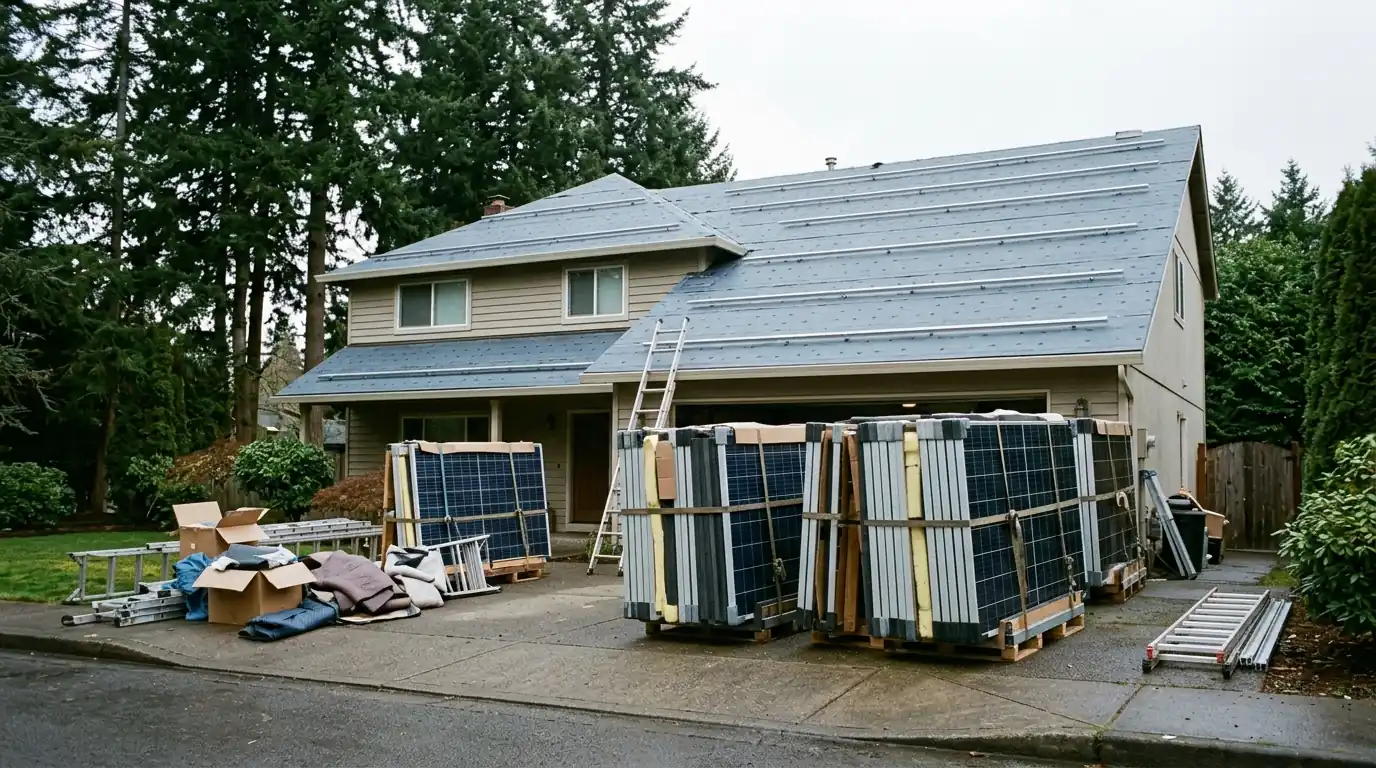
Removing and reinstalling solar panels for a Portland reroof typically costs $112 to $186 per panel, or about $2,340 to $4,890 for a common 16 to 24 panel home system, on top of the roof itself. The array comes down, the roof is replaced with new flashed mounts, the panels go back up, and the system is tested and restarted before we leave.
A lot of Portland solar systems went up in the 2010s on roofs that were already 10 or 15 years old. Now the shingles under those panels are curling and shedding granules while the modules themselves still produce. Reroofing around an array is not possible, and leaving an old roof under 20 years of solar is asking for a leak you can't reach.
We take the array off, store it safely, replace the roof, install new flashed mounting points and set the panels back in place. The roofing and the mount flashing are the part most likely to leak later, so having roofers own that step is the point. We also line up timing with your solar installer if they want to handle electrical sign-off, and we keep you posted on each stage.
Which mounting and roofing setup works best under solar?
These are the choices that matter most when the roof under an array is replaced.
Flashed composite mounts
A low profile mount with an integrated flashing plate that slides under the shingle above it. Water sheds over the plate rather than relying on sealant alone. This is our default on asphalt shingle reroofs.
Architectural asphalt shingles
Laminated shingles from Malarkey, GAF or Owens Corning hold up well under panels and are easy to flash around. They also let us match the roof color outside the array so the house looks uniform.
Standing seam metal roof
Panels clamp to the seams with no roof penetrations at all. It costs more up front, but if you plan to keep solar for decades, metal and clamps remove most of the leak points.
Critter guard around the array
Mesh around the panel edges keeps squirrels and birds from nesting underneath and chewing wires. Since everything is coming apart anyway, it costs little to add during the reset.
When does a solar array need to come off the roof?
These are the most common reasons a Portland array gets detached and reset.
Shingles worn under the panels
Panels shade the roof and slow drying, but the exposed courses around them still age in the sun. When the edges of the array show curled tabs, bare granules or cracked ridge caps, the hidden section is usually close behind.
Leaks near mounting feet
Older lag-bolted mounts sealed with only caulk or a dab of sealant start dripping after enough freeze and thaw cycles. Stains on ceilings under the array often trace back to one or two failed penetrations.
Moss growing under the modules
The dark, damp gap under panels is perfect for moss in Portland. Roots lift shingle edges and hold water against the deck, and you can't clean it properly with the array in place.
Storm or tree damage
A fallen limb or the kind of ice load the January 2024 storm brought can crack decking or bend rails. Panels have to come off to repair the roof framing and sheathing underneath.
Adding panels or new equipment
If you're expanding an array or moving to a new inverter setup, that's a natural point to check the roof underneath. A short reroof first avoids pulling the expanded system off again in a few years.
How a solar detach, reroof and reset works with us
Document the system before touching it
We photograph the array layout, string wiring, rail positions and production readings. That record lets us set the panels back exactly where they were and compare output afterward so you know nothing changed.
Coordinate with solar company and utility
If your installer or monitoring service needs notice, or the system has to be formally shut down, we line that up first. Some owners prefer their original solar company to handle disconnect and reconnect, and we schedule around them.
Shut down and remove the array
The system is shut down at the disconnect, modules are unplugged and lifted off, and rails and mounts come off. Panels are stacked on padded racks on site or in a covered spot so glass and frames stay protected.
Replace the roof completely
Full tear-off down to the decking, rotten sheathing replaced, synthetic underlayment, ice and water shield at eaves and valleys, new drip edge, and new shingles. The old mount holes are filled and sealed before new ones go in.
Install new flashed mounts
Each attachment lands in a rafter and gets a proper flashed mount that sits under the upslope shingle course. That is far more durable than the sealant-only feet many older Portland systems used.
Reset, test and restart
Rails and modules go back in the original layout, wiring is reconnected and secured off the roof surface, and the system is restarted. We check that production matches the readings taken before removal.
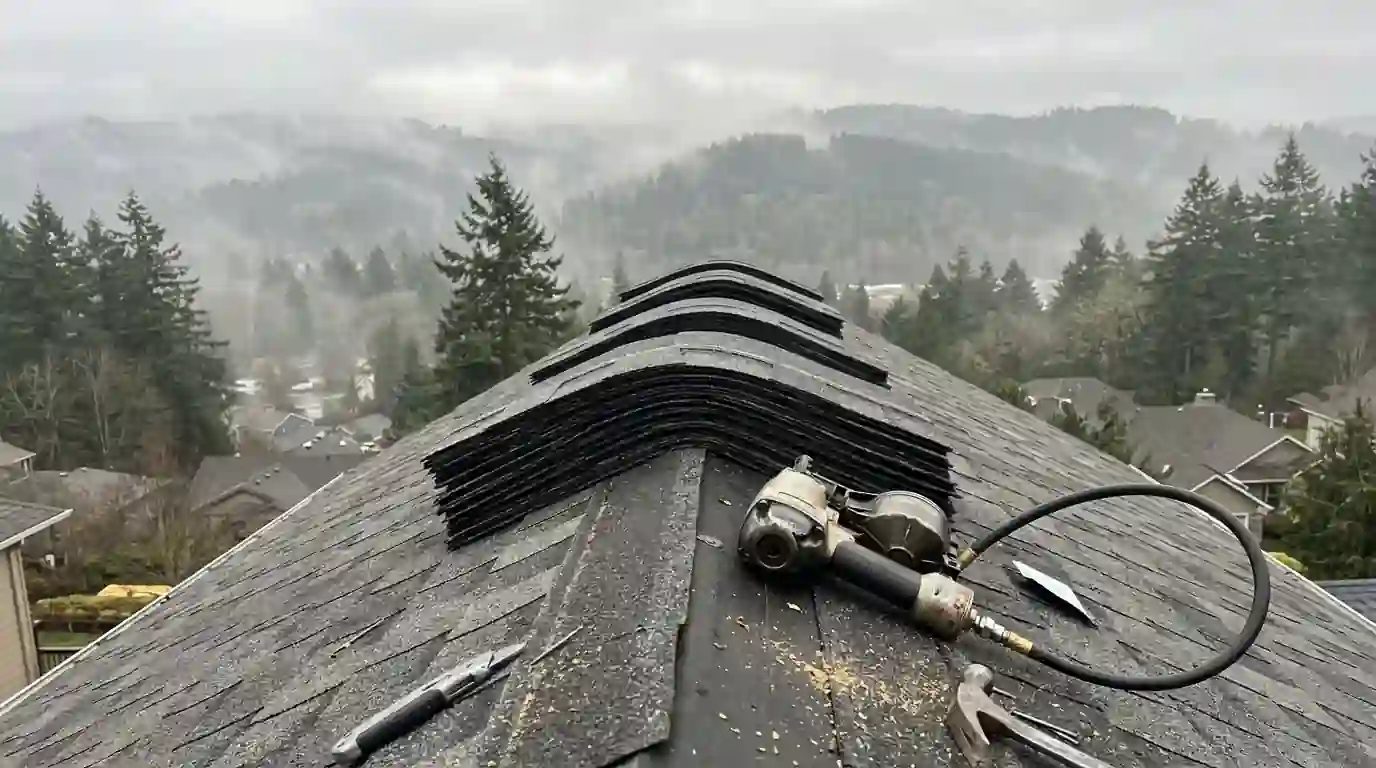
Materials for solar panel removal & reinstall come from manufacturers such as Malarkey, GAF, Owens Corning, CertainTeed, Carlisle and Velux, chosen for the job rather than the logo.
What does solar panel removal and reinstall cost in Portland?
Detach and reset pricing is usually quoted per panel and added to the roofing cost. Here are typical 2026 ranges in the Portland metro.
| Work | Typical Portland range |
|---|---|
| Detach and reset, per panelper panel | $112 to $186 |
| Typical home array, 16 to 24 panelsper job | $2,340 to $4,890 |
| New flashed mounts, per attachmentper mount | $37 to $68 |
| Critter guard mesh around arrayper job | $385 to $935 |
| Microinverter or optimizer swap during resetper unit | $215 to $390 |
These are typical Portland ranges, not a quote. We give you a real number after looking at the roof and system and writing up an estimate for both.
What moves the price:
- Number of panels and arrays
- Roof pitch and stories
- Rail system and mount type
- Microinverters or string inverter
- Solar company coordination needs
- Condition of decking under panels
Solar reroofs in Portland: rain, moss and timing
The wettest months are the worst time to have a house open, so most of our solar reroofs land between May and early October. That's also when solar companies are busiest, which is why we start coordinating weeks ahead. A typical home in Concordia or Rose City Park with a 6 to 8 kW array is down for about a week, and we pick the shortest weather window that fits the whole job.
Moss is a bigger problem under panels than people expect. On shaded homes near Forest Park or in Beaverton cul-de-sacs with tall firs, the gap under the array holds moisture all winter. When we reset an array, we leave enough clearance for airflow and add zinc strips at the ridge where the layout allows, so the new shingles don't end up in the same shape.
Why a roofer should lead your solar reroof
Mount flashing done right
Every penetration under a solar array is a potential leak. We flash each one as part of the roof, under the upslope course, instead of relying on a bead of sealant that dries out in a few seasons.
One schedule for everything
We plan the removal, roofing and reset as a single timeline and coordinate with your solar company when needed. You aren't stuck chasing two outfits who each wait on the other.
Output checked before and after
We record production before removal and compare after the restart. If a string or panel looks off, we catch it while the crew and equipment are still at your house.
Solar Panel Removal & Reinstall questions from Portland homeowners
How long is my Portland solar system offline during a reroof?
For most single family homes, about five to eight days. Removal takes a day, the reroof takes two to four depending on size and weather, and the reset and restart take another day. Production lost during that window is small, especially in summer when we schedule most of this work.
Do I need my original solar installer to remove and reinstall the panels?
Not always. Some systems or financing agreements ask that the original installer or a specific electrician handle disconnect and reconnect. Check your paperwork, and tell us what it says. We'll schedule around them, or handle the detach and reset ourselves when that's allowed.
Should I replace my Portland roof before installing solar?
If the roof is past roughly half its life, yes. Removing and resetting an array later costs thousands, so it's cheaper to reroof first. We look at the shingles, decking and flashing and tell you honestly whether the roof will outlast the panels.
Can moss under solar panels damage a Portland roof?
Yes. Panels keep that section of roof shaded and damp, which is ideal for moss in our wet season. Moss lifts shingle edges and holds water. During a detach and reset we clean the roof completely and leave airflow under the array.
Are panels damaged when they come off a Portland roof?
Breakage is rare when the array is handled carefully. Panels are lifted off by hand, stacked on padding with spacers between them, and kept out of foot traffic. We inspect each module before reinstalling it and point out any existing cracks or hot spots we find.
Where we do this work most
We cover the whole metro. These are the places we are on roofs most often:
Related roofing services
Roof Replacement
When patches stop holding and the shingles are bare, curling or shedding granules, a full reroof is the smarter spend. We replace Portland roofs from...
Asphalt Shingle Roofing
Asphalt shingles cover most Portland roofs, but the line you pick, the granules on it and how each shingle is nailed decide how well it handles eight...
Metal Roofing
Metal roofs shrug off the things that wear Portland roofs down: constant rain, moss, fir needles and wind. We install standing seam and ribbed metal...
Roof Moss Removal
Moss on a Portland roof is almost a given under the firs. We take it off by hand and brush, treat what is left and add zinc so it grows back slower.
Roof Inspection
A clear, photo-backed report on your Portland roof, for buying or selling a home, after a windstorm or before winter, with an honest read on how many...
Need solar panel removal & reinstall in Portland?
Call and tell us what you are seeing. We answer 24/7 and can usually talk you through the next step on the first call.