Flat roof replacement in Portland, tear-off to new membrane
When a Portland flat roof has more patches than original membrane, it's time to start over. We strip it to the deck, fix the drainage and install a new low-slope system built for a long wet season.
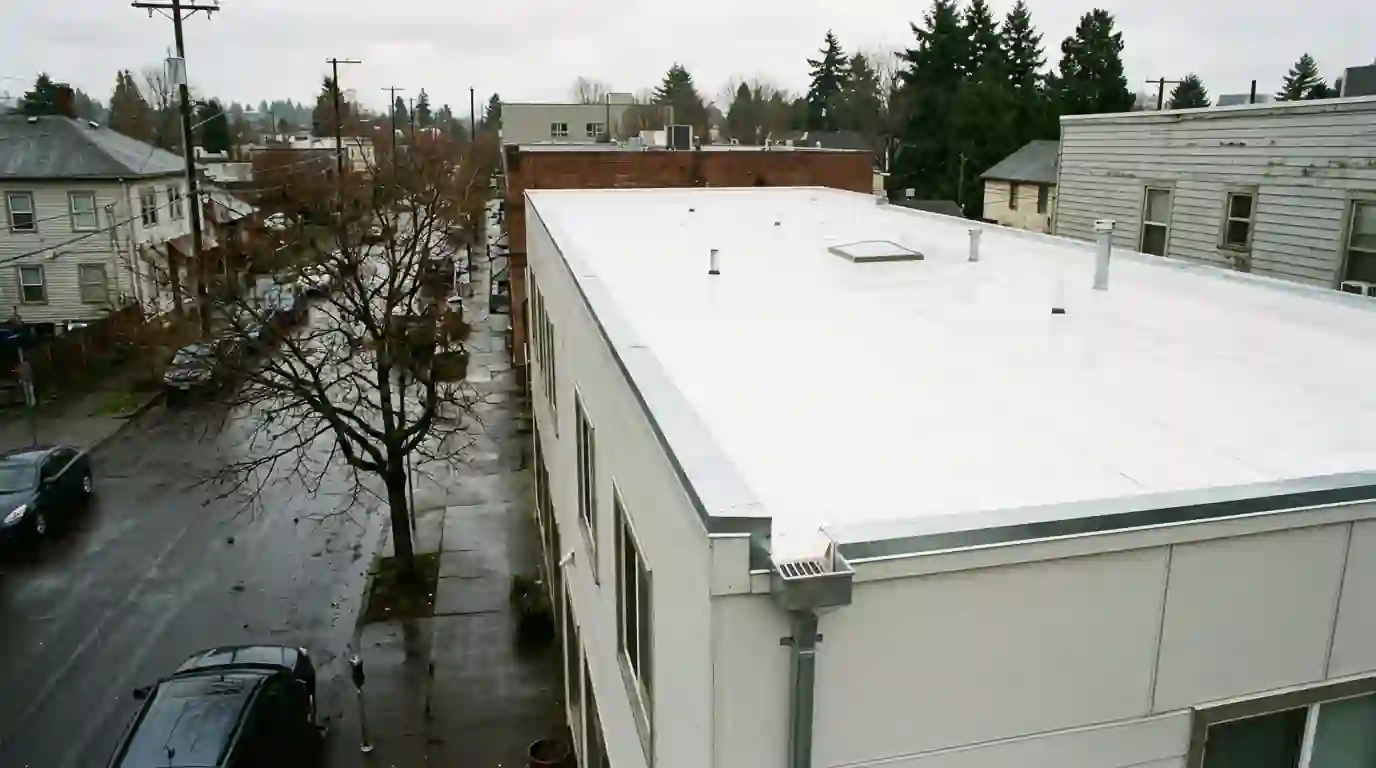
Flat roof replacement in Portland usually runs $9.40 to $15.80 per square foot for a full tear-off and new membrane, so a 600 square foot roof over a house or addition often lands around $5,640 to $9,480. The job includes removing old layers, replacing rotten decking, adding insulation and slope where water ponds, new flashing at walls and curbs, and a new TPO, EPDM or torch-down membrane.
A new low-slope roof is a different decision from a new shingle roof. On a flat roof, the membrane you pick matters less than what goes under it and around its edges: how the deck is prepared, whether the insulation is tapered toward the drains, and how the flashing turns up walls and parapets. Get those right and nearly any quality membrane performs well in Portland.
We replace flat roofs on mid-century ranches with low-slope sections, modern homes with roof decks, Craftsman additions, garages, and small mixed-use buildings. Most of those roofs have two or three layers stacked up over the years. We take everything off, look at the bare deck, and rebuild from there so you know exactly what's under the new surface.
Which flat roof membrane is right for your building?
All three systems work well in Portland when installed right; the choice depends on use, budget and the roof itself.
TPO single-ply membrane
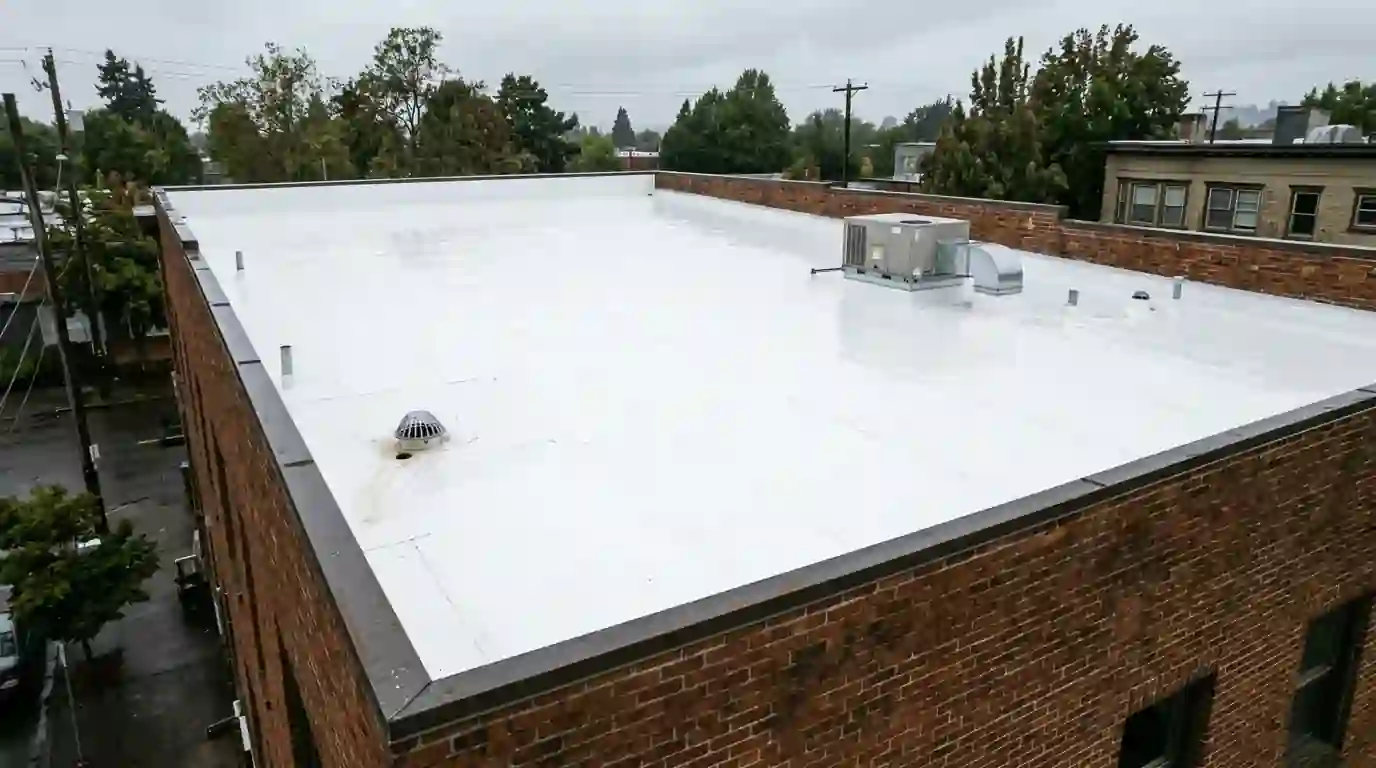
A white or gray sheet with heat-welded seams that are as strong as the membrane itself. Reflective, clean looking, and well suited to larger homes, additions and small commercial roofs. It's our most common replacement choice.
EPDM rubber membrane
A thick black rubber sheet that stays flexible in cold weather and handles foot traffic well. Fully adhered systems with taped seams suit roof decks, garages and roofs with few penetrations.
Modified bitumen torch-down
A two-ply asphalt system with a granulated cap sheet. Very tough against punctures and familiar on older Portland flat roofs and porches. Good where the roof sees ladders, equipment or regular foot traffic.
Tapered insulation package
Not a membrane but the part that fixes ponding. Sloped polyiso boards create a quarter inch per foot fall toward drains and also improve the energy performance of rooms under the roof.
How do you know a flat roof needs replacing rather than repair?
Patching makes sense for a while, but these signs say the roof as a whole is done.
Leaks in several places
One leak is a repair. Three or four in different spots during the same winter means the membrane is failing everywhere at once, and patching each one costs more than replacing the roof within a few years.
Spongy spots underfoot
Soft areas when you walk the roof mean wet insulation or rotting decking underneath. Moisture spreads sideways through insulation, so the damaged area is almost always bigger than it looks.
Widespread cracking or alligatoring
Old built-up and torch-down roofs develop a cracked, scaly surface as they dry out. Once the cap sheet shows that pattern across most of the roof, it has lost its waterproofing value.
Multiple layers already in place
If there are already two or more roofs stacked up, adding another traps moisture and adds weight. A full tear-off is the only sound option at that point.
Chronic ponding across the roof
When large areas hold water after every rain, the roof needs slope built back in. That means new tapered insulation, which only goes in properly during a replacement.
Shrinking or pulling membrane
Older EPDM shrinks over time and pulls away from walls and edges, stretching flashing until it tears. When the whole sheet is tight as a drum, patching edges won't hold.
What happens during a flat roof replacement
Core samples and measurements
We cut small test cores to count layers and check insulation moisture, measure the roof, and map drains, scuppers, parapets and penetrations. That tells us how much decking may need replacing and where slope has to be added.
Tear off to the deck
All existing membrane, felts, gravel and wet insulation come off, usually in sections so the building is never fully open at day's end. Debris goes straight into a dump trailer or bin to protect the yard and street.
Repair the decking
Rotten plywood or plank sheathing gets cut out and replaced. On older Portland buildings we often find 1x6 plank decking under the roof, which we either repair or overlay with new plywood for a solid base.
Build in slope and insulation
Tapered polyiso insulation, crickets and saddles are laid out so water runs to drains and scuppers. Cover board goes over the top to protect the insulation and give the membrane a firm surface.
Install the new membrane
TPO is heat-welded at every seam, EPDM is fully adhered with taped seams, or modified bitumen goes down as a torch-applied base and cap. Each system is installed to its manufacturer instructions.
Flash every edge and opening
Walls, parapets, curbs, vents and skylights get new flashing turned up and terminated with metal counterflashing. Edge metal, gutters and scuppers are replaced so water leaves cleanly. Then we clean up and walk you through it.
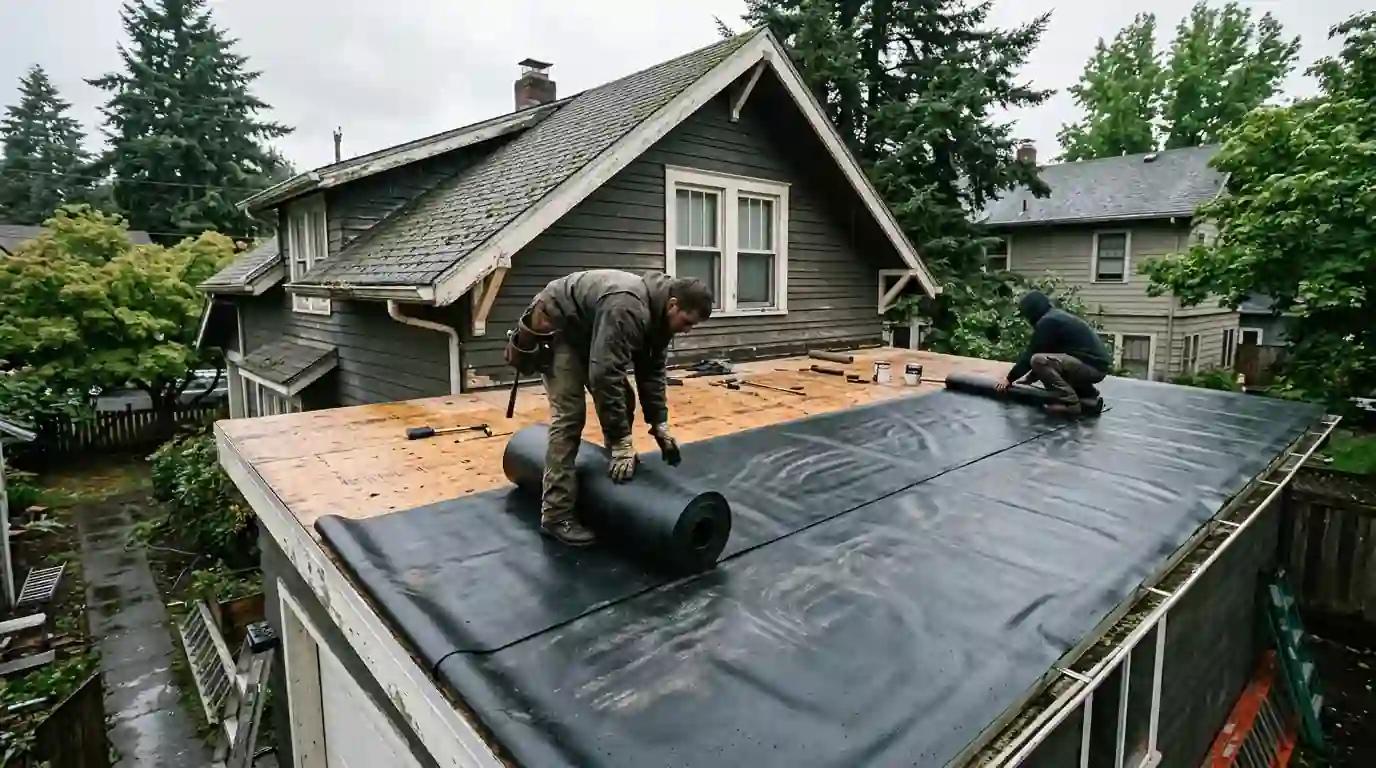
Materials for flat roof replacement come from manufacturers such as Malarkey, GAF, Owens Corning, CertainTeed, Carlisle and Velux, chosen for the job rather than the logo.
What does a new flat roof cost in Portland?
Flat roofs are usually priced by the square foot. These are typical 2026 Portland ranges for complete tear-off and replacement.
| Work | Typical Portland range |
|---|---|
| TPO, tear-off and new roofper sq ft | $9.40 to $14.70 |
| EPDM, tear-off and new roofper sq ft | $8.90 to $13.60 |
| Torch-down two-ply, tear-off and newper sq ft | $10.20 to $15.80 |
| Tapered insulation for drainageper sq ft | $2.35 to $4.80 |
| Decking replacementper sq ft | $4.65 to $8.30 |
| Typical 600 sq ft home flat roofper job | $5,640 to $9,480 |
These are typical Portland ranges, not a quote. Your real price comes after we take core samples on the roof and give you a written estimate.
What moves the price:
- Number of old layers to remove
- Decking condition
- Tapered insulation and crickets
- Parapets, curbs and penetrations
- Access, height and staging
- Membrane choice
Planning a flat roof replacement around Portland weather
Most full replacements happen between late spring and early fall, when we can count on several dry days in a row. We do replace roofs in winter when a roof has failed, but we work in smaller sections and seal the building each night. Mid-century homes in Hillsdale and Multnomah Village often have low-slope sections tied into pitched roofs, and those transitions need careful flashing because water from the steep slope pours onto the flat area.
Older mixed-use buildings in Woodstock and along Division and Hawthorne often have flat roofs hidden behind parapets, with several layers of built-up roofing and scuppers sized for a different era. Replacing those usually means adding tapered insulation, enlarging scuppers and rebuilding parapet caps. In Milwaukie and Oregon City, we see many 1960s and 1970s flat roofed homes where ponding never got corrected and the deck shows it.
Why our flat roof replacements drain and last
We look under the old roof
Core samples before the bid and a bare deck during tear-off mean no hidden rot gets buried under new membrane. You see photos of what we find and what we replaced.
Slope designed into the job
We plan tapered insulation and crickets around your drains instead of laying flat insulation and hoping. Water leaving the roof is what keeps a low-slope system healthy for decades.
Edges and flashing treated as priority
Most flat roof failures happen at walls, curbs and edges. We give those details the most time on the job, with new metal counterflashing and edge trim.
Building protected every night
We tear off only what we can close up that day. If showers roll in, the roof is sealed and you are not left with a tarp flapping over an open deck.
Flat Roof Replacement questions from Portland homeowners
How long does a flat roof replacement take in Portland?
A typical home flat roof or addition of 400 to 800 square feet takes two to four working days. Larger roofs or buildings with parapets, several curbs or major decking repairs take longer. Rain adds days in the wet season, which is why we schedule most replacements between May and October.
Can you install a new flat roof over the old one in Portland?
Sometimes a single dry layer can be covered with a recover board and new membrane, but most Portland flat roofs we see already have wet insulation or multiple layers. Covering wet material traps moisture and rots the deck. We take cores first and only recommend a recover when the existing roof is dry and sound.
Which flat roof material lasts longest in Portland rain?
Properly installed TPO, EPDM and two-ply modified bitumen all handle our climate well. The bigger factors are drainage, flashing and installation quality. A roof that sheds water and has solid edge and wall details will outlast a premium membrane laid over a ponding deck.
Will a new flat roof stop ponding on my Portland home?
It will when slope is added during the replacement. We use tapered insulation and crickets to direct water to drains or scuppers, and we enlarge or add drains where needed. Simply laying new membrane over the same flat deck leaves the ponding in place.
Do I need a permit to replace a flat roof in Portland?
Permit requirements depend on the scope, especially when decking, structure or insulation changes. We review your project and let you know what the City of Portland or your local jurisdiction requires before work starts, and we handle the paperwork that goes with our work.
Where we do this work most
We cover the whole metro. These are the places we are on roofs most often:
Related roofing services
Flat Roof Repair
Low-slope roofs in Portland hold water for months at a time. We find where it's getting in, repair the membrane, seams and drains, and get your flat...
TPO Roofing
TPO is a single-ply membrane with seams welded by hot air instead of glued. On Portland low-slope roofs that sit wet for months, those fused seams...
EPDM Rubber Roofing
EPDM is the black rubber sheet on thousands of Portland garages, dormers and additions. We install new fully adhered rubber roofs and repair the...
Torch-Down & Modified Bitumen
Torch-down covers a huge share of older Portland flat roofs, from porch roofs on Craftsman homes to storefront buildings on Hawthorne. We install new...
Roof Replacement
When patches stop holding and the shingles are bare, curling or shedding granules, a full reroof is the smarter spend. We replace Portland roofs from...
Need flat roof replacement in Portland?
Call and tell us what you are seeing. We answer 24/7 and can usually talk you through the next step on the first call.