Silicone roof coatings for Portland low-slope roofs
A silicone coating can add years to a Portland flat roof that is still dry and solid underneath. It can't save a roof full of wet insulation, and we'll tell you which one you have.
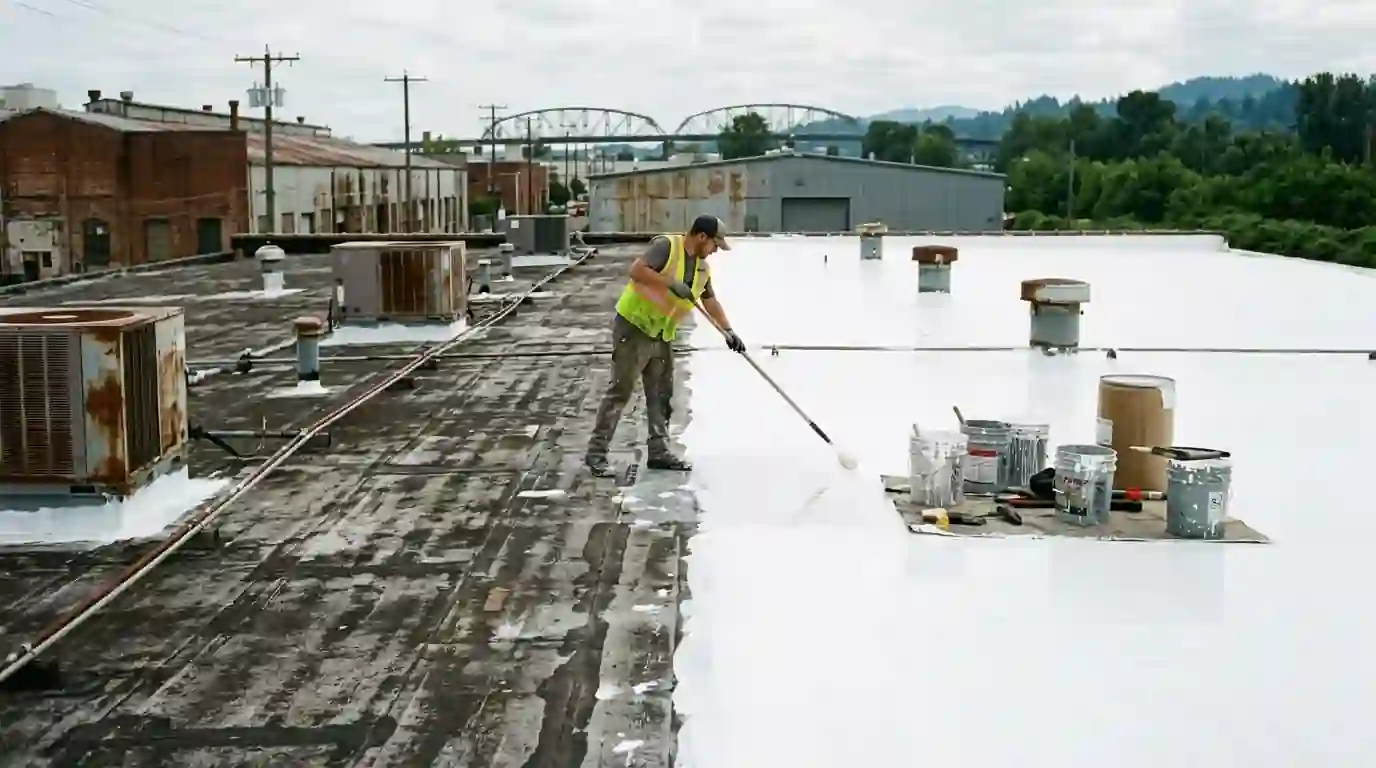
Silicone roof coatings in Portland typically cost $3.65 to $6.90 per square foot, including cleaning, seam reinforcement and two coats. A coating forms a continuous rubbery layer over an existing TPO, EPDM, modified bitumen, built-up or metal roof that's still dry and structurally sound. Silicone handles ponding water well, which makes it the coating of choice in Portland's long wet season.
Coatings get sold as a cheap alternative to replacement, and sometimes that's true. If the roof is aging on the surface but the insulation and deck underneath are dry, a silicone coating can seal small cracks and weathered seams, reflect summer heat, and push back a full tear-off for a decade or more. On commercial roofs, that can mean a large saving.
If the roof is wet underneath, though, a coating just seals the water in. The deck keeps rotting under a shiny new surface and the problem gets more expensive. That's why every coating job we take starts with a moisture survey and core samples. We only recommend silicone when the roof under it is worth keeping, and we explain plainly when it isn't.
Is your roof a good candidate for a silicone coating?
A coating works best on roofs that are tired on top but still sound below. These are the signs we look for.
Surface wear, dry insulation
Chalky, crazed or granule loss on the surface, but core samples show dry insulation. This is the ideal situation, where a coating restores the waterproofing without disturbing a healthy roof assembly.
Weathered seams on single-ply
Older TPO or EPDM with seams that are starting to age but haven't fully opened. Seams get reinforced with fabric and silicone, then the whole roof is coated over.
Rusting metal roof panels
Metal roofs on warehouses and shops with surface rust and loose fasteners. After cleaning, fastener sealing and primer, a silicone coat stops further corrosion and seals leaking screw holes.
Hot top floor under a dark roof
White silicone reflects much of the sun, so rooms and warehouse space below stay cooler in summer. It's a real comfort and energy benefit on dark built-up or torch-down roofs.
Replacement would disrupt tenants
Coatings go on with no tear-off and little noise. For occupied retail or office buildings, that avoids the debris and disruption of removing a whole roof.
What does a silicone roof coating cost in Portland?
Coatings are priced by the square foot. These are typical 2026 Portland ranges, including preparation and seam work.
| Work | Typical Portland range |
|---|---|
| Silicone coating, single-ply roofper sq ft | $3.65 to $5.80 |
| Silicone over modified bitumen or built-upper sq ft | $4.20 to $6.90 |
| Silicone over metal roofper sq ft | $3.90 to $6.40 |
| Moisture survey and core samplesper roof | $385 to $865 |
| Wet insulation section replacementper sq ft | $11.40 to $18.70 |
These are typical Portland ranges, not a quote. The real number comes after we survey the roof for moisture and give you a written estimate.
What moves the price:
- Roof surface type and condition
- Amount of wet insulation
- Seam and fastener prep
- Coating thickness
- Roof size and access
- Primer or bleed blocker needed
How we decide on and apply a silicone coating
Moisture survey and cores
We walk the roof, take core samples and use a moisture meter across the field. If more than a small portion of the insulation is wet, we recommend repair or replacement instead of a coating.
Replace wet sections first
Small areas of wet insulation or soft deck are cut out and rebuilt with matching materials. Coating only goes over dry, sound roof, never over soaked patches.
Clean the surface thoroughly
The roof is cleaned with low pressure water and a cleaner to remove dirt, moss and chalky residue. Silicone needs a clean surface to bond, and Portland roofs collect a lot of organic grime.
Reinforce seams and details
Seams, flashing, penetrations and fasteners get a base coat with polyester fabric embedded where needed. These are the weak points, so they get extra material before the main coats.
Apply coating at the right thickness
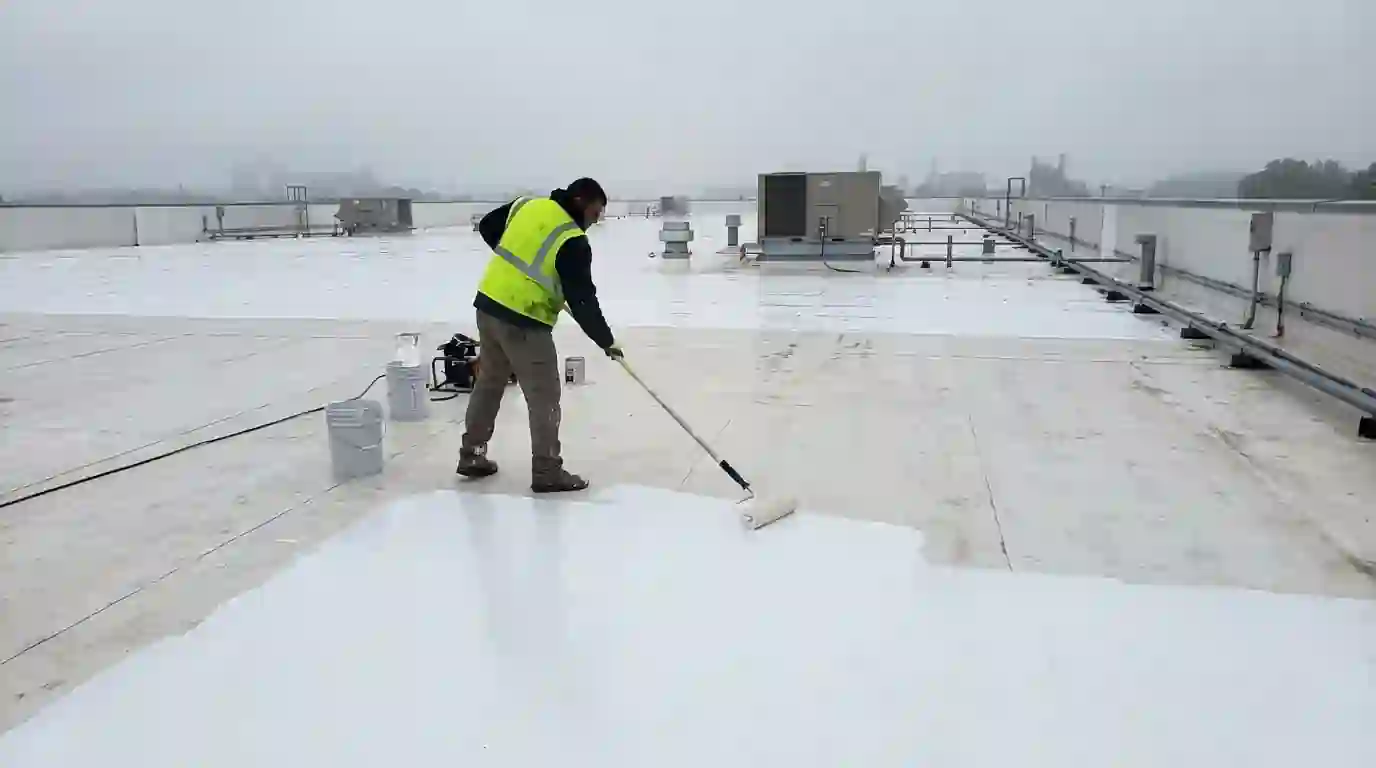
Silicone is sprayed or rolled in one or two coats to reach the specified dry thickness. We check thickness with a wet mil gauge as we go so every area gets enough material.
Final check and drains
Once cured, we inspect for pinholes and thin spots, touch them up, and make sure drains and scuppers are clear. We also show you how water now moves on the roof.
Materials for silicone roof coatings come from manufacturers such as Malarkey, GAF, Owens Corning, CertainTeed, Carlisle and Velux, chosen for the job rather than the logo.
Which coating approach fits your roof?
Different roofs need different coating systems, and sometimes the right answer is not a coating at all.
Silicone over single-ply
Coating aging TPO or EPDM after cleaning and priming. Seams get fabric reinforcement first. A good option when the membrane is weathered but the insulation below is dry.
Silicone over modified bitumen
Coating torch-down or built-up roofs after removing loose granules and gravel. A primer or bleed blocker is often needed to keep asphalt from staining the white coating.
Silicone over metal roofs
After fastener replacement, rust treatment and seam sealing, silicone stops corrosion and leaks at screw holes. Common on older warehouses and shop buildings across the metro.
Replacement instead of coating
When moisture surveys show widespread wet insulation, a new roof is the honest recommendation. Coating over wet material traps water and wastes money, so we say so up front.
When coatings make sense in Portland and when they don't
Silicone stands up to ponding better than acrylic, which can soften and wash off under standing water. In Portland, where flat roofs may hold puddles from November to April, silicone is the only coating type we typically recommend. Application needs a dry roof and temperatures above about 40 degrees, so we usually schedule coatings from late spring through early fall.
Coatings often fit warehouses in the Central Eastside and northwest industrial area that have large, still dry roofs and businesses that cannot easily shut down. They make less sense on older mixed-use buildings in St. Johns or near Division where built-up roofs have been patched for decades and carry wet insulation. In Gresham and Troutdale, east wind and debris add wear, so we pay close attention to edges and seams before coating.
Why we survey before we coat
Moisture checked on every roof
We take cores and run a moisture meter before we price a coating. That keeps you from paying to seal water into a roof that needs to come off.
Silicone chosen for our climate
We use silicone because it tolerates ponding, which is unavoidable on many Portland flat roofs. Coatings that soften under standing water have no place on a roof here.
Thickness measured as we go
We check wet mil readings across the roof so every section gets enough coating. Thin areas are where coatings fail first, so we track it closely.
Straight answers on fit
If your roof isn't a good coating candidate, we say so and explain repair or replacement options with photos and core samples.
Silicone Roof Coatings questions from Portland homeowners
How long does a silicone roof coating last in Portland?
A properly applied silicone coating typically lasts 10 to 15 years, depending on thickness and roof traffic. After that, the roof can often be cleaned and recoated rather than torn off, as long as the roof underneath stays dry. Regular drain clearing helps it last.
Can a silicone coating stop leaks on my Portland flat roof?
It can seal small cracks, weathered seams and leaking fasteners when the roof underneath is dry. It can't fix a roof with wet insulation, failed flashing or structural damage. We locate and repair those problems first, then coat the sound roof.
Why do you recommend silicone over acrylic coatings in Portland?
Acrylic coatings can soften and break down under standing water. Many Portland flat roofs hold puddles for days or weeks during the wet season. Silicone tolerates ponding without losing its bond or waterproofing, so it suits our climate far better.
When is the best time to coat a roof in Portland?
Late spring through early fall is best. The roof needs to be dry, temperatures should stay above about 40 degrees, and rain shouldn't fall for several hours after application. We watch forecasts closely and schedule coatings for dry stretches.
Is a roof coating cheaper than replacing a commercial roof in Portland?
Usually, yes, often by half or more, because there's no tear-off or new insulation. That saving only holds if the roof underneath is dry and sound. If a large share of the insulation is wet, the coating fails early and replacement ends up costing more.
Will a coated roof in Portland be harder to replace later?
Not in a way that adds much cost. When the roof eventually needs replacement, the coating comes off with the old membrane during tear-off. Some coated roofs can also be recoated again instead, extending the life further.
Where we do this work most
We cover the whole metro. These are the places we are on roofs most often:
Related roofing services
Commercial Roof Repair
A drip over a register, a server room or a stack of inventory can't wait. We respond to commercial roof leaks around Portland, stop the water, and...
Commercial Roofing
A commercial roof protects inventory, equipment, tenants and rent. We install new and replacement roofs on Portland warehouses, storefronts, offices...
Flat Roof Repair
Low-slope roofs in Portland hold water for months at a time. We find where it's getting in, repair the membrane, seams and drains, and get your flat...
TPO Roofing
TPO is a single-ply membrane with seams welded by hot air instead of glued. On Portland low-slope roofs that sit wet for months, those fused seams...
Roof Inspection
A clear, photo-backed report on your Portland roof, for buying or selling a home, after a windstorm or before winter, with an honest read on how many...
Need silicone roof coatings in Portland?
Call and tell us what you are seeing. We answer 24/7 and can usually talk you through the next step on the first call.