Roof leak repair in Portland that finds the real source
A stain on a Portland ceiling is rarely under the hole that caused it. We trace the water back along rafters and decking to the true entry point, then repair that spot instead of guessing.
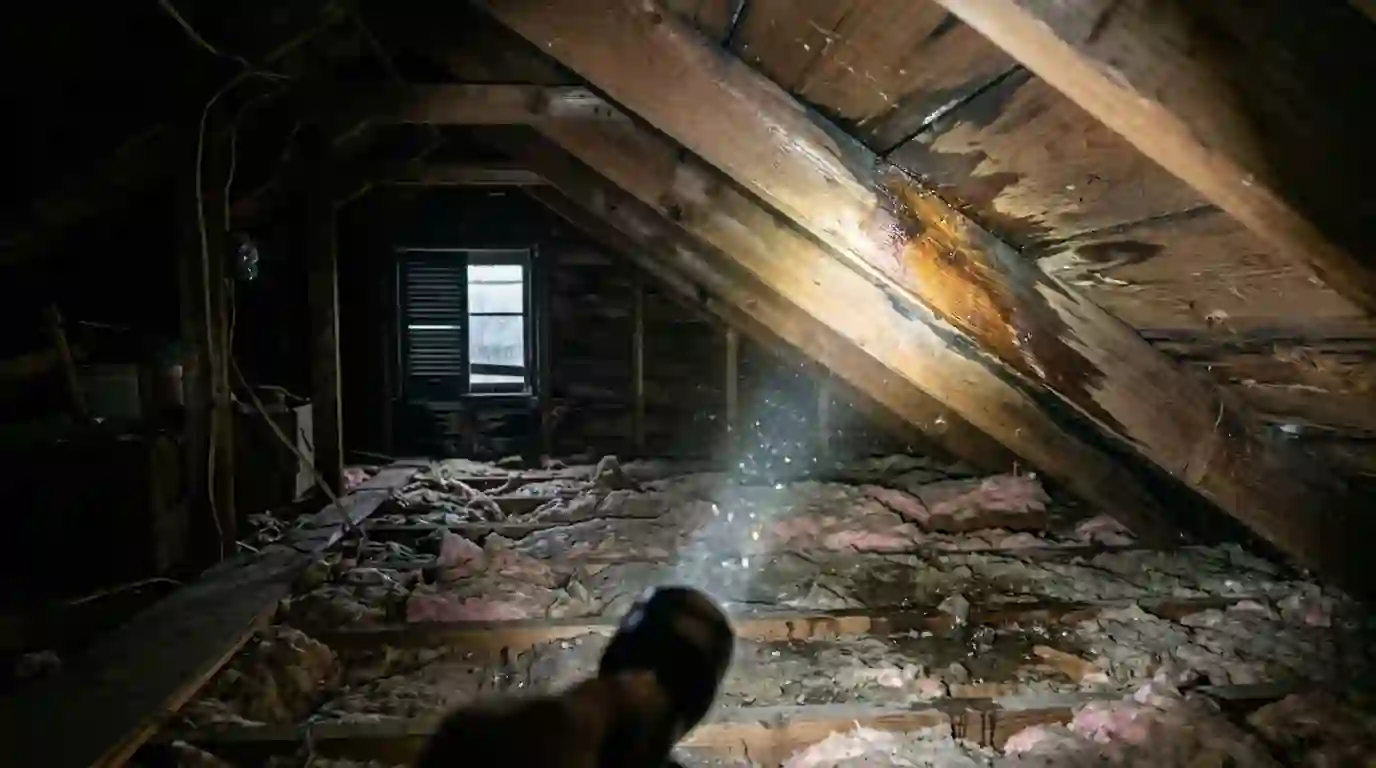
Roof leak repair in Portland usually costs $365 to $2,180 once the source is found. The hard part is tracing: water often enters at flashing, a nail hole or a cracked boot and travels several feet before dripping. We check the attic, follow the stain trail to the roof, water test suspect areas if needed, and repair the actual entry point. Call (503) 917-5484.
Most leak calls start the same way. A brown ring shows up on a bedroom ceiling after the first big October storm, or a drip appears near a window that has never leaked before. The natural guess is that the hole is directly overhead. In practice, water lands on the underlayment, runs downhill along a rafter or the top of a truss, and drops wherever gravity finally lets go. We have traced leaks that traveled eight feet from a chimney corner to a hallway light fixture.
That is why a leak repair is really two jobs. The first is detective work: finding where water actually gets past the roof. The second is the repair itself, which is often small once the source is known. A loose step flashing, a cracked pipe boot, an exposed nail head or a lifted shingle above a valley can each let in a surprising amount of water during a long Portland soaker.
Patching the spot you can see from inside, or caulking every seam on the roof hoping one of them is the culprit, wastes money and usually fails by the next storm. Tracing first keeps the repair small and permanent. It also gives you a clear record of what failed, which matters if the same area acts up again or if you're weighing a bigger project like new flashing around a chimney or a reroof in a few years.
Clues that tell us where a roof leak is coming from
Each symptom points in a different direction, and reading them together narrows the search before anyone climbs a ladder.
Stains that grow after wind-driven rain
If a stain only spreads when rain blows sideways, the entry is likely at a wall flashing, a rake edge or siding above the roof line rather than through the field of shingles.
Drips that start hours after rain
Delayed dripping means water is traveling a long path or soaking into insulation before it shows. We look uphill along rafters and around penetrations well away from the visible stain.
Water near chimneys or skylights
Moisture on drywall beside a chimney chase or skylight well usually points to failed step flashing, counterflashing or a worn curb seal, which are among the most common leak sources we find.
Wet insulation with dry ceilings
In the attic, matted or darkened insulation shows water that has not reached the drywall yet. Catching it here prevents ceiling damage and tells us exactly where to look on the roof.
Rusted nail tips in the attic
Rust streaks and dripping nail points across a large area often mean condensation from poor ventilation rather than a roof hole. That changes the fix completely, so we check before repairing anything.
Leaks only during heavy downpours
When a leak shows up only in the hardest rain, the cause is often a valley overflowing, a clogged gutter backing water under the first course, or debris damming water behind a chimney.
How we trace a leak to its source before we repair it
Ask where and when it drips
We start on the phone and at the door: which room, which storm, how long after rain started, and whether wind was blowing. Those details often point to one side of the house before we even look.
Follow the trail in the attic
With a light and moisture meter, we follow stains on the underside of the decking and along the rafters uphill toward the source. Daylight through nail holes or around a pipe often shows up immediately.
Inspect suspects from the roof
On the roof, we check every flashing, boot, vent and shingle in the area that lines up with the attic trail. We lift shingles gently to look at step flashing and underlayment underneath.
Water test when it is unclear
If the source still is not obvious, one person runs a hose on a single section at a time while another watches inside. Working from the bottom up isolates the exact entry point.
Repair the entry point properly
Once found, the fix is made with real parts: new step flashing, a replacement pipe boot, rebuilt shingles or a resealed curb. We avoid caulk-only fixes because Portland's weather breaks them down quickly.
Check the damage left behind
We note wet insulation, stained decking or soft sheathing that the leak caused and tell you what should be dried, replaced or watched, so a hidden problem does not grow into rot or mold.
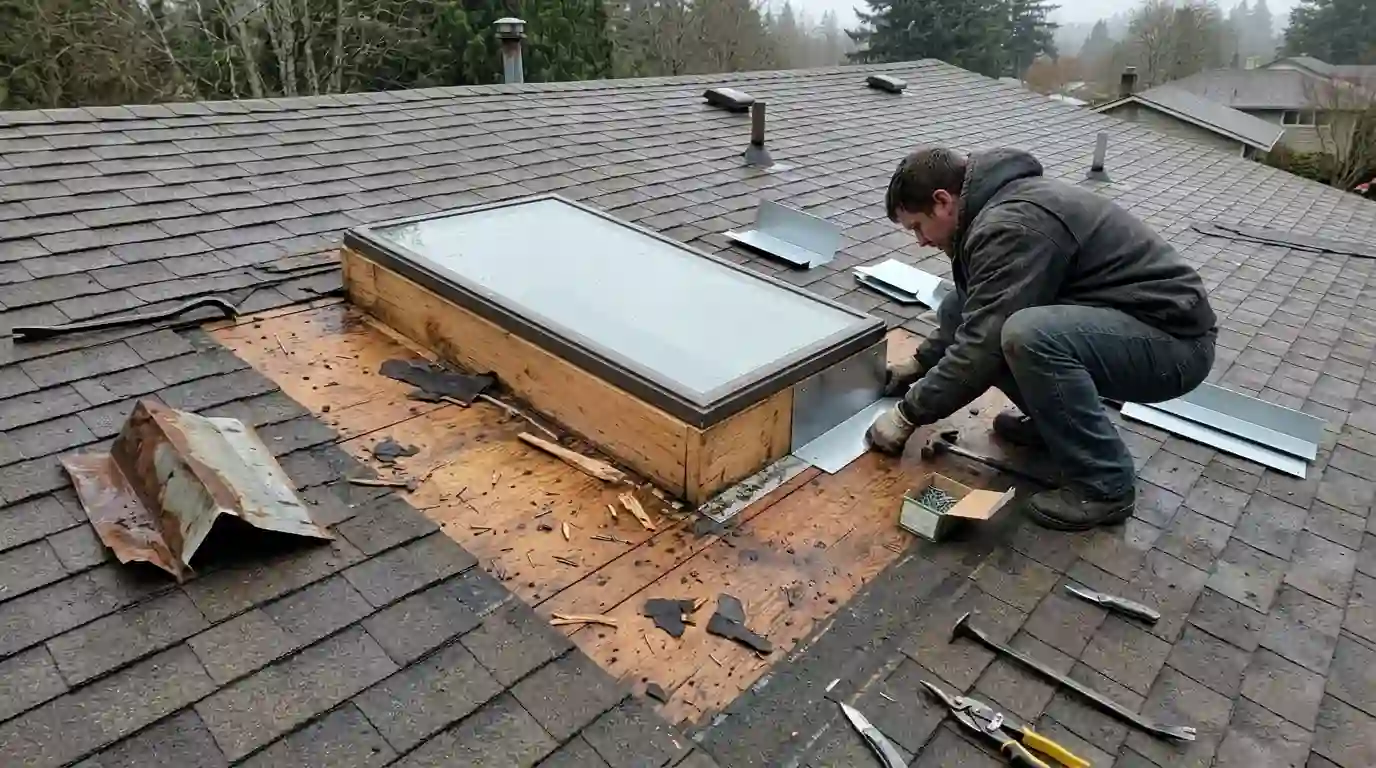
Why leaks hide so well on Portland houses
Portland's rain is more persistent than violent. Days of steady drizzle let water find the smallest gap and wick slowly along wood, which is why leaks here so often appear far from their source and show up days into a storm. Older homes in Irvington, Alameda and Rose City Park add another layer of difficulty: many have plank sheathing with gaps between boards, original chimneys and several generations of roofing, so water has more paths to follow.
Debris is the other local factor. Douglas fir needles and maple leaves fill valleys and pile up behind chimneys in neighborhoods like Mount Tabor and Beaumont-Wilshire, damming water until it backs under shingles. On daylight basement homes and split levels in the Southwest Hills, roof-to-wall joints are common, and a missing kickout flashing at the bottom of a wall can send water inside the siding in a way that looks like a roof leak.
Materials for roof leak repair come from manufacturers such as Malarkey, GAF, Owens Corning, CertainTeed, Carlisle and Velux, chosen for the job rather than the logo.
Common leak sources and how each one is fixed
Here is what we usually find at the end of the trail and what the repair looks like.
Failed step or counterflashing
Where a roof meets a wall or chimney, rusted or missing step flashing lets water behind the siding. We remove the nearby shingles, install new step flashing piece by piece and refit or replace the counterflashing above.
Cracked pipe boot or vent
Rubber collars on plumbing vents crack after years of sun. We replace the boot with a new one, set it under the upper shingles correctly and seal the nail heads around it.
Exposed or backed-out nails
Nails driven too high or popped by wood movement leave open holes. We pull them, refasten into solid decking and seal or replace the shingle so no hole remains.
Valley or eave water backup
When water dams in a valley or at the eave, we clear the debris, reline the area with ice and water shield where needed and make sure gutters can take the flow.
Typical 2026 prices for tracing and fixing a Portland roof leak
The cost of a leak repair depends mostly on what the source turns out to be and how much material has to come off to reach it.
| Work | Typical Portland range |
|---|---|
| Leak tracing visit with attic and roof checkper visit | $215 to $415 |
| Pipe boot or vent collar replacementper penetration | $365 to $685 |
| Step flashing repair along a wallper run | $745 to $1,690 |
| Nail pop and shingle repairper area | $335 to $795 |
| Water test with repair the same dayper leak | $585 to $2,180 |
Treat these as ballpark Portland figures rather than a quote. We give you a real number after we trace the leak, look at the roof in person and write up an estimate.
What moves the price:
- How far the water traveled from its entry
- Roof pitch and attic access
- Type of flashing or penetration involved
- Whether decking or insulation got wet
- Number of separate leak sources
Why tracing first saves you money on a leak
We fix the cause, not the stain
Repairing where water enters, rather than where it drips, is what stops the leak. It also avoids paying for patches in places that were never the problem.
Attic and roof checked together
Looking from both sides lines up the evidence. The attic shows the trail, the roof shows the failed part, and together they leave very little guesswork.
Real parts instead of caulk
Sealant alone rarely survives a Portland winter. We replace flashing, boots and shingles so the repair keeps working long after the caulk would have cracked.
Honest notes on hidden damage
If the leak soaked insulation or softened decking, you will know. We would rather tell you now than have rot discovered during your next roof replacement.
Roof Leak Repair questions from Portland homeowners
Why does my Portland roof only leak in certain storms?
Leaks that appear only with wind from one direction usually come from flashing on that side of the house, where rain is driven under laps. Leaks that appear only in very heavy rain often come from overflowing valleys or gutters. Telling us which storms cause the drip helps narrow the search quickly.
How do you find a roof leak that is far from the ceiling stain?
We start in the attic and follow water marks uphill on the decking and rafters toward the source. If that does not settle it, we run a controlled water test on one roof section at a time while someone watches inside, which isolates the exact entry point.
Can a roof leak in Portland actually be condensation?
Yes, quite often in winter. Poor attic ventilation and warm moist air from bathrooms or kitchens condense on cold decking, then drip off nails. It looks like a leak but needs ventilation and air sealing fixes. We check for frost or rusted nail tips across the attic before blaming the roof.
Is it safe to wait until spring to fix a roof leak?
Not in Portland. Our wet season runs for months, and a small leak soaks insulation and decking with every storm. Rot and mold can start within a few weeks. If you cannot schedule a full repair right away, a temporary fix at the entry point is better than waiting.
What should I do inside while waiting for roof leak repair?
Move belongings away, set a bucket under the drip and lay towels around it. If a ceiling bulges with water, poke a small hole in the center so it drains into a bucket instead of collapsing. Keep power off to any light fixture that is getting wet, then call (503) 917-5484.
Where we do this work most
We cover the whole metro. These are the places we are on roofs most often:
Related roofing services
Roof Repair
Portland roofs rarely fail all at once. A few torn shingles, a cracked ridge cap or a soft valley can be fixed cleanly and matched to what you have...
Chimney Flashing Repair
Portland's old brick chimneys are the single most common leak point we see. Proper chimney flashing uses two layers of metal, one woven into the...
Pipe Boot & Vent Repair
The rubber collar around a plumbing vent is often the first part of a Portland roof to fail, usually years before the shingles. Replacing a cracked...
Roof Flashing Repair
Most roof leaks in Portland start at a joint, not in the open field of shingles. Flashing at dormers, sidewalls, valleys and roof edges is where...
Attic & Roof Ventilation
Damp attics are common in Portland winters. We balance soffit intake with ridge or roof exhaust so moist air leaves the attic before it condenses on...
Related reading
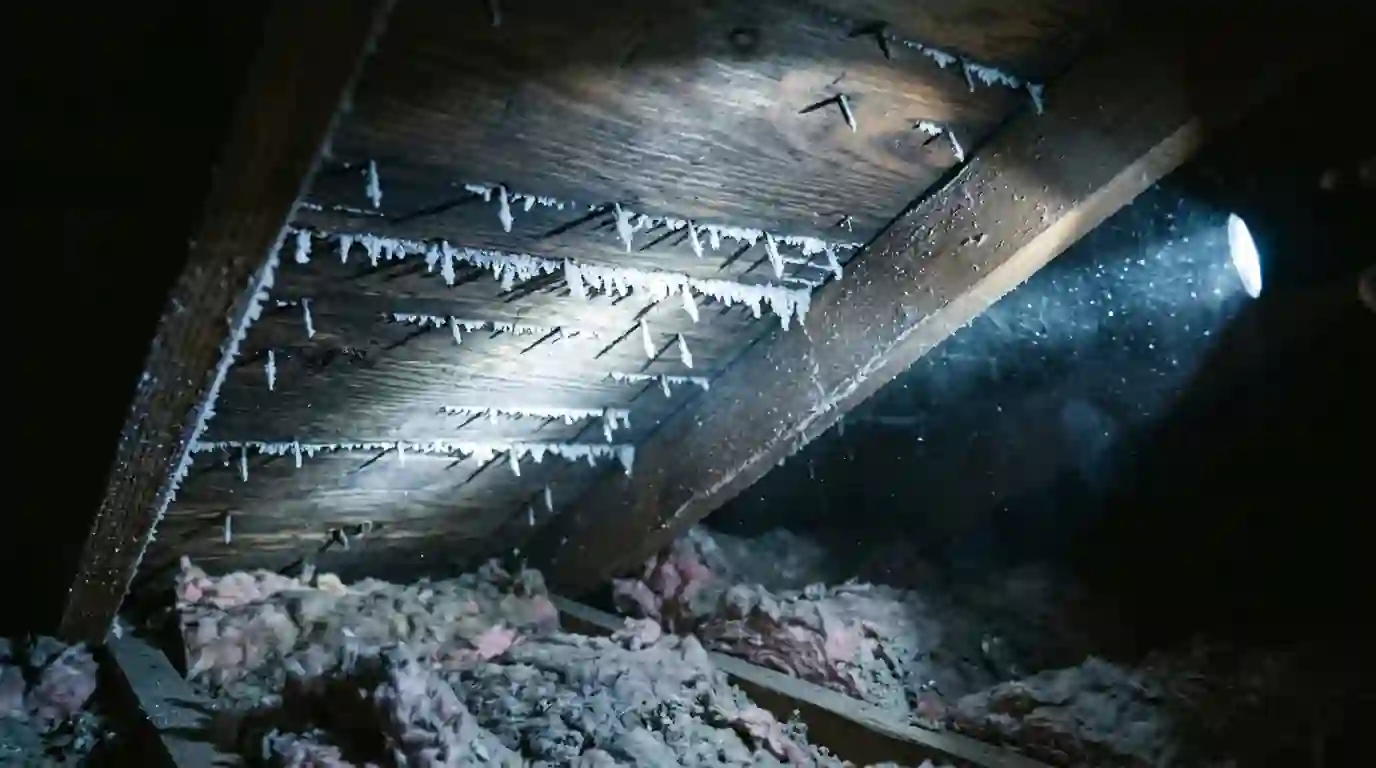
Attic Condensation or a Roof Leak? How to Tell
Drips in the attic after a cold snap send a lot of Portland homeowners looking for a roof leak that is not there. Here is how to read the clues and figure out which problem you actually have.
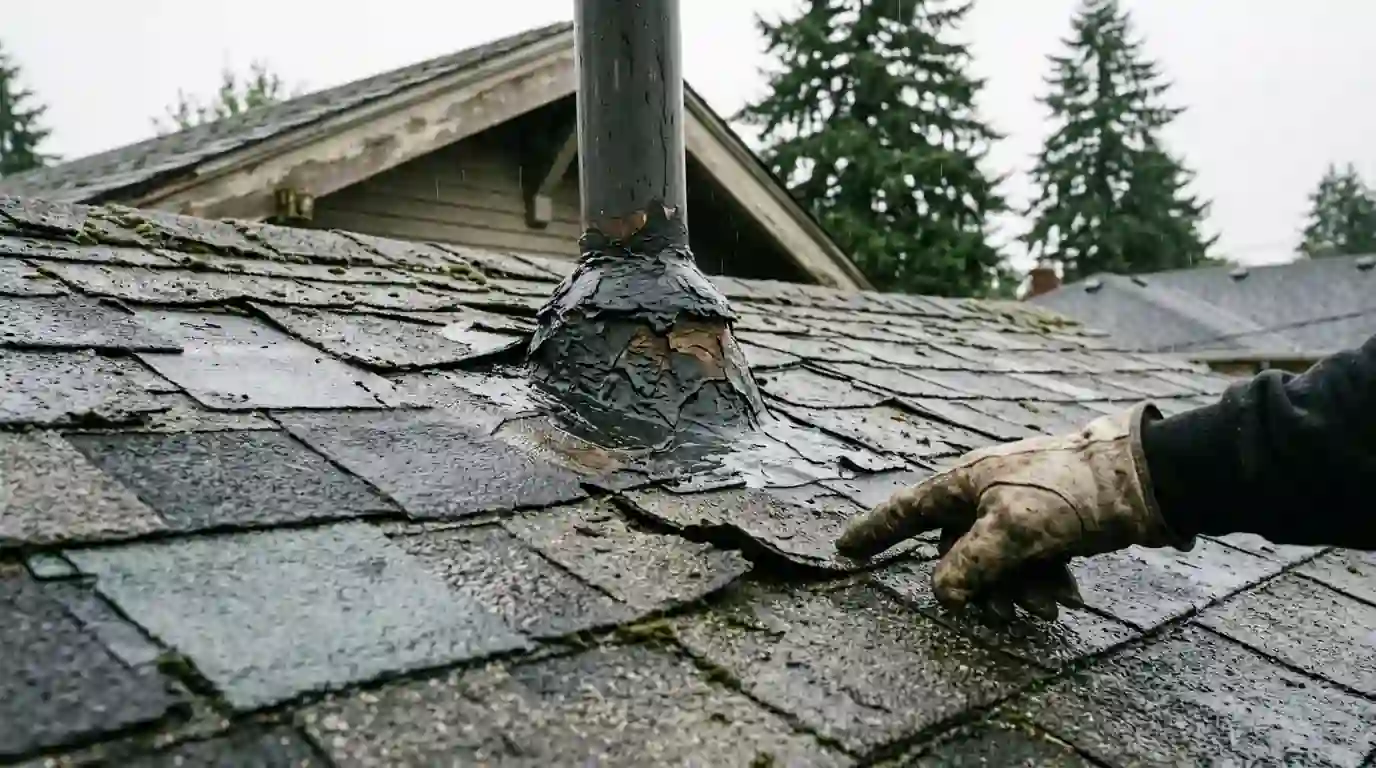
Repair or Replace Your Roof in a Wet Climate?
A leak, a few missing shingles or a roof that just looks tired raises the same question. This guide walks Portland homeowners through the evidence that points toward repair and the evidence that points toward replacement.
Need roof leak repair in Portland?
Call and tell us what you are seeing. We answer 24/7 and can usually talk you through the next step on the first call.