Commercial roofing for Portland businesses and buildings
A commercial roof protects inventory, equipment, tenants and rent. We install new and replacement roofs on Portland warehouses, storefronts, offices and mixed-use buildings, planned around how your business runs.
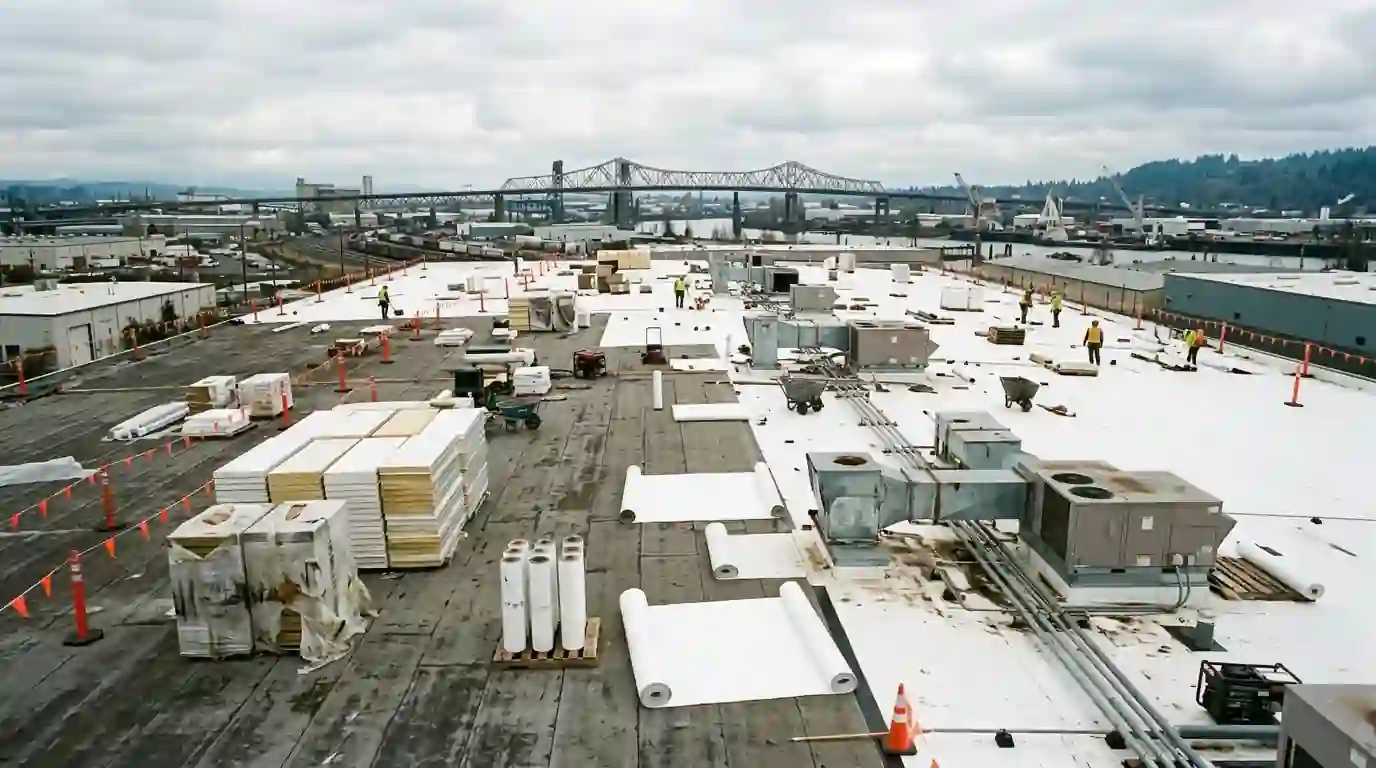
Commercial roofing in Portland typically runs $7.60 to $12.90 per square foot for a new TPO or EPDM system with tear-off, and $9.70 to $15.60 for two-ply modified bitumen. A 10,000 square foot warehouse roof often falls between $78,340 and $133,860 depending on insulation, drains and rooftop equipment. Good projects start with a core survey, a drainage plan and a schedule that keeps your building operating.
Replacing a commercial roof is a capital project, not a repair call. The decisions you make about insulation thickness, drainage, membrane type and rooftop equipment affect energy bills, maintenance costs and the building's value for the next 20 to 30 years. A cheap roof that ponds or leaks around HVAC curbs ends up costing more than one designed properly from the start.
We roof warehouses, light industrial shops, retail strips, office buildings, restaurants, churches and older mixed-use buildings with apartments above storefronts. Most are low-slope roofs with TPO, EPDM or modified bitumen, and some are metal. We bring a clear scope, a written schedule, and a plan for keeping tenants, customers and staff safe and dry while the roof is open.
Which commercial roof system fits your building?
Each system has strengths, and the best choice depends on use, budget, traffic and drainage.
TPO single-ply
Heat-welded seams, a reflective white surface and quick installation over large areas. It's the most common choice for warehouses, retail and office roofs in the metro today.
EPDM rubber
Flexible, durable and easy to repair, with long performance in cool climates. Good for buildings with irregular roofs, frequent foot traffic or owners who prefer a proven black rubber system.
Modified bitumen
Multi-ply asphalt system that resists punctures and handles heavy service traffic. Common on older mixed-use buildings and restaurants where rooftop equipment gets frequent attention.
Standing seam metal
For low-slope roofs with enough pitch, metal offers long life and no field seams to seal. Often used on newer light industrial buildings and as a retrofit over existing metal panels.
Silicone restoration coating
When the existing roof is dry underneath, a coating can delay full replacement. We survey first and recommend it only when moisture levels support it.
When should a commercial roof be replaced instead of patched?
These are the conditions that usually move a commercial roof from the repair budget into the capital plan.
Repair bills climbing each year
If you're paying for leak calls every winter and the invoices keep growing, the roof has reached the point where replacement often costs less than continued patching over the next five years.
Wet insulation across large areas
Infrared or core surveys showing a large share of wet insulation mean the roof has lost its thermal value and is rotting the deck. That condition rarely improves with repairs.
Ponding across the roof field
Widespread standing water after every rain means the original slope was too low or the deck has deflected. Replacement is the time to add tapered insulation and correct drainage.
New tenant or change in use
A new restaurant with kitchen exhaust, a tenant adding rooftop units, or a conversion to offices often means new curbs, penetrations and loads. A new roof avoids patching around changes.
Failing edge metal and parapets
Rusted coping, loose edge metal and cracked parapet flashing let water into walls. When edges fail all around the building, the roof field is usually close behind.
Building sale or refinance
Buyers and lenders often ask for a roof condition report. An aging roof can affect value or terms, so many owners replace it ahead of a sale or refinance.
How we plan and run a commercial roof replacement
Survey and scope the roof
We measure the roof, take core samples, map drains, curbs and penetrations, and look at the deck from below where possible. Then we write a scope with membrane, insulation, drainage and flashing details spelled out.
Schedule around operations
We agree on work hours, crane days, noisy tear-off windows and parking with you and your tenants. Retail jobs often start early; warehouses may need loading dock access kept open throughout.
Tear off in daily sections
We remove only what we can close the same day. Each section gets new insulation and membrane or a temporary seal before we leave, so the building is never left open to rain.
Insulation and drainage upgrades
Tapered polyiso, crickets at curbs and saddles between drains move water off the roof. Insulation thickness is chosen to meet energy code and lower heating and cooling costs.
Membrane and detail work
TPO seams are heat-welded, EPDM seams taped, or modified bitumen plies torched and adhered. Curbs, walls, drains and edge metal get full flashing details, which is where commercial roofs succeed or fail.
Closeout and documentation
We walk the finished roof with you, provide photos of the deck, insulation and details, and list maintenance needs. That record helps with insurance, property management and future sales.
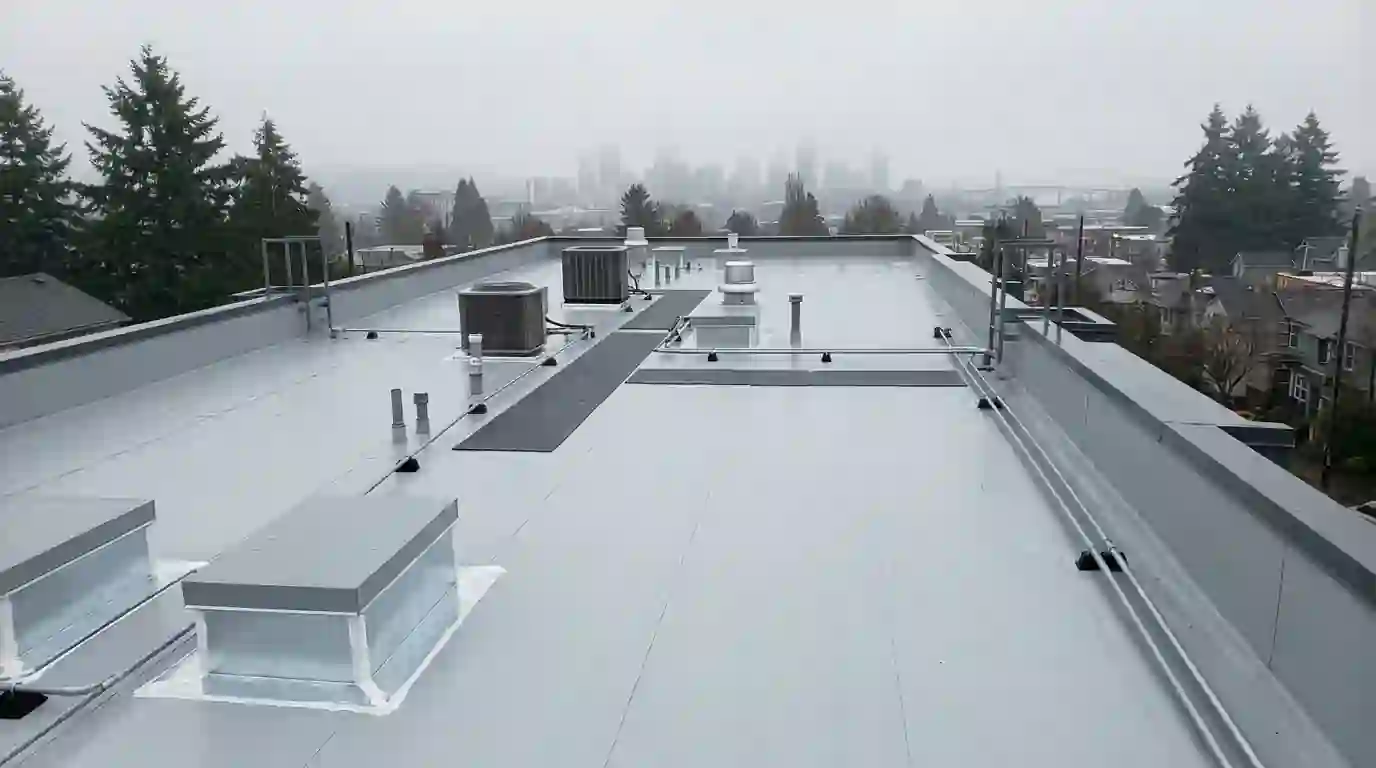
Materials for commercial roofing come from manufacturers such as Malarkey, GAF, Owens Corning, CertainTeed, Carlisle and Velux, chosen for the job rather than the logo.
What does a commercial roof cost in Portland in 2026?
Commercial roofs are priced per square foot. These typical Portland ranges include tear-off, insulation and standard flashing details.
| Work | Typical Portland range |
|---|---|
| TPO with tear-off and insulationper sq ft | $7.80 to $12.90 |
| EPDM with tear-off and insulationper sq ft | $7.60 to $12.40 |
| Modified bitumen two-plyper sq ft | $9.70 to $15.60 |
| Tapered insulation for drainageper sq ft | $2.15 to $4.60 |
| Rooftop unit curb flashingper curb | $485 to $1,240 |
| Typical 10,000 sq ft warehouse roofper project | $78,340 to $133,860 |
These are typical Portland ranges, not a quote. Your price comes after a roof survey and a written scope and estimate for your building.
What moves the price:
- Roof area and number of levels
- Deck type and condition
- Insulation thickness and taper
- Rooftop equipment and curbs
- Crane, access and staging
- Work hours and tenant needs
Commercial roofing across the Portland metro
The Central Eastside and northwest industrial area are full of older warehouses with large, low roofs, interior drains and decades of patching. Many have plank or concrete decks and roofs layered over time. In Hillsboro and Beaverton, newer tilt-up buildings and office parks often have original single-ply roofs from the 1990s and 2000s reaching the end of their life, with seams and curbs that need full replacement.
Portland's wet season shapes every commercial schedule. We plan major tear-offs for late spring through early fall, and when a roof must be replaced in winter we work in smaller daily sections with crews ready to seal up fast. Fir debris and moss are constant issues around drains, especially on buildings in Tigard and Lake Oswego with landscaped lots and mature trees close to the roofline.
What property owners get from working with us
Written scope you can compare
Membrane, insulation, taper, flashing and edge metal are listed clearly. You can compare bids line by line instead of guessing what each price includes.
Schedules built around tenants
We plan noisy work, crane days and parking with your operations in mind. Staff and customers keep moving, and tenants know what to expect each day.
Building closed up daily
We tear off only what we can finish or seal the same day. Inventory and equipment below stay dry even when the weather turns.
Photo record at closeout
You receive photos of the deck, insulation and details. That documentation helps with maintenance planning, insurance questions and future building sales.
Commercial Roofing questions from Portland homeowners
How long does a commercial roof replacement take in Portland?
A 10,000 square foot warehouse roof typically takes two to four weeks, depending on weather, deck repairs and rooftop equipment. Smaller retail roofs may take one to two weeks. We give you a schedule up front and update it if rain delays work during shoulder seasons.
Can my Portland business stay open during a commercial reroof?
In most cases, yes. We plan tear-off hours, crane lifts and noisy work around your operations, keep entrances and loading docks clear, and close the roof each day. For restaurants and offices, we often start early or work weekends to limit disruption.
What is the best commercial roofing system for Portland weather?
TPO, EPDM and modified bitumen all perform well here when drainage and flashing are done right. TPO is the most common choice for warehouses and retail. Modified bitumen suits roofs with heavy service traffic. We recommend a system after looking at your roof, use and budget.
Do commercial roofs in Portland need tapered insulation?
Most older commercial roofs in Portland have too little slope, which leads to ponding through the wet season. Adding tapered insulation during replacement moves water to drains and often lowers energy costs. It's one of the most valuable upgrades on a commercial reroof.
How do I budget for a commercial roof in Portland?
Start with a roof survey that includes core samples and a moisture check. That tells you how many years the roof has left and whether repairs, a coating or replacement makes sense. Many owners plan replacement two to three years out and set aside funds based on our estimate.
Where we do this work most
We cover the whole metro. These are the places we are on roofs most often:
Related roofing services
Commercial Roof Repair
A drip over a register, a server room or a stack of inventory can't wait. We respond to commercial roof leaks around Portland, stop the water, and...
TPO Roofing
TPO is a single-ply membrane with seams welded by hot air instead of glued. On Portland low-slope roofs that sit wet for months, those fused seams...
Silicone Roof Coatings
A silicone coating can add years to a Portland flat roof that is still dry and solid underneath. It can't save a roof full of wet insulation, and...
Apartment & Multifamily Roofing
Roof work on Portland apartments, condo buildings and fourplexes, planned around tenants, parking, board approvals and the wet season so residents...
Flat Roof Replacement
When a Portland flat roof has more patches than original membrane, it's time to start over. We strip it to the deck, fix the drainage and install a...
Need commercial roofing in Portland?
Call and tell us what you are seeing. We answer 24/7 and can usually talk you through the next step on the first call.