Portland usually gets a few dry, warm weeks in September, and then sometime in October the rain arrives and stays. For a roof, that shift matters. Any gap that stayed quiet all summer now gets tested day after day, and once shingles and decking are wet, repairs get harder, slower and messier to do.
The good news is that most winter leaks start with something small that's easy to spot in September: a cracked pipe boot, a gutter packed with needles, a valley full of debris, a chimney flashing that's pulled loose. Below is the checklist we use ourselves, split into what you can safely look at from the ground, what to check inside, and what's worth having a roofer handle while the weather still cooperates.
What should you look for from the yard with binoculars?
Pick a dry afternoon with flat light and walk all the way around the house. Use binoculars, and look at each slope from a couple of angles. You're not trying to diagnose everything, just to note anything that looks different from last year.
- Missing, cracked or creased shingles, especially along ridges and rakes where wind gets under them
- Shingle edges that curl up or have lifted with moss underneath
- Bare dark patches where granules have washed off
- Rust, gaps or lifted edges where metal flashing meets a chimney, wall or dormer
- Plumbing vent pipes with cracked rubber collars or a visible gap around the pipe
- Branches touching or hanging low over the roof, which rub shingles and drop debris all winter
Are your gutters ready for the first heavy fir needle drop?
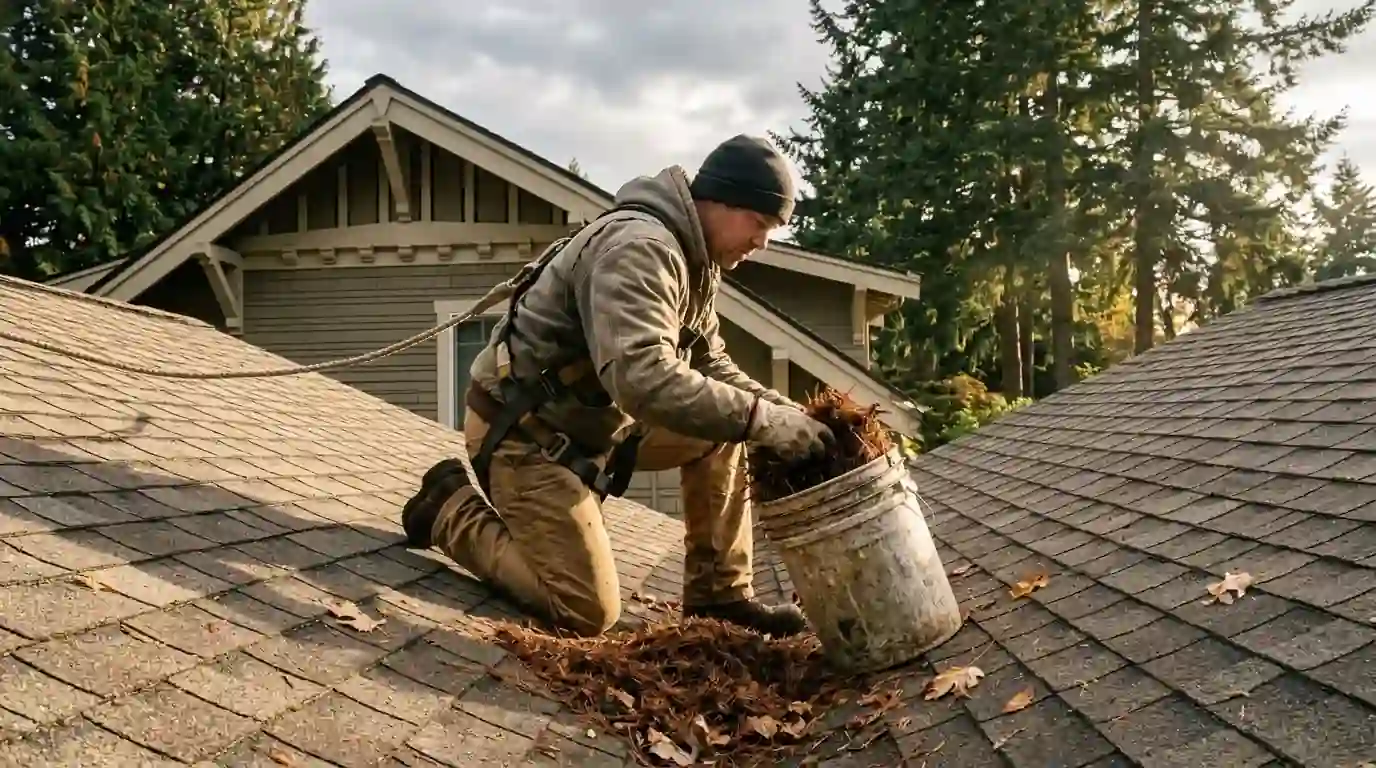
Late summer is when Douglas firs shed a lot of older needles, and bigleaf maples follow in October and November. Gutters that look clear in August can be full by Halloween. Clean them once before the rains and plan for at least one more pass after leaf fall.
While gutters are empty, check that they still slope toward the downspouts and that water doesn't pool in the middle of a run. Look for sagging sections and loose hangers, and confirm that every downspout carries water at least a few feet from the foundation. Splash blocks that have shifted or extensions that have come apart are easy to fix now and annoying to fix in a downpour.
If you have gutter guards, look at the top surface. Fine fir needles can mat on top of mesh guards and shed water right over the front edge. A quick brushing clears it.
What does the attic tell you before the rain starts?
Go up into the attic on a sunny afternoon and turn off the light once your eyes adjust. Any pinpoints of daylight coming through the roof deck, other than at ridge or soffit vents, are places water can enter. Mark them with tape so they're easy to find later.
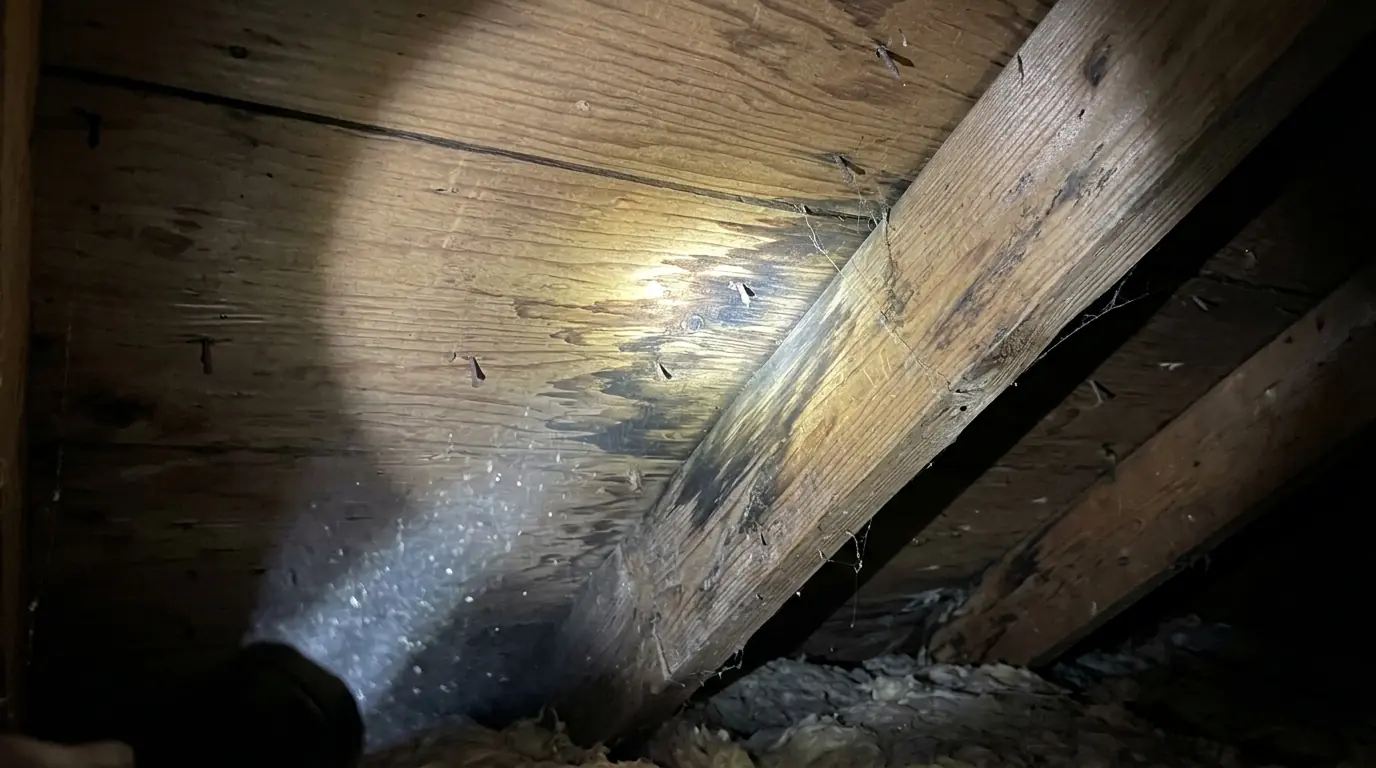
Then turn the light on and look at the wood. Old water stains are common and not always active, but compare them with what you saw last year if you can. Look closely around chimneys, plumbing vents, skylight shafts and valleys, since these are where leaks show up first.
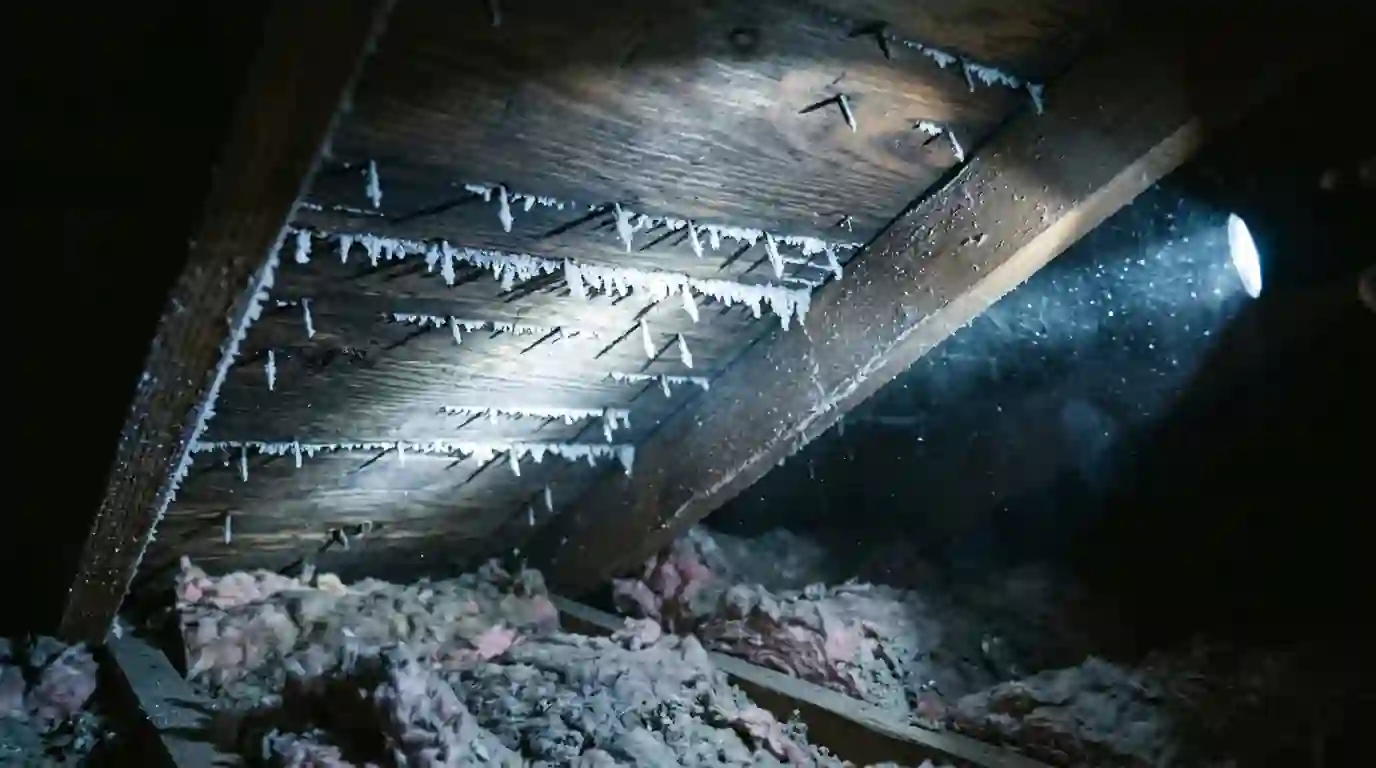
Check that soffit vents aren't buried under insulation and that bathroom and kitchen fans actually vent outside rather than into the attic. A fan dumping warm, damp air into the attic all winter can cause frost and dripping that looks just like a roof leak once cold weather arrives.
Which jobs are worth handing to a roofer in September?
Some items need someone on the roof with proper footing and tools. September is the right time for them, because sealants cure better in dry weather and the roof can be opened and closed the same day without a storm moving in. These are the jobs we see most often this time of year:
- Replacing cracked pipe boots and resealing roof vents
- Resetting or replacing loose step flashing and counterflashing at chimneys and sidewalls
- Clearing valleys and the area behind chimneys where needles pile up and dam water
- Replacing missing or creased shingles from summer wind
- Moss removal and zinc strips on north slopes before the wet season restarts growth
- Checking skylight curbs and flashing for gaps and cracked seals
How should you prepare for fall windstorms and early cold snaps?
The first strong storms often come in October and November, and the east wind out of the Gorge can start blowing in late fall too. Before then, have dead or overhanging limbs trimmed back from the roof. A branch that brushes the shingles in a breeze can strip granules, and a heavy limb that breaks in a storm can punch through decking.
Make sure loose items near the house are put away and any satellite dishes or antennas on the roof are tight. If you have solar panels, look under the edges for nests and piles of debris that hold moisture against the roof.
Finally, save our number somewhere you'll find it in the dark: (503) 917-5484. We answer 24/7, and if a storm does open up your roof, getting a tarp on fast limits the damage inside.
Do flat porch roofs and skylights need extra attention this fall?
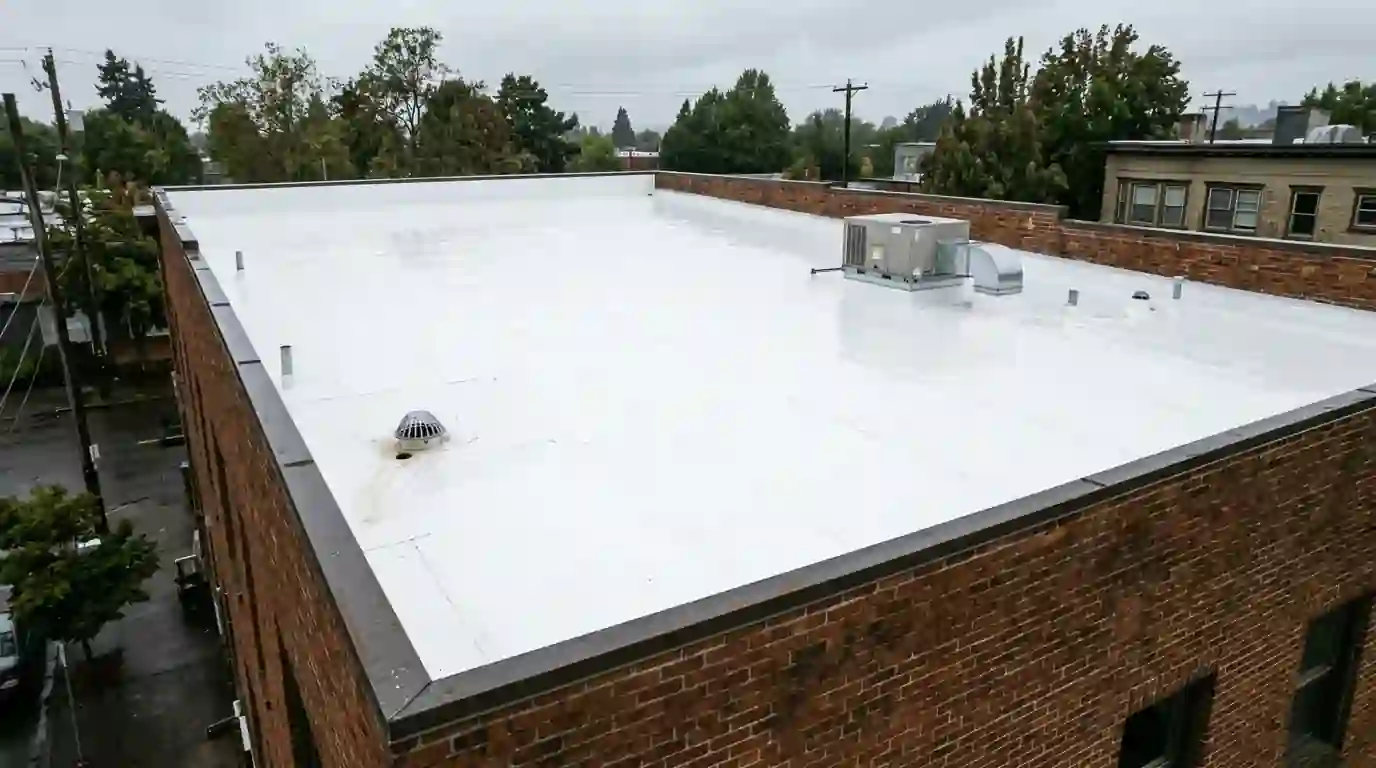
Yes, because they fail in different ways from sloped shingles. Many Portland homes have a low-slope porch roof, a flat section over a back addition or a rooftop deck. These areas drain slowly, so leaves and needles collect, water ponds and any open seam gets soaked for days at a time. Sweep them clear, check that scuppers and drains aren't blocked, and look for blisters, cracks or lifted seams in the membrane. On torch-down roofs, watch for granules worn off the cap sheet. On TPO or EPDM, look at the edges and around any pipes coming through.
Skylights deserve a close look from inside. Stains on the drywall of the light shaft, peeling paint or condensation pooling on the frame all point to a problem with the flashing, the seal between glass and frame or attic moisture. Older skylights with cracked acrylic domes or fogged glass are often near the end, and replacing one is far easier in dry September weather than during a January leak.
What does a professional fall roof check usually cost?
A fall roof inspection with a written photo report typically runs $185 to $365 for a single-family Portland home. Small repairs found on the same visit, such as a pipe boot or a few shingles, typically add $245 to $690. Moss removal with gutter clearing usually lands between $485 and $1,260 depending on roof size, pitch and how much growth there is.
These are typical 2026 ranges, not quotes. The real price depends on what we find once we're on the roof, and we'll put it in writing before any work starts. September fills up quickly, so call early if you'd like your roof checked before October.
Key takeaways
- September is the last reliable dry window to fix small roof problems before Portland's wet season.
- Use binoculars from the yard to check shingles, flashing and pipe boots instead of climbing the roof.
- Clean gutters before the rains and plan another cleaning after maple leaves drop.
- Look for daylight, stains and blocked vents in the attic on a sunny afternoon.
- Trim branches away from the roof before fall windstorms arrive.
Written and edited by Grady Pelham, Roofing Articles Editor at MY Construction Roofing. Last updated August 27, 2026.