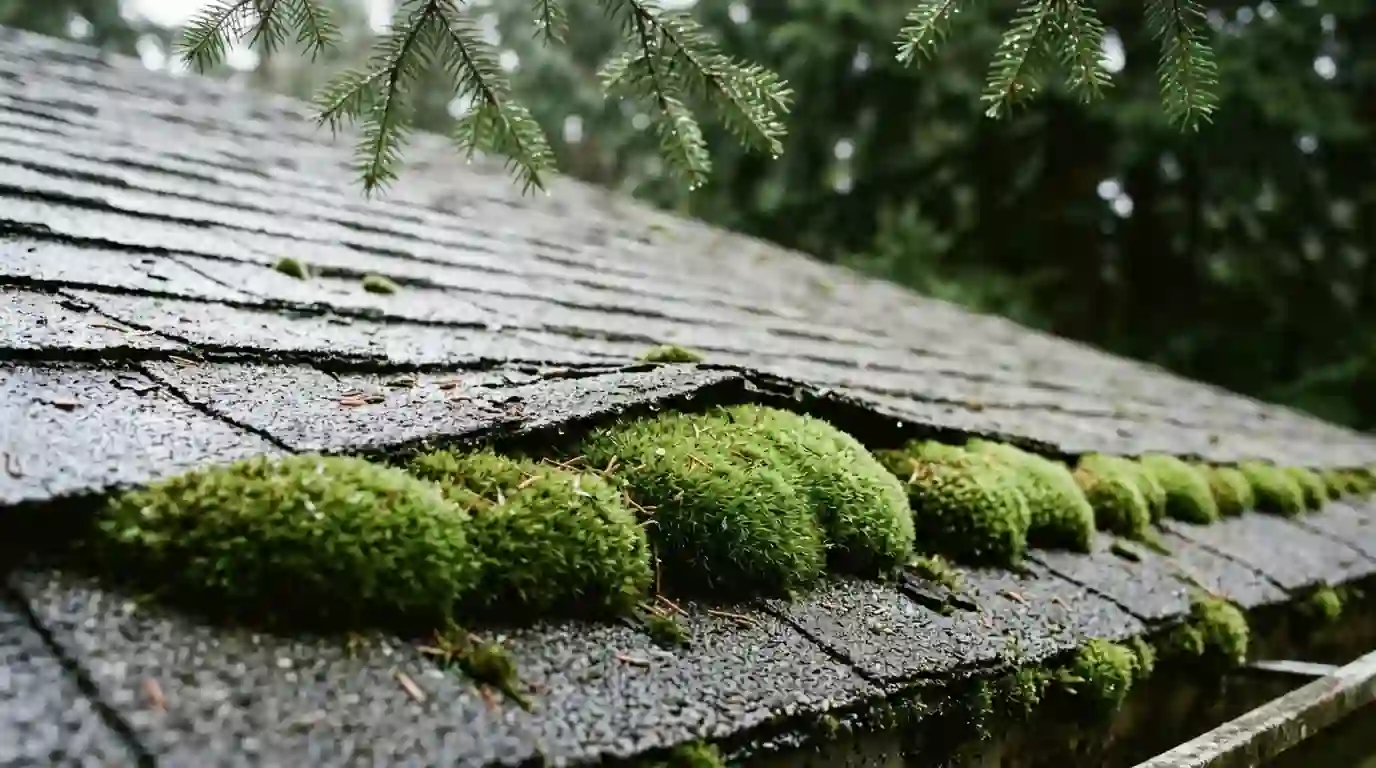
Most Portland roofs grow some moss. A few soft green patches on a north slope don't mean the roof is failing, and plenty of homeowners live with a light dusting for years without trouble. The problem starts when moss stops sitting on top of the shingles and begins working its way underneath them. At that point it holds water against the shingle mat, pries tabs loose and feeds rot in decking you can't see from the street.
This guide covers the signs that separate cosmetic moss from moss that's doing real harm, what you can check without climbing a slick roof, and how we remove it without tearing up the shingles we're trying to save. If you're staring at a green roof right now and can't decide which category it falls into, it helps to know exactly what our roofers look for when they walk one.
Why does moss take hold so fast on Portland roofs?
Moss needs steady moisture, shade and a surface with something to grip. Portland supplies all three. The wet season runs from roughly October through May, and a roof under Douglas firs or bigleaf maples can stay damp for days after the rain stops. North-facing slopes get almost no direct sun in winter, so they dry last and grow first. Needles and leaf litter collect in valleys and behind chimneys, break down into a thin layer of organic matter and give spores a place to settle.
Older asphalt shingles make it easier still. As a shingle ages it sheds granules, and the rougher, more porous surface left behind holds water longer. That's why a 15 year old roof in Laurelhurst or Eastmoreland, with big street trees overhead, can carry thick moss while a newer roof two blocks away in full sun stays mostly clean.
Which signs mean moss has moved past cosmetic?
Light moss sits on the surface and brushes away. Damaging moss changes the shape of the roof and the way water moves across it. These are the signs we treat as a reason to act this season rather than next year:
- Shingle tabs that lift or curl at the bottom edge, with moss packed into the gap underneath
- Cushions thick enough to read as raised mounds from the sidewalk, not just green color
- Moss running along the keyways between tabs, where it pulls water sideways under the course above
- Heavy clumps in valleys or above a chimney that dam runoff into a small pool after every storm
- Granules and moss chunks piling up in gutters or at the bottom of downspouts
- Dark stains, damp spots or a musty smell on the attic sheathing below a mossy slope
What can you check safely from the ground and the attic?
Please stay off a mossy roof. Moss is slick when wet and barely better when dry, and the damage you'd be looking for is easy to make worse by stepping on brittle shingles. You can learn a lot without a ladder.
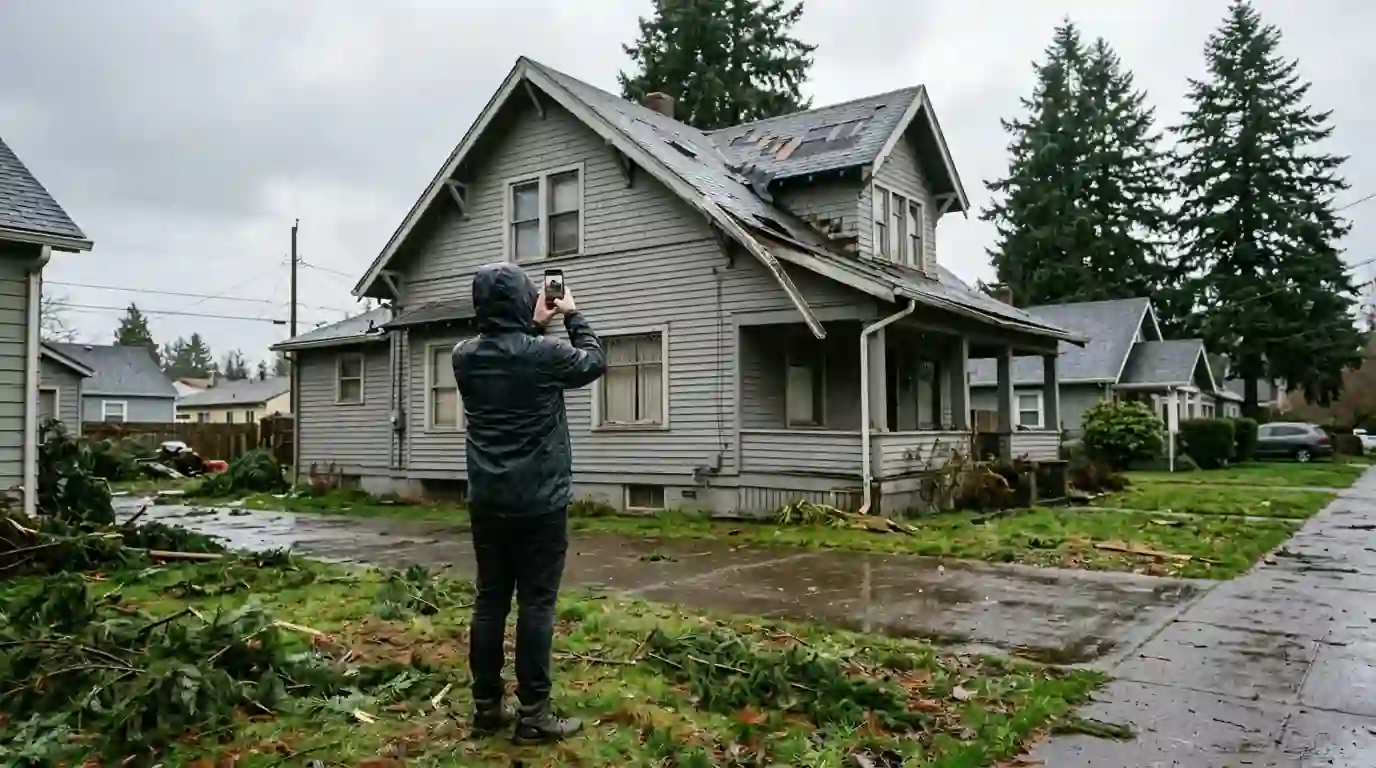
Start with binoculars from across the street, or from an upstairs window that looks onto a lower roof. Look along the bottom edges of the shingle rows. They should be flat and straight, and wavy or lifted edges stand out once you know to look for them. Then check what washes out of the downspouts after a heavy rain. Gritty black granules mixed with moss tell you the shingle surface is wearing away.
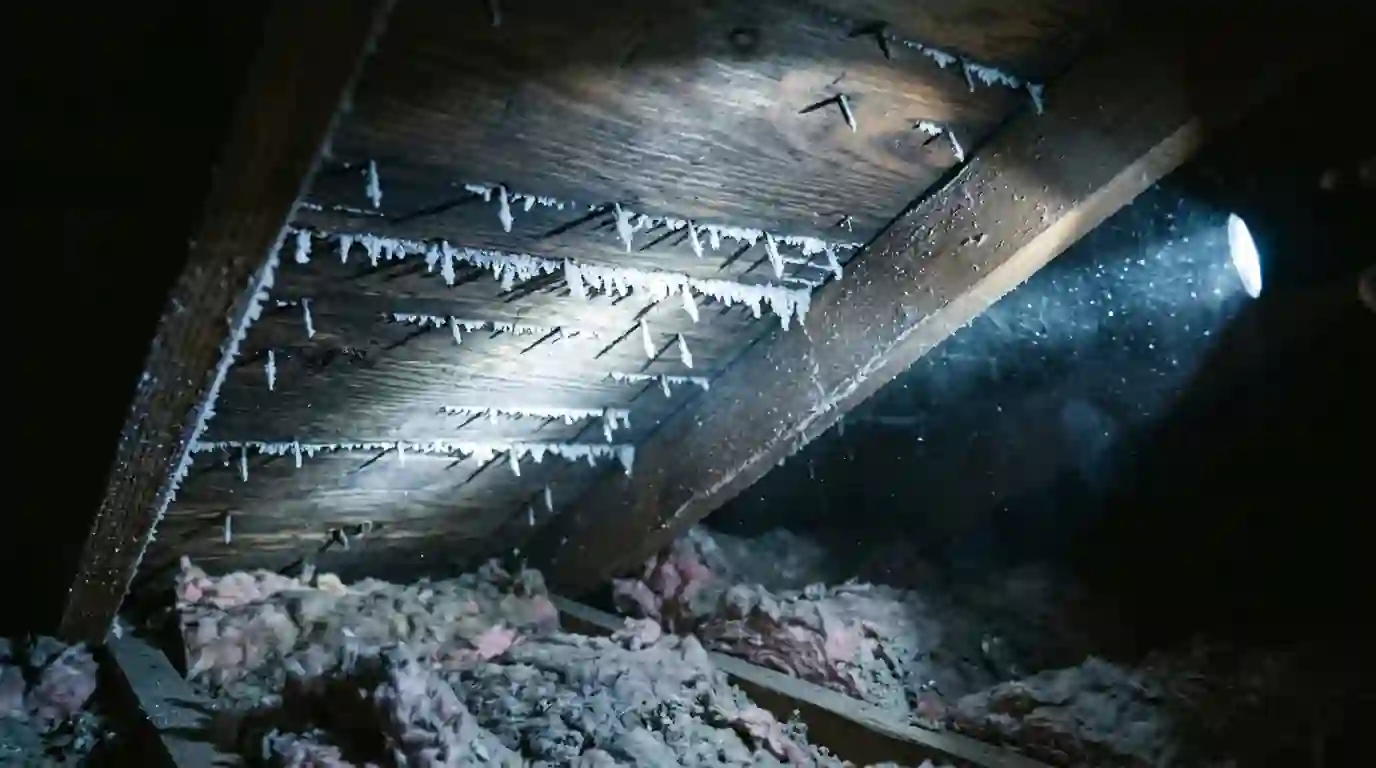
Finally, go into the attic on a rainy day with a strong flashlight. Look at the underside of the roof deck below the mossiest slope. Dark rings, white fuzzy growth, rusty nail tips or soft plywood when you press it with a screwdriver handle all mean moisture is getting further than it should. Some of that can be condensation rather than a leak, so note where it shows up and what the weather was doing.
How does moss break a shingle down over a few winters?
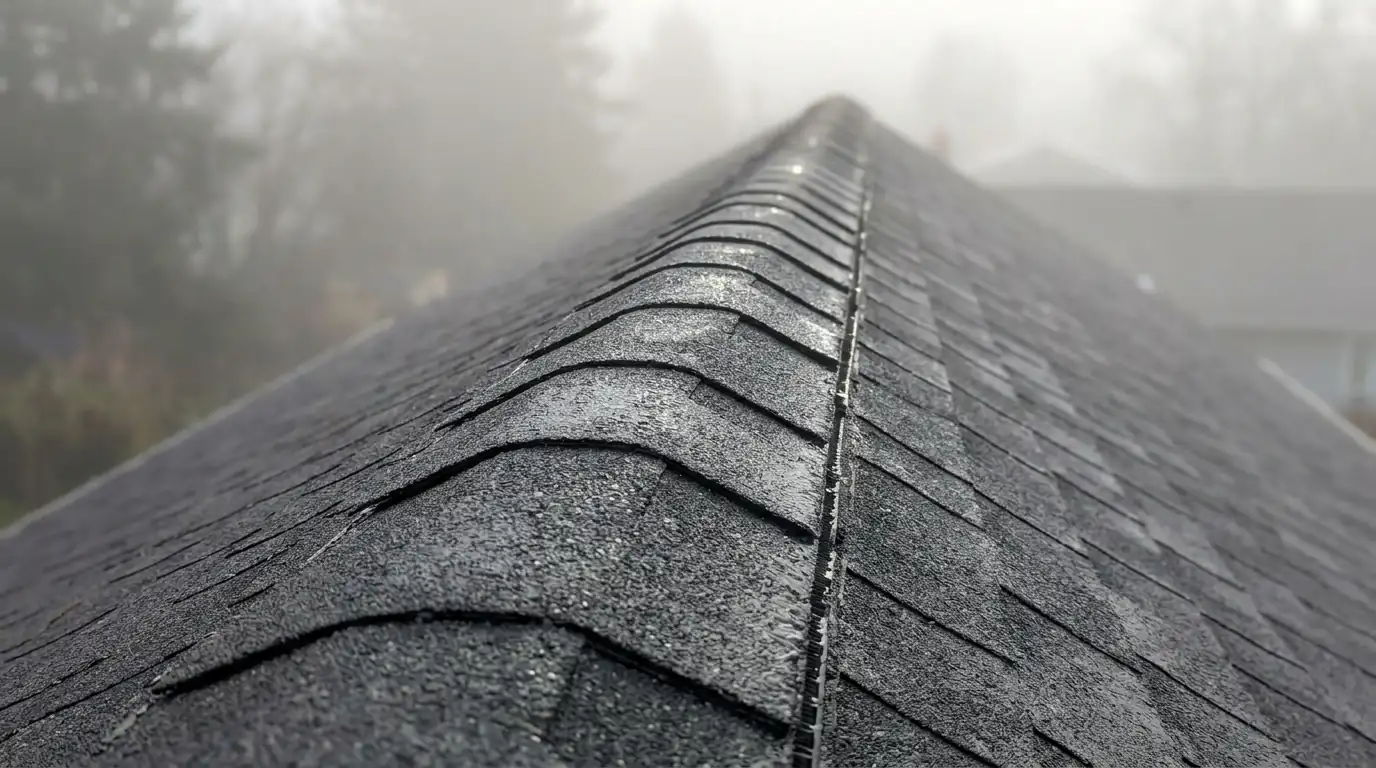
Moss anchors itself with fine threads called rhizoids that work into the granule surface and under the edge of each tab. As the cushion thickens, it acts like a sponge. Water that would have run off in seconds sits against the shingle for days, and the asphalt underneath softens and dries out in turn.
The bigger problem is lift. Moss grows into the gap between one course and the next, prying the tab away from the sealant strip that holds it down. Once a tab has lost its seal, the east wind that pushes out of the Columbia River Gorge in winter can catch it, fold it back and crack it. Water then reaches the nail line, the underlayment and finally the decking. During a cold snap, water trapped in the moss freezes and expands, widening every gap it sits in.
None of this happens in one season, which is good news. Catching it at the lifted tab stage usually means a cleaning and a handful of replacement shingles instead of new sheathing.
What does safe moss removal look like on a shingle roof?
Pressure washing is the fastest way to turn a moss problem into a roof problem. It strips granules off the shingle, drives water up under the tabs and can tear brittle shingles outright. That's why our roofers clean asphalt by hand and with a low-pressure soft wash. Here's the order we follow on a typical job:
- Brush and scrape the thick cushions working downslope only, so we never push against the shingle overlap
- Apply a moss treatment with a low-pressure sprayer and let it work instead of blasting residue off
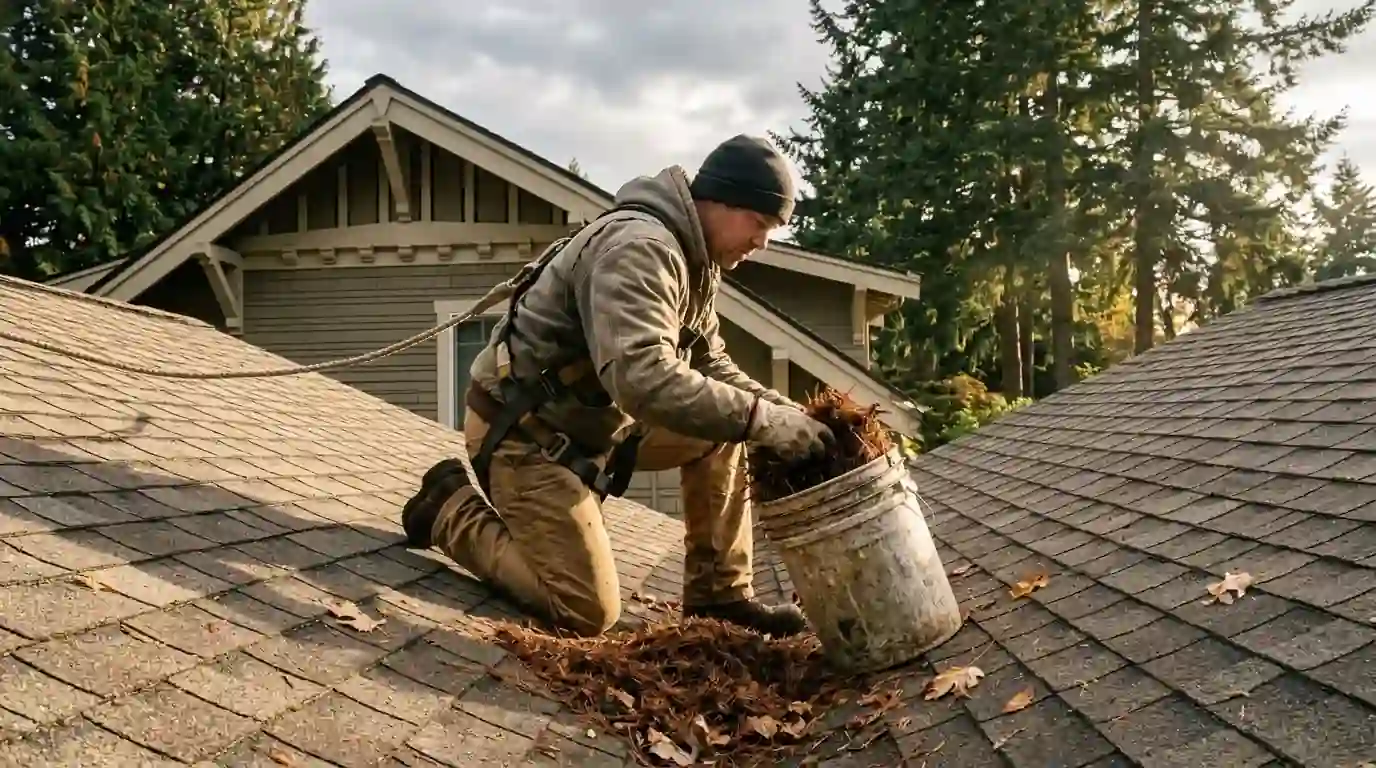
- Clear valleys, the area behind the chimney and every gutter and downspout so loosened moss doesn't clog drainage
- Walk the roof for lifted tabs, cracked shingles and split pipe boots, then reseal or replace what we find
- Fasten zinc strips just below the ridge on the slopes that grow moss fastest, so each rain carries a little zinc down the roof
When is cleaning not enough and repairs need to come first?
Sometimes the moss comes off and the shingles underneath are finished. If tabs crack when we lift them, if the fiberglass mat shows through where granules used to be, or if the decking flexes underfoot near the eaves, cleaning alone won't buy much time. We'll show you photos of what we found and talk through the options: replacing shingles in a few spots, cutting out and replacing rotted sheathing on one slope, or planning a full replacement if the whole roof is near the end of its life.
On most single-family homes around Portland, moss removal with gutter clearing typically runs $485 to $1,260, depending on roof size, pitch, how thick the growth is and whether zinc strips go on. That's a typical range, not a quote. The real number comes after we've looked at your roof and handed you a written estimate. To set up a visit, call (503) 917-5484. We answer 24/7.
Key takeaways
- Light surface moss is mostly cosmetic, but lifted tabs, thick cushions and granules in the gutters mean damage has started.
- Check from the ground with binoculars and from the attic on a rainy day instead of walking a slick roof.
- Pressure washing strips granules and forces water under shingles, so stick to hand brushing and a soft wash.
- Zinc strips near the ridge slow regrowth on shaded north slopes.
- Catching moss at the lifted tab stage usually means cleaning and small repairs, not new decking.
Written and edited by Grady Pelham, Roofing Articles Editor at MY Construction Roofing. Last updated May 6, 2026.